Listen to New Voices on Studs Terkel our partnership with 826CHI-here! Read the Story


Showing 16 - 30 of 242 results
-

Talking about Ethel Waters, with Jackie Taylor
Apr. 4, 1990 The playwright, director, actress, and founder of the Black Ensemble Theater talks with Studs about her portrayal of singer and actress Ethel Waters in Sweet Mama Stringbean.*Please note: some sections have been edited out from the original recording due to copyright considerations
-
Talking about Charles Dickens, with David Edgar
Jan. 19, 1983 The British playwright discusses his nine-hour adaptation of the Charles Dickens novel Nicholas Nickleby, at Chicago's Blackstone Theatre.*Please note: some sections have been edited out from the original recording due to copyright considerations
-
Talking about A Streetcar Named Desire, with Jackie Taylor
Mar. 23, 1987 The playwright, director, actress, and founder of the Black Ensemble Theater joins Studs to discuss her role as Blanche DuBois in the Tennessee Williams play, A Streetcar Named Desire.*Please note: some sections have been edited out from the original recording due to copyright considerations
-

Studs Terkel talks with Erich Lüth on his first hand experiences living in Hamburg through the rise and fall of Hitler ; part 1
1968 Erich Lüth discusses his experiences, observations, and accounts of life in Hamburg, Germany during the rise and fall of Hitler. He recounts how as a member of Parliament he brought in Hitler's, "Mein Kampf" and read portions aloud and was laughed at by his colleagues. He states they were blind to what Hitler declared in his book he would do and some are still blind by wanting to rub out their past, their history.
-
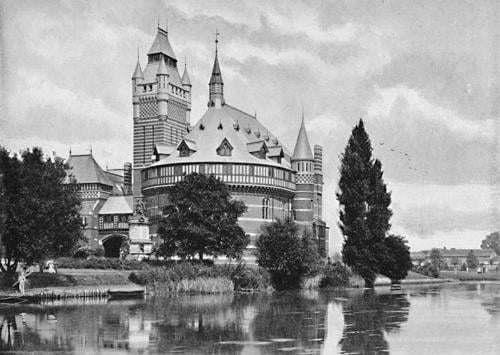
Studs Terkel in Stratford-Upon-Avon. At the National Theatre and at the Falcon Hotel ; part 1
1962 Studs Terkel heads to the British town of Stratford-upon-Avon (the birthplace of William Shakespeare) intending to interview Sir John Gielgud, and getting a few words before Studs realizes that Sir John is not intending to be interviewed. He speaks instead to other members of the company. Then he meets Mr. and Mrs. Lawrence in the Falcon Hotel.
-
Studs Terkel discusses the global status of theater with Croatian director Vlado Habunek
Apr. 25, 1962 Vlado Habunek, the Director of The Croatian National Theater, also a teacher at the University of Zagreb and board member for the Debrovnik Summer Festival discusses how all arts are seeking new revelations with Studs Terkel. Terkel asks Habunek to compare American Actors with Croatian actors because they are subsidized by the state. He sees Croatian actors as too secure and admires the ambition of American actors. The fact that theater reflects life and life is difficult begins a discussion on the status of theater today.
-
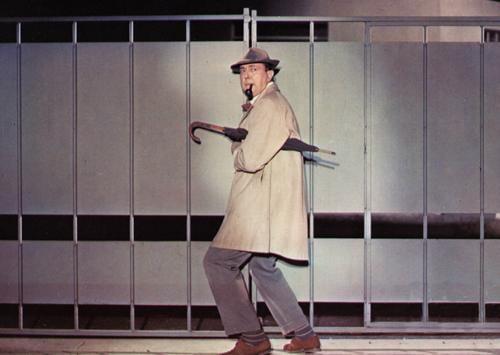
Studs Terkel discusses the film "Mon Oncle"with creator Jacques Tati
Dec. 12, 1958 Studs Terkel reintroduces this 1958 broadcast with Jacques Tati in a 1992 rebroadcast. At 39:06, Terkel includes a musical epilogue to the conversation with Jacques Tati with French children's songs such as "Cadet Rousselle". Tati discusses his films "Mr. Hulot's Holiday" and" Mon Oncle" and his emphasis as writer, director, actor, and producer to maintain a naturalness. He doesn't want lights, cameras or action to influence the actors. Naturalness will respect independence and keeping it simple and real will create pride and invite people in.
-
Studs Terkel continues his interview with Erich Luth in Hamburg discussing the aftermath of the war on Germany's youth ; part 3
1967 There is a silence in the tape from 3:48 to 3:58 due to Studs changing the tape. It should be noted that the word "clever" in this discussion means intelligent. The interview concludes at 35:36 where Studs offers his reflections on his stay. Luth is the retired Press Chief of Hamburg and has also helped with remunerations for the Jewish people in the aftermath of World War II. He has also facilitated detente between Israel and West Germany.
-

Studs Terkel concludes his interview with Erich Lüth going more in depth on the aftermath of the war on Germany's youth ; part 4
1968 Erich Lüth's discussion with Studs Terkel is similar to part 3 but Luth offers a more in-depth conversation on the role of teachers in schools and how the time of Hitler is taught. There were those teachers that joined the party to continue their love of teaching and those teachers that were brought into the Nazi Party to follow their convictions. This lack of courage to resist influences pupils today because teachers are not saying they were cowards. The relationship is altered out of shame, and embarrassment.
-
Stephen R. Roszell discusses his documentary film "Other Prisoners"
Sep. 21, 1987 Studs interviews Stephen R. Roszell about the time he spent in the Louisville, Kentucky prison to interview and observe inmates and guards for his documentary film "Other Prisoners." Roszell describes his relationship with the inmates during his work and the prison environment. Roszell shares interesting insights to prison life for inmate and guard. Parts of the soundtrack recordings are removed from this edited version of the original.
-
Stanislaw Pchenikov and Valentin Nikolaevich Pluchek discuss theater with Studs Terkel ; part 2
Jan. 19, 1962 Studs Terkel discusses Russian theater with Stanislaw Pchenikov and Theater director Valentin Nikolaevich Pluchek.
-
-
Stan Brakhage discusses cinematography
Oct. 19, 1970 According to Stan Brakhage, being a cinematographer is being a writer of movement. Here, he talks with Studs about film and magic, and always finding new techniques to make pictures move.*Please note: some sections have been edited out from the original recording due to copyright considerations
-
Sir Cedric Hardwicke discusses today's theatre
Oct. 14, 1960 According to Sir Cedric Hardwicke, plays are only fashionable in New York City even though people all around the country are hungry to see a good play. In England around Christmas time, Hardwicke says children are exposed to plays at an early age, unlike here in the states, where there aren't any plays geared toward children.*Please note: some sections have been edited out from the original recording due to copyright considerations
-
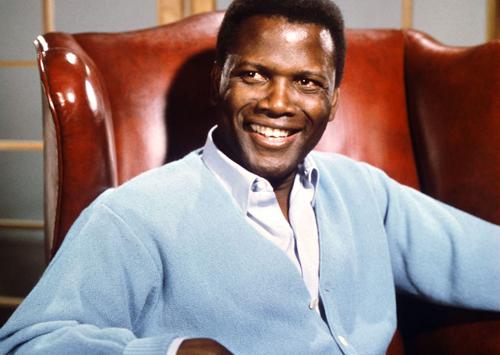
Sidney Poitier discusses his book "This Life"
Jun. 13, 1980 Actor and director Sidney Poitier offers his reflections about his autobiographical memoir, "This Life". Poitier explains how he never had ambitions to be an actor and yet he stumbled into acting when looking through the clasisfied ads. There's a story about his agent trying to settle a negotiation on Poitier's behalf. Poitier's agent told the others involved that Poitier was offered a film in Hollywood. Believing it was a cheap ploy, the agent was told to tell Poitier to go onto Hollywood, and the rest is history for Sidney Poitier.