Listen to New Voices on Studs Terkel our partnership with 826CHI-here! Read the Story


Showing 331 - 345 of 3671 results
-

Studs Terkel discusses the songs by Steve Goodman and songwriter John Prine
Jul. 29, 1975 Studs Terkel comments on folk music entertainers Stever Goodman and John Prine. He discusses a little about their life and names a variety of their song titles. The musical performances have been erased from this edited version of the recording. Includes an excerpt from a previous interview with John Prine who speaks about his grandfather and a song he wrote about him.
-

Studs Terkel discusses the rugby match between England and Wales live from Twickenham Stadium, London, England
The England vs. Wales rugby rivalry is brought to life live from Twickenham Stadium by Studs Terkel. Surrounded by 65,000 fans, Studs Terkel with David Thomson interview fans during the pregame show offering the traditions and spirit of this passionate sport.
-
Studs Terkel discusses the novel "Creation" with its author, Gore Vidal
Discussing the book "Creation" with the author Gore Vidal.
-

Studs Terkel discusses the novel "Blind Date" with its author Jerzy N. Kosinski
Nov. 11, 1977 Studs Terkel and Jerzy Kosinski express their own views on the morality of protagonist George Levanter from Blind Date. Terkel sees him as a vigilante whereas Kosinski sees him as a responsible social reformer. Kosinski states that ethics are viewed differently by Europeans based upon their history of invasions and betrayal which lends itself to an individual code of ethics as exemplified by George Levanter.
-
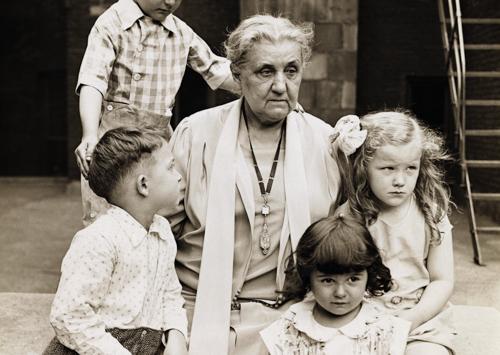
Studs Terkel discusses the life of Hull House founder, Jane Addams with her grand niece, Mrs. John B. Allen
Jul. 1, 1960 Mrs. John B. Allen recalls stories from Jane Addams' "The Long Road of Woman's Memory" and "Twenty Years at Hull House". She also recounts her own personal stories of Thanksgiving and Christmas at Hull House as well as her own volunteer service with The Immigrants Protective League. Jane Addams advocated for shorter hours, child labor laws, women's suffrage, youth, and peace. She prejudged no one and saw individuals as having various needs, desires, and each with their own gifts. She found reassurance that life is good through the spirit of youth. This interview ends at 45:03.
-
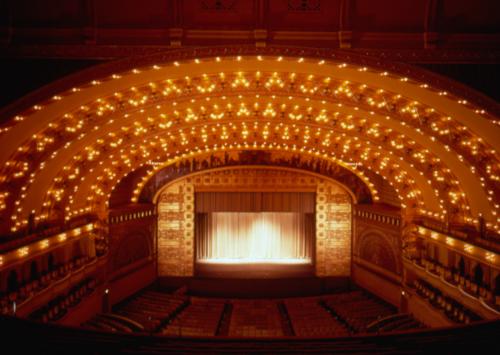
Studs Terkel discusses the history of Chicago architecture and its future with Carl Condit, Richard Nickel, and Ben Weese
1957 Studs Terkel rebroadcasts a discussion on the Chicago School of Architecture and its future in memory of Carl Condit. Carl Condit, Richard Nickel, and Ben Weese share their opinions on the Auditorium Theatre, University of Illinois-Circle Campus, Chicago Civic Center, Monadnock Building, and historical continuity.
-
Studs Terkel discusses the global status of theater with Croatian director Vlado Habunek
Apr. 25, 1962 Vlado Habunek, the Director of The Croatian National Theater, also a teacher at the University of Zagreb and board member for the Debrovnik Summer Festival discusses how all arts are seeking new revelations with Studs Terkel. Terkel asks Habunek to compare American Actors with Croatian actors because they are subsidized by the state. He sees Croatian actors as too secure and admires the ambition of American actors. The fact that theater reflects life and life is difficult begins a discussion on the status of theater today.
-
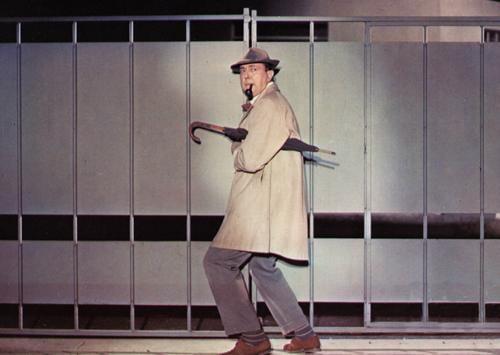
Studs Terkel discusses the film "Mon Oncle"with creator Jacques Tati
Dec. 12, 1958 Studs Terkel reintroduces this 1958 broadcast with Jacques Tati in a 1992 rebroadcast. At 39:06, Terkel includes a musical epilogue to the conversation with Jacques Tati with French children's songs such as "Cadet Rousselle". Tati discusses his films "Mr. Hulot's Holiday" and" Mon Oncle" and his emphasis as writer, director, actor, and producer to maintain a naturalness. He doesn't want lights, cameras or action to influence the actors. Naturalness will respect independence and keeping it simple and real will create pride and invite people in.
-
Studs Terkel discusses the English language with Bergen Evans ; part 1
Feb. 26, 1962 Studs Terkel discusses the English language with Bergen Evans, television host, writer, and Northwestern University professor of English.
-
Studs Terkel discusses the creation of the U.S.-U.S.S.R. Initiatives with founder Sharon Tennison
Jun. 17, 1988 Sharon Tennison was concerned with U.S. and U.S.S.R. relations in the early 1980's when there was a nuclear threat and decided to form a group of ordinary citizens to travel to Moscow and immerse themselves in the culture. They got firsthand accounts and dispelled decades old myths. They not only formed the Center for U.S.-U.S.S.R. Initiatives but created branches of Alcoholics Anonymous in the Soviet Union as well as teacher and young adult exchanges. The ordinary citizen has created participatory democracy and began a dialogue and exchange with a former enemy.
-
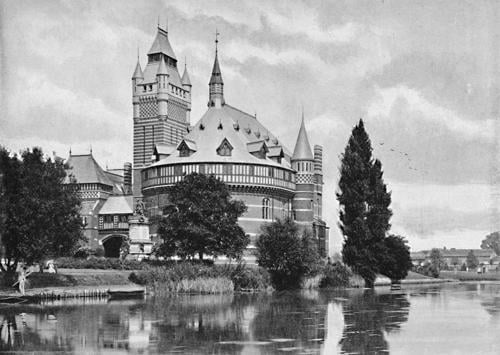
Studs Terkel discusses the changing role accents play on class distinctions in England with guests in the parlor of the Mayor in Stratford-upon-Avon ; part 2
1962 Studs Terkel gathers a cross section of opinions on accents and their changing role on class distinctions in British Society. He asks the Mayor and Mayoress of Stratford-upon-Avon, the Huxleys, their opinions on the influence of education on accents and class. Also present to offer opinions are Mr. & Mrs. Lawrence, pub owners from Lower Quinton near Stratford-on-Avon, and Mr. Morris, a London stockbroker and his wife. Bookending the conversation at the mayor's home are two conversations with Mr. and Mrs. Lawrence.
-
Studs Terkel discusses the book " Daughters and Mothers Mothers and Daughters" with author Signe Hammer
Mar. 17, 1976 Studs Terkel discusses the changing role of feminism, women and rights with author, Signe Hammer, also a teacher of a Women's School in New York that caters to women aged 24 through 78 that are seeking information on new ideas of identity. Signe Hammer interviewed three generations of women to explore the importance of supporting womanhood and how Mothers must have a strong sense of self in order to see their Daughters as also having value.
-
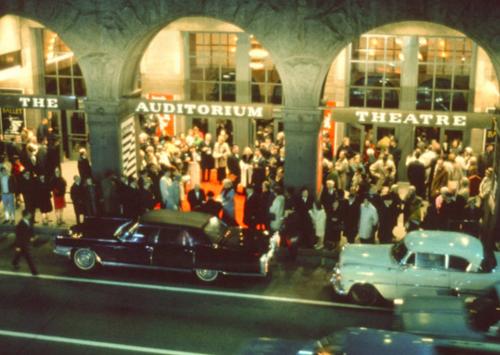
Studs Terkel discusses the Auditorium Theater with friends ; part 2
Jun. 1, 1967 Studs Terkel sits down with three guests who convey their memories of the Auditorium Theater in Chicago. Mary Garden, John Glickman and architect Harry Weese all agree that the theater's acoustics were extraordinary and there wasn't a bad seat in the house. Weese helped Chicago rediscover the Auditorium.
-

Studs Terkel discusses television and advertising with Nicholas Johnson of the FCC
Apr. 3, 1970 Johnson had recently released a book, "How to Talk Back to Your Television Set". Topics of conversation include the history and role of advertising in television and radio programming, and how advertising revenue influences the media. Emphasis is placed on cigarette advertising, which was particularly prevalent and controversial at the time of this interview.
-
Studs Terkel discusses songs about domestic violence against women
Aug. 5, 1981 Terkel presents songs that discuss the subject of domestic violence against women. Songs range from ballads in musicals, to jazz torch songs, to popular music at the time.