Listen to New Voices on Studs Terkel our partnership with 826CHI-here! Read the Story


Showing 61 - 75 of 558 results
-

Talking about Paul Robeson, with Dorothy Gilliam
Feb. 11, 1977 The American journalist joins Studs to discuss the life of singer, actor, social activist, and lawyer Paul Robeson, as chronicled in her biography, Paul Robeson, All-American.*Please note: some sections have been edited out from the original recording due to copyright considerations
-
Talking about Paderweski, with Adam Zamoyski
Sep. 30, 1982 The British historian and author talks with Studs about the research that went into the creation of his book, Paderweski: A Biography, about the famed Polish pianist and statesman Ignacy Jan Paderweski.*Please note: some sections have been edited out from the original recording due to copyright considerations
-
Talking about musicals, with Albert Johnson
Nov. 8, 1979 The African American film scholar discusses the history of American musical films, especially during the Depression and into the 1950's.*Please note: some sections have been edited out from the original recording due to copyright considerations
-
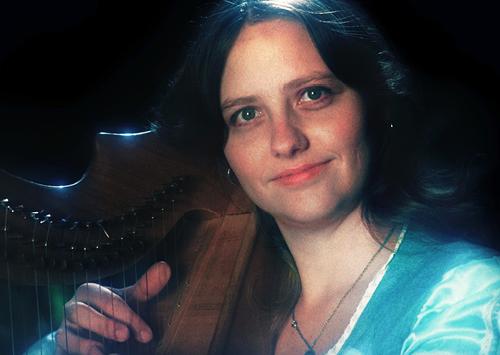
Sylvia Woods discusses her book "Teach Yourself to Play the Folk Harp"
Sep. 2, 1982 Syvia Woods, an American, and 1980 All Ireland Harp Competition winner sits down with Studs Terkel in a wonderful discussion on the history of the folk harp and plays a variety of selections. As a self taught folk harper, she has written a book "Teach Yourself to Play the Folk Harp" for the absolute beginner. She is known as a harper and not harpist because she doesn't play the orchestra harp. She also discusses her involvement musically in a documentary for PBS entitled "Chicago Secret Wilderness", produced by Mike Hirsh. The folk harp is also known as the celtic harp or Irish harp.
-
Sylvia Syms discusses her career as a singer and those that have influenced her
Nov. 24, 1976 Studs interview with Sylvia Syms about her career through the years and the people who influenced her. They discuss Jazz music and composers who Syms calls poets. The music numbers are removed from this edited version.
-
Sweet Honey In The Rock, an African American female vocal group, discusses their music
Feb. 2, 1978 Sweet Honey In The Rock, an African American female vocal group, discusses their music. They talk to Studs and play folk/blues/traditional music.
-
Suzanne Bloch discusses her career as a lute player and her appreciation for theater
Mar. 19, 1960 *Please note: some sections have been edited out from the original recording due to copyright considerations
-
Susan Salm discusses her career as a cellist
Oct. 26, 1977 Susan Salm discusses her career as a cellist, the cello, and classical music. Includes an earlier interview with a younger Susan Salm and her mother. Includes an announcer's comments from the BBC at the end of the program.
-
Studs Terkel reflects on trip to People's Republic of China to describe Inner Mongolian music
Jun. 11, 1981 Studs Terkel travels to a Yurt shepherd's farm commune to hear the old song ballad of a Mongolian hero. It concerns a slave uprising from 200 years ago and shows the unity of the Mongolian people. Terkel compares this music to the Hungarian legacy before moving to the School of Story Telling and School of Music and Story Telling in the capital of Inner Mongolia, Hohhot. We are introduced to the four string hu that played Homeric ballads of drinking songs that could last four days.
-
Studs Terkel presents an Easter program of commentary and secular and sacred music
Mar. 24, 1988 Terkel presents an Easter program. Songs include "Lord of the Dance/Simple Gifts" sung by Bill Crofut and Benjamin Luxon; "Plenty Good Room" sung by Roland Hayes; "Vidé" a carnival song of Martinique; "Wondrous Love" sung by Ed McCurdy; "The Cuckoo" sung by Burr Tillstrom as Kukla; "The Cuckoo's Nest" sung by Jimmy MacBeath; "The Cuckoo" sung by Jean Ritchie; "Gloria," Malaga Flemenco song; "Old Blind Barnabus" sung by Golden Gate Quartet; and Bach's "St.
-
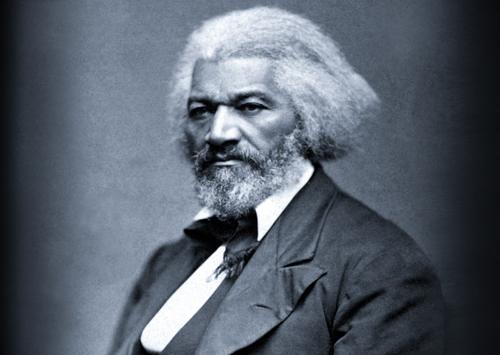
Studs Terkel presents a program in honor of the birthday of abolitionist and African American leader Frederick Douglass
Feb. 15, 1971 Studs Terkel presents a program in honor of the birthday of abolitionist and African American leader Frederick Douglass, including excepts from Terkel's 1964 interview with African-American scholar, author and social historian Lerone Bennett. Terkel reads at length from Douglass' autobiography, "My Bondage and My Freedom," focusing on Douglass' interactions with slave owners Hugh and Sophia Auld.
-
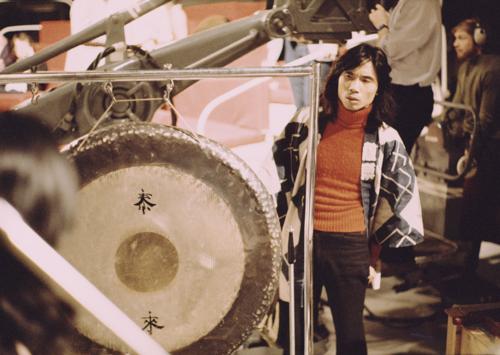
Studs Terkel interviews Japanese percussionist Stomu Yamash'ta
Jun. 24, 1969 The virtuoso percussionist, Stomu Yamash'ta, sits down with Studs Terkel and discusses from his heart how he creates the sound of his music. Sound is created in your head and heart. The ocean creates a different sound by day and night. Yamash'ta writes down his thoughts on the sounds he hears and creates the music. For the Akira Kurasawa film "YoJimbo" where he did solo musical work, he analyzed the character and what type of sound was in his mind and thought how to create it and convey that to his audience musically. Technology is not the answer to the development of sound.
-
Studs Terkel in conversation with Buffy Sainte-Marie
Apr. 21, 1972 Studs Terkel interviews Canadian singer-songwriter Buffy Sainte-Marie.
-
Studs Terkel discusses the songs by Steve Goodman and songwriter John Prine
Jul. 29, 1975 Studs Terkel comments on folk music entertainers Stever Goodman and John Prine. He discusses a little about their life and names a variety of their song titles. The musical performances have been erased from this edited version of the recording. Includes an excerpt from a previous interview with John Prine who speaks about his grandfather and a song he wrote about him.
-
Studs Terkel discusses the global status of theater with Croatian director Vlado Habunek
Apr. 25, 1962 Vlado Habunek, the Director of The Croatian National Theater, also a teacher at the University of Zagreb and board member for the Debrovnik Summer Festival discusses how all arts are seeking new revelations with Studs Terkel. Terkel asks Habunek to compare American Actors with Croatian actors because they are subsidized by the state. He sees Croatian actors as too secure and admires the ambition of American actors. The fact that theater reflects life and life is difficult begins a discussion on the status of theater today.