Listen to New Voices on Studs Terkel our partnership with 826CHI-here! Read the Story


Showing 76 - 90 of 261 results
-

Marlon Brando discusses his views on mankind ; part 1
Apr. 19, 1963 Content Warning: This conversation includes racially and/or culturally derogatory language and/or negative depictions of Black and Indigenous people of color, women, and LGBTQI+ individuals. Rather than remove this content, we present it in the context of twentieth-century social history to acknowledge and learn from its impact and to inspire awareness and discussion. Self-righteousness and values are topics covered by Marlon Brando. Here in the states, Brando said, we are living a dream. We do not want strife in our lives, and yet he says it seems as though we seek it.
-
Marcel Ophuls discusses his documentary films
Apr. 30, 1984 Discussing the showing of his films with film maker Marcel Ophuls.
-
Marcel Marceau talks about adapting his work to film
Oct. 17, 1974 The famed French mime and actor discusses illusion and reality, as depicted in the surrealist horror film, Shanks.*Please note: some sections have been edited out from the original recording due to copyright considerations
-
Maggie Renzi and John Sayles discuss the movie "Return of the Seacaucus Seven"
Feb. 1, 1981 Discussing the movie "Return of the Secaucus seven" with Maggie Renzi and John Sayles.
-
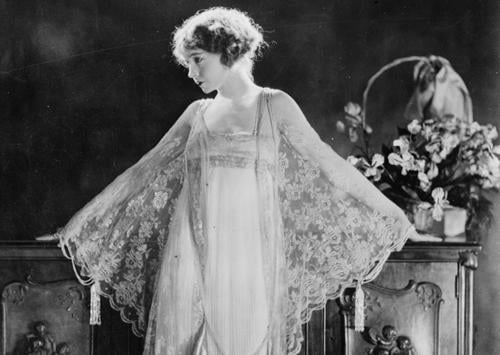
Lillian Gish discusses the play "Passage to India" and her career
Jan. 16, 1963 Actress Lillian Gish joins Studs Terkel to talk about her role in the play “Passage to India.” Gish connects the play based on a book by E. M. Forster to “Uncle Tom’s Cabin,” and discusses the relevance and importance of historical works like those mentioned. Studs asks Gish about working with D. W. Griffith, and the two praise Griffith’s impact on the world of film; Gish comments on her experience with working with Charles Laughton too.
-
Lilli Palmer discusses her book "The Red Raven"
Nov. 13, 1978 Lilli Palmer, actress and writer, discusses her life and her book, "The Red Raven." She talks about growing up in Germany, some of her film and play work, and her personal life.
-
Lila Kedrova discusses her background
Apr. 1, 1965 Although she came from a family with a musical background, Lila Kedrova went into acting. A friend of her father, Feodor Chaliapin, played a part in influencing Kedrova into performing. Kedrova said she's been acting since she was eight. After her role as Madame Hortense, Kedrova said she wanted to explore other types of roles.*Please note: some sections have been edited out from the original recording due to copyright considerations
-
Larry Gelman in conversation with Studs Terkel
Sep. 22, 1988 Interviewing actor Larry Gelman.
-
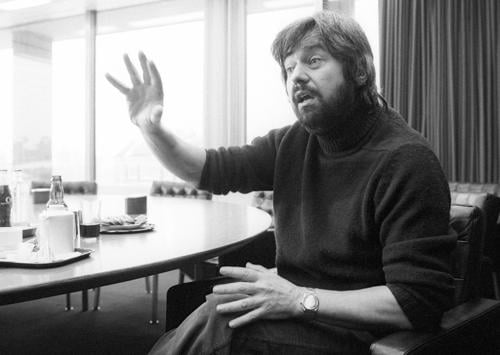
Jurek Becker discusses his background
1986 While in his home in Berlin, Jurek Becker covers various topics. He first talks about being arrested back in 1978 in New Orleans. Becker also talks about his lack of memories from being in the concentration camp. When he was 3, 4, or 5, Becker said that when he was there, there was nothing, and therefore, there's nothing to remember.
-
Joyce Grenfell, Dame Sybil Thorndike and Frances Cucka discuss acting
Dec. 1, 1962 When asked what she thought of Dame Sybil Thorndike, British actress Joyce Grenfell said Dame Sybil has a great sense of discovery. The Grand Dame of the British Theatre, Dame Sybil Thorndike said the greatest thing that ever happened to her was George Bernard Shaw's "Saint Joan". Thorndike also spoke of her politics and of being anti-war. Frances Cucka said working with Dame Sybil Thorndike was an extraordinary experience. Cucka, voted one of the most promising actresses of the west, said she also learned to sing and to dance for future roles.
-
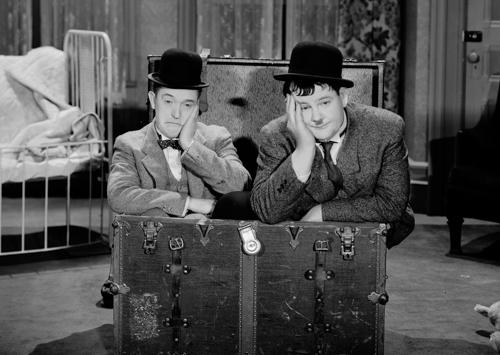
John West discusses Stan Laurel and Oliver Hardy
Nov. 2, 1965 John West discuss early classical Hollywood comedy double act Stan Laurel and Oliver Hardy. Four clips are played during the interview. The first three clips are from Laurel and Hardy's "Their First Mistake" (1932) and the fourth clip is from Laurel and Hardy's "Swiss Miss" (1938).
-
John Simon discusses film
Feb. 16, 1979 Film critic John Simon and Studs Terkel discuss various movies, filmmaking techniques, and how film is a newer form of art. Terkel plays an audio clip from an interview he did he with Italian actor Marcello Mastroianni.
-
John Henry Faulk discusses his book "Fear on Trial" ; part 1
Dec. 1, 1964 Folklorist and radio show host John Henry Faulk discusses his book "Fear on Trial," covering his experiences being on the Hollywood blacklist and his lawsuit against AWARE; includes Christmas story at the end of part 2.
-
John Bird and Eleanor Bron discuss television and the theatre ; part 2
1962 Eleanor Bron explained that audiences want something new from actors all the time. Bron said she was leery of all the newness because people would get bored. John Bird added that at times, it's difficult to be creative. In the end, they both spoke of their looking around for a two-person show to do together.
-
John Bird and Eleanor Bron discuss television and the theatre ; part 1
1962 Eleanor Bron said television provided its audience with too many facts. Bron also said it’s dreadful to hear about all the misery and tragedy going on in today’s world. In contrast, John Bird said the television offered its audience an opportunity to learn more about world affairs. Switching to the topic of theatre, Bron said she preferred working in the theatre because, as an actor, she has more control over what’s done at every performance. In contrast again, Bird said he did not like acting on the stage.