

-

Oliver W. Sacks discusses his book "Awakenings"
1985 In the of first of many appearances on Studs' radio show, Oliver Sacks discusses his book "Awakenings" and recounts several patient profiles from his groundbreaking treatment application of L-DOPA to sufferers of Sleeping sickness and Parkinson's disease. They explore his work in the context of Studs' concept of Feeling Tone and Sacks tells of a remarkable scene with aphasic patients reacting to a speech of then President Ronald Reagan.
-
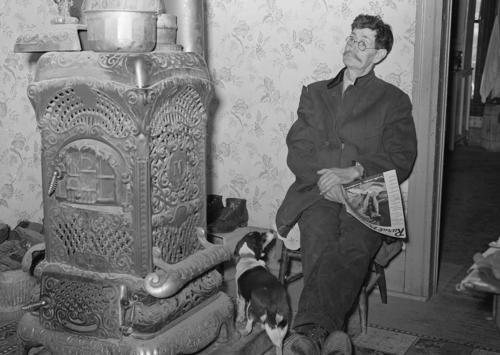
Nick Cherniavsky and Barbara (Bobbe) Herndon discuss capturing the oral history of the Progressive Mine Workers
Jul. 20, 1976 Nick Cherniavsky and Barbara (Bobbe) Herndon share their work of collecting oral histories of the coal miners of Southern Illinois who were members of the Progressive Mine Workers of America during the 1930s. The following oral history segments are played: Frank Bertetti, Joe Ozanic, Jack Battuello, James (Jim) Hopley, and Irene Allard.
-
Nancy Milford discusses her book "Zelda" a biography of Zelda Fitzgerald
Aug. 7, 1970 The interview begins with Ms. Milford reading from the prologue of her book "Zelda". Ms Meyer talks with Studs about her book and the lives of Zelda and F. Scott Fitzgerald. Studs reads a few lines of a farewell poem by Ring Lardner to Zelda Fitzgerald "To Z.S.F." Both Studs and Ms. Meyer read letters from Zelda and F Scott Fitzgerald from the book. Excerpt of Virginia Durr of Montgomery AL. talking about southern women and the image they have to live up to.(1965958-4-1 & -4-2) Excert of Mrs.
-

Mary Lynn Kotz discusses her book "Rauschenberg, Art and Life"
Oct. 29, 1991 In Mary Lynn Kotz's book, "Rauschenberg, Art and Life," Kotz recounts the works and story of 20th century art pioneer Robert Rauschenberg. They survey his career beginning in Port Arthur, TX, discussing his Depression-era upbringing which caused him to reuse and salvage virtually any object and transform it into art, his studies in Paris, made possible by the G.I.
-
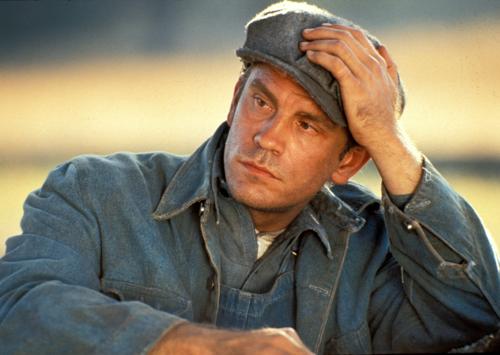
John Malkovich and Gary Sinise discuss the play "Of Mice and Men"
Sep. 29, 1981 Studs Terkel discusses the upcoming new play "Of Mice and Men", based on the novel written by John Steinbeck with the starring actors, John Malkovich (Lennie) and Gary Sinise (George). The program begins with the opening excerpt from the play "Of Mice and Men" featuring Terkel (George) and Win Stracke (Lennie) from 1952, which then leads into Malkovich and Sinise's interpretation of the rest of the scene. Folk singer Utah Phillips song "On the Goodnight Loving Trail" is presented as a comparison to themes expressed in "Of Mice and Men".
-
John Kenneth Galbraith discusses his book, "The Age of Uncertainty"
Apr. 8, 1977 John Kenneth Galbraith, economist and diplomat, discusses his book, "The Age of Uncertainty," which was being made into a PBS documentary. Galbraith talks about some of the most well-known economists and explains their writings. He explains how many of their ideas have long lasting effects on capitalism the US has today.
-
-
James Cameron discusses his experiences as a Brittish journalist and his book "Point of Departure" ; part 3
Jun. 4, 1973 Studs Terkel interviews James Cameron about his experiences as a journalist that includes thoughts about Cameron's book, "Point of Departure." They talk about his relationships with Winston Churchill, Lord Beaverbrook, Charlie Templeton, and Bertrand Russell. Cameron discusses his education, poverty, and the depression during his youth. They talk about Cameron's career with the "News Chronicle" and his home of Dundee, Scotland. This is part 3 of a total of 4 parts. The interview takes place at Lewis and Clark Community College.
-
Inteviewees discuss a variety of topics from the Hard Times: an Oral History of the Great Depression program; excerpts part 3
Excerpts from different episodes of "Hard Times: an Oral History of the Great Depression". Concerning The New Deal: Ed Paulsen talks about conflicting feelings regarding the New Deal and how the government seemed more present in daily life. Gardner C. Means explains how the New Deal was created to help save the country. Joe Marcus remembers feeling like his ideas were valued and were making a difference in his government job. John Beecher talks about working in the transient camps.
-
Inteviewees discuss a variety of topics from the Hard Times: an Oral History of the Great Depression program; excerpts part 2
Excerpts from different episodes of "Hard Times: an Oral History of the Great Depression". Bonnie Laboring Boy: Joe Morrison talks about generational differences in laborers. Evelyn Finn talks about trying to unionize at clothing factories. Two Strikes: Jose Yglesias talks about strikes in cigar factories and the lifelong stigmas of strikebreakers. Bob Stinson discusses working at General Motors and the sit-down strike. The Farmer is the Man: Oscar Heline explains farmer's actions in response to farm foreclosures.
-
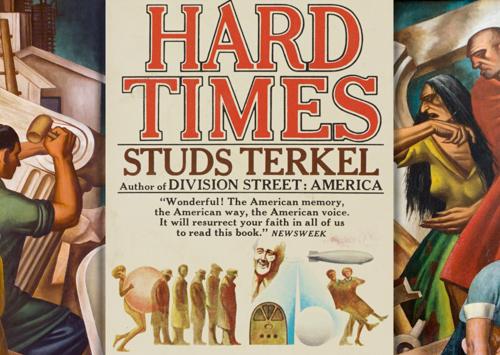
Inteviewees discuss a variety of topics from the Hard Times: an Oral History of the Great Depression program; excerpts part 1
Excerpts from different episodes of "Hard Times: an Oral History of the Great Depression". A Fairy Tale: Montage of young voices that talk about their parents' stories of surviving the Depression. The March: Jimmy Sheridan talks about what life was like on the rails as part of the Bonus March. Born Losers: Ed Paulsen discusses trying to find work in San Francisco and upon failing, marching to City Hall, which then led to rioting with the police. Hard Travelin': Pauline Kael remembers her mother feeding beggars that came to the back door.
-
Interviewing violinist Nadja Salerno-Sonnenberg
Dec. 5, 1990 Virtuoso violinist Nadja Salerno-Sonnenberg discusses her training, performance style and reactions to it, attracting a younger classical audience, and comments on several of her recordings.
-
Interviewing St. Clair Drake, author of "Black Metropolis: A Study of Negro Life in a Northern City."
May. 10, 1976 A discussion with sociologist and anthropologist St. Clair Drake at the time of his receiving an honorary award from Roosevelt University on the themes of his convocation address. A fascinating deep-dive into race relations from the Revolution to the Bicentennial, touching on the contradictions, crises, and struggles that led to Black institutions and liberation. Studs plays several excerpts from previous programs with St.
-
Interviewing Kevin Phillips
Aug. 1, 1990 Program includes an excerpt from Hard Times (T3452B).
-
Interviewing Bob "Doc" Graham ; part 2
Discussing life in Chicago and its underworld in the 1930s, longer interview that was the basis of his Hard Times book appearance.