Listen to New Voices on Studs Terkel our partnership with 826CHI-here! Read the Story


Showing 61 - 75 of 549 results
-
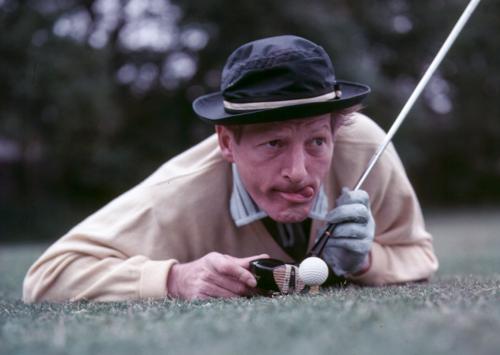
Studs talks with versatile actor, singer, performer Danny Kaye
Mar. 8, 1963 Studs talks with versatile actor, singer, performer Danny Kaye who opens up about his worldwide appeal to children and adults alike, relating to children on their terms, his father's influence, the skills and work that go into his crafts, and much more. Kaye reveals his lack of musical training yet details his comic conducting talents ala Victor Borge via his charity work. The conversation continues with talk of his variety show performances, his fondness for Señor Wences, the medium of television, and his knack for dialects.
-
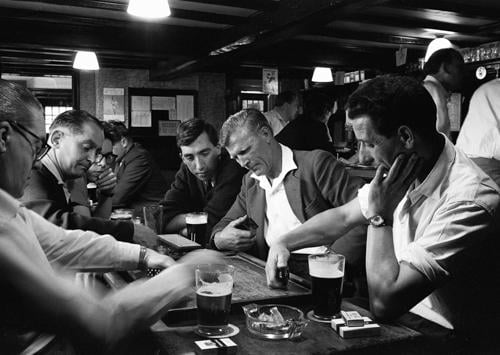
Studs speaks with patrons at Mr. and Mrs' Lawrence's pub in the British Midlands near Stratford-upon-Avon
1962 Studs interviews patrons in a the pub of the Falcon Hotel, owned by Mr. and Mrs. Lawrence, while in Stratford-upon-Avon (Midlands) in England. A variety of questions were asked about favorite memories, jobs, and daily life.
-
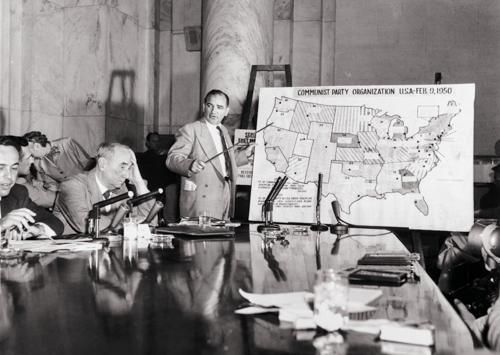
Studs discusses McCarthyism with journalist Fred J. Cook
Jul. 27, 1971 Studs discusses McCarthyism with investigative journalist Fred J. Cook. The recording opens with an excerpt from a speech by U.S. Senator Joseph McCarthy. Cook then reads from his recent book "The Nightmare Decade: The Life and Times of Senator Joe McCarthy" (Random House, 1971). Studs and Cook discuss the history, consequences of Senator McCarthy's relentless pursuit of suspected communists and communist sympathizers in the United States throughout his term in office (1953-1955). They also discuss the possibilities for similar campaigns to emerge during the 1970s.
-
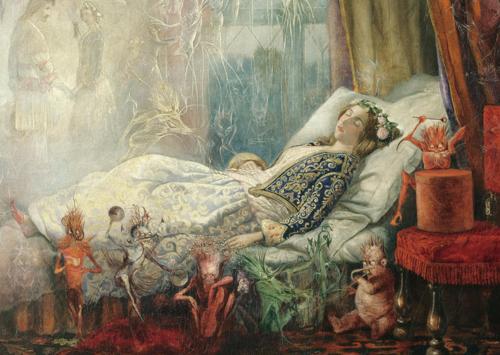
Studs discusses dreams and computers with Dr. Christopher Evans
1969 Studs discusses dreams, consciousness and computers with psychologist, computer scientist, and author Dr. Christopher Evans. Topics of conversation include the need for humans to dream, contemporary research on sleep and rest, and computer technology. Dr. Evans draws analogies between the behavior of the sleeping and dreaming human brain and the functions of modern computers.
-

Stuart Dybek reads from and discusses his book "The Coast of Chicago"
May. 7, 1990 Hearing Chopin being played through the pipes of another apartment and a tale about a young girl who died and whose father froze her body in an ice house are among the stories in Stuart Dybek's book, "The Coast of Chicago." Dybek explained that although his stories may seem dream-like, he tries to come up up with stories from some place of reality.
-
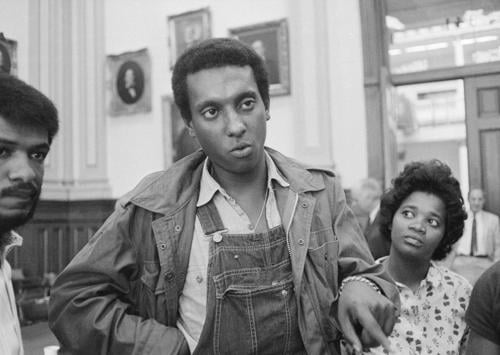
Stokely Carmichael, Charlie Cobb, and Courtland Cox discuss the SNCC ; part 2
Jul. 23, 1965 Stokely Carmichael, Charlie Cobb, and Courtland Cox discuss civil rights and African Americans in politics. Discussing the philosophy of SNCC.
-

Stokely Carmichael, Charlie Cobb, and Courtland Cox discuss the SNCC ; part 1
Jul. 23, 1965 Stokely Carmichael, Charlie Cobb, and Courtland Cox discuss civil rights and African Americans in politics. Discussing the philosophy of SNCC.
-
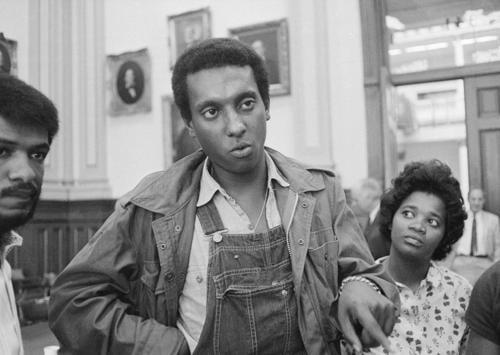
Stokely Carmichael, Charlie Cobb, and Courtland Cox discuss the philosophy of SNCC ; part 3
Jul. 23, 1965 Stokely Carmichael, Charlie Cobb, and Courtland Cox discuss civil rights and African Americans in politics. Discussing the philosophy of SNCC.
-
Sterling "Red" Quinlan discusses the book "The Hundred Million Dollar Lunch"
Jul. 30, 1974 Mr Quinlan a pioneering Chicago TV executive and one time general manager of Chicago's ABC affiliate WBKB, discusses the book "The Hundred Million Dollar Lunch." Mr Quinlan and Studs converse about the trials against RKO General/General Tire, a struggle that lasted 15 years. Includes an excerpt of an interview with Denis Mitchell.
-

Sterling "Red" Quinlan discusses his book "Inside ABC"
Oct. 18, 1979 Sterling "Red" Quinlan discusses his book "Inside ABC: American Broadcasting Company's Rise to Power". Quinlan was a pioneering Chicago TV executive who worked for ABC (which later became WLS-Ch. 7), WFLD-TV, and WTTW, Chicago's public television station.
-
Stephen R. Roszell discusses his documentary film "Other Prisoners"
Sep. 21, 1987 Studs interviews Stephen R. Roszell about the time he spent in the Louisville, Kentucky prison to interview and observe inmates and guards for his documentary film "Other Prisoners." Roszell describes his relationship with the inmates during his work and the prison environment. Roszell shares interesting insights to prison life for inmate and guard. Parts of the soundtrack recordings are removed from this edited version of the original.
-
Stanislaw Pchenikov and Valentin Nikolaevich Pluchek discuss theater with Studs Terkel ; part 2
Jan. 19, 1962 Studs Terkel discusses Russian theater with Stanislaw Pchenikov and Theater director Valentin Nikolaevich Pluchek.
-

Stan Steiner talks with Studs Terkel ; part 2
1967 Discussing the book "The New Indians" and interviewing the author Stan Steiner.
-

Stan Steiner talks with Studs Terkel ; part 1
1967 Discussing the book "The New Indians" and interviewing the author Stan Steiner.
-
Spiet Himmelsturb discusses the little school movement
1968 Spiet Himmelsturb, a school teacher, talks about the little school where he works. Parents, teachers and students all have a say in how the school is run. Eighty percent of a teacher's salary is paid by the Danish government. Himmelsturb explains that no grades are given in the school. A walking tour of the school transpires seeing the children knit and weave and play jazz instruments. [part 2 is missing].