Listen to New Voices on Studs Terkel our partnership with 826CHI-here! Read the Story


Showing 166 - 180 of 5186 results
-

Tom Geoghegan discusses his book "Which Side Are You On?"
Aug. 28, 1991 The book, "Which Side Are You On?: Trying to be for Labor When it's Flat on its Back," is Tom Geoghegan's story of working with the labor unions in the 1960's and the 1970's. Goeghegan said the current standard of living is flat or falling which wasn't the case when organized labor unions were present in the 50's and 60's. We're all in trouble, all of us, if labor declines, explained Goeghegan.
-
Todd Gitlin discusses his book "The Sixties"
Mar. 29, 1988 Some people thought the 60's were glorious years and other people thought they were destructive years. "The Sixties: Years of Hope, Days of Rage," is Todd Gitlin's autobiography where he offers his perspective of those years.
-
Tito Gobbi reflects on his career and his favorite role of Simon Boccanegra
Oct. 28, 1959 At the time of the interview, Gobbi was playing Simon Boccanegra in Chicago.*Please note: some sections have been edited out from the original recording due to copyright considerations
-
-
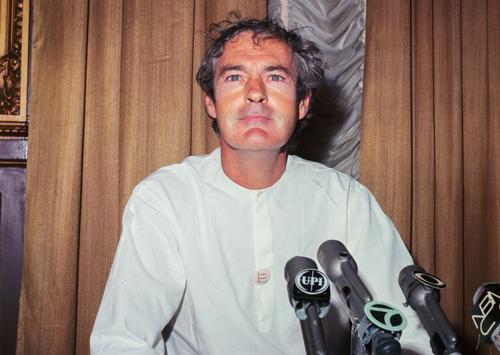
Timothy Leary talks with Studs Terkel ; part 1
Dec. 1, 1966 Interviewing Timothy Leary.
-
Tim Pat Coogan discusses his book "The IRA: A History"
Dec. 1, 1993 Author and historian Tim Pat Coogan talks about the history, culture, and division of Ireland. Coogan tells the backstory and summary of his book, "The IRA: A History." Later, he gives an in-depth view of the history, politics, and religion of the IRA and gives some ideas on how to fix the problems.
-
Tim Pat Coogan discusses his book "The IRA: A History"
Dec. 1, 1993 Author and historian Tim Pat Coogan talks about the history, culture, and division of Ireland. Coogan tells the backstory and summary of his book, "The IRA: A History." Later, he gives an in-depth view of the history, politics, and religion of the IRA and gives some ideas on how to fix the problems.
-
-
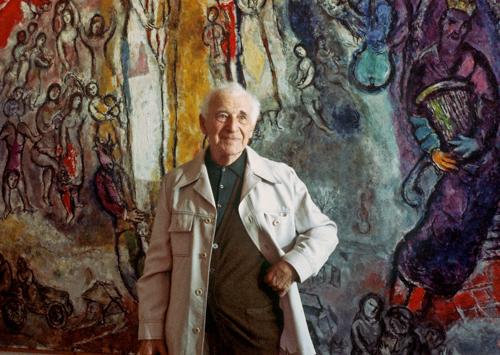
Through an interpreter, Marc Chagall discusses his approach to art and his views on people
1970 Professor John Nef explained that Marc Chagall came from an environment of nothing. From his dreams, Chagall created joy in his pieces of art. Nef lets the audience know that Chagall said he still has a lot of unfinished artwork to complete. The 3rd and last part of this program is a colloquy. Again, through another translator, Chagall’s words are translated. Chagall said his life’s purpose is art. Chagall said any man could be a bad artist but that no man can be an artist unless he is in fact, a good man.
-
Through an interpreter, Marc Chagall discusses his approach to art and his views on people
1970 Professor John Nef explained that Marc Chagall came from an environment of nothing. From his dreams, Chagall created joy in his pieces of art. Nef lets the audience know that Chagall said he still has a lot of unfinished artwork to complete. The 3rd and last part of this program is a colloquy. Again, through another translator, Chagall’s words are translated. Marc and Valentina Chagall speak French.
-
Three Vietman War veterans, Robert Black, Robert Johnson, Dr. Gordon Livingston, and Steve Perriman discuss the war, part 2
Nov. 13, 1973 Robert Black, Robert Johnson, Dr. Gordon Livingston, and Steve Perriman talk about the Vietnam War. All three are officers in the military and veterans of the Vietnam War. They discuss their lives before and after the war and the contradiction and changes that came after seeing the horrors of the Vietnam War.
-
Three Vietman War veterans, Robert Black, Robert Johnson and Dr. Gordon Livingston, discuss the war, part 1
Nov. 12, 1970 Robert Black, Robert Johnson, and Dr. Gordon Livingston talk about the Vietnam War. All three are officers in the military and veterans of the Vietnam War. They talk about the Tet offensive and the Battle of Hue in 1968, and the deplorable treatment of the Vietnamese people by the United States military . Upon returning they have chosen to become anti-Vietnam War because it is not a struggle to stop Communism so much as being a force of destruction.
-
Three residents of Newburgh, Indiana discusses their lives
The owner of the pool hall, Henry Chase, talks about how he was once a fisherman with 18 boats. With only a 6th grade education, Chase went straight into working at the mines and then into fishing. Chase explained it would be impossible to make a living from the Ohio river with fishing now. The 19-year-old man said he was a set-up man in a factory and he hoped to become an electrician one day. He explained that he's heard both good and bad things about Henry Chase.
-

Three employees from the Hanes factory in Galax, Virginia discuss their work environment
Oct. 28, 1982 Dorothy Andrers, Berlene Bernette, and Fay Williams talk about the rapid and repetitive work they do inspecting Hanes tee shirts. Without a union to protect them, the women said they are treated like animals. They all suffer from tendonitis but the company refuses to acknowledge that their suffering is from work on the job.
-
Thor Heyerdahl discusses his book "The Ra Expeditions" and his sailing adventures
Sep. 16, 1971 Thor Heyerdahl, an adventurer and ethnographer, discusses his newly published book, "The Ra Expeditions." He talks about his adventures sailing from Africa to South America on the ships "Ra" and "Ra II" which were made from papyrus. Heyerdahl explains the trial and error he had getting the papyrus reeds, building the ship, and sailing. Briefly the two discuss environmental concerns with the ocean. Heyerdahl also talks about ancient peoples and their cultures and technologies they used. Near the end of the interview Thor reads a passage of his book.