

-
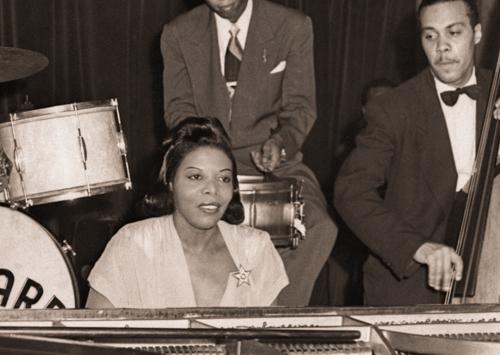
Mary Lou Williams and her manager Father Peter O'Brien discuss Williams' career
Sep. 15, 1978 Studs Terkel interviews Mary Lou Williams and her manager, Father Peter O'Brien. They discuss music, musicians, and instruments. Some clips of piano music playing at the end.
-

Terkel talks jazz with Teddy Wilson and John McDonough
Apr. 27, 1976 Studs Terkel and John McDonough talk with jazz pianist Teddy Wilson about his influences and career. Wilson was initially strongly influenced by Fats Waller and later came to highly admire Earl Hines. He adapted their clean and clear piano style to his own work. Wilson aspired to be a classical musician but felt he could not attain the performance level required because his time was spent in jazz. He was an original member of the Benny Goodman trio alongside both Goodman and Krupa. He was a part of the first inter racial group to play in public.
-

Sylvia Woods discusses her book "Teach Yourself to Play the Folk Harp"
Sep. 2, 1982 Syvia Woods, an American, and 1980 All Ireland Harp Competition winner sits down with Studs Terkel in a wonderful discussion on the history of the folk harp and plays a variety of selections. As a self taught folk harper, she has written a book "Teach Yourself to Play the Folk Harp" for the absolute beginner. She is known as a harper and not harpist because she doesn't play the orchestra harp. She also discusses her involvement musically in a documentary for PBS entitled "Chicago Secret Wilderness", produced by Mike Hirsh. The folk harp is also known as the celtic harp or Irish harp.
-
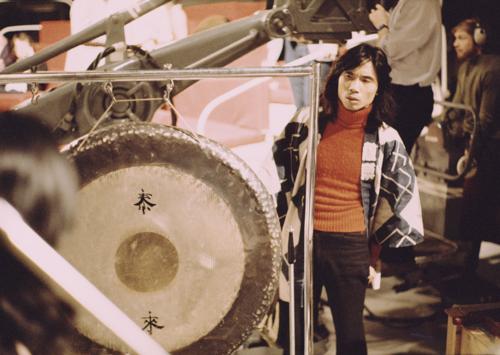
Studs Terkel interviews Japanese percussionist Stomu Yamash'ta
Jun. 24, 1969 The virtuoso percussionist, Stomu Yamash'ta, sits down with Studs Terkel and discusses from his heart how he creates the sound of his music. Sound is created in your head and heart. The ocean creates a different sound by day and night. Yamash'ta writes down his thoughts on the sounds he hears and creates the music. For the Akira Kurasawa film "YoJimbo" where he did solo musical work, he analyzed the character and what type of sound was in his mind and thought how to create it and convey that to his audience musically. Technology is not the answer to the development of sound.
-
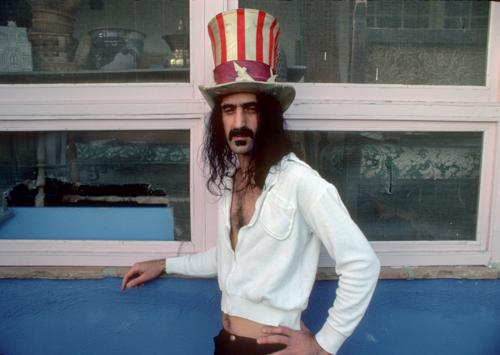
Discussing the music of the Mothers of Invention and interviewing Frank Zappa
Aug. 1, 1970 Discussing the music of the Mothers of Invention and interviewing Frank Zappa. Songs include "Who are the Brain Police," "Brown Shoes Don't Make It," "Concentration Moon," "Mom and Dad," "Bow Tie Daddy," "Harry, You're a Beast," "What's the Ugliest Part of Your Body?" "Trouble Every Day," "Very Distraughtening," "White Ugliness" and "There Will Come a Time."
-
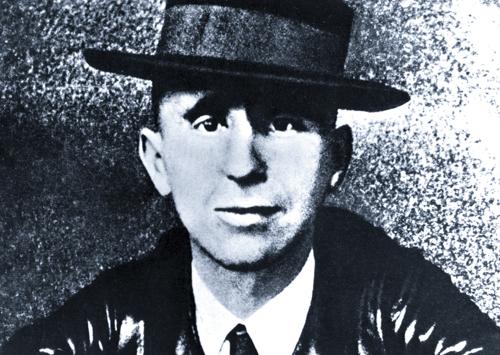
Frederick Ritter discusses Bertolt Brecht and philosophy of epic German theater with in studio performances
May. 3, 1962 Frederick Ritter discusses the life and work of playwright and poet Bertolt Brecht and preforms a few his songs. He also discusses the philosophy of epic theater and literature in Germany. Sabina Roupp joins Ritter with Brecht's music.
-
Jane Eaglen discusses her career as an opera performer
Mar. 26, 1996 Jan Eaglen, British soprano, discusses her career as an opera singer and trends in opera music.
-

Ray Still discusses his career with the Chicago Symphony Orchestra
May. 7, 1990 Interviewing Ray Still, first oboist and director of the Quadrangle Chamber Players, an ensemble of nine musicians from the Chicago Symphony Orchestra.
-
Donald Gramm discusses his career
Oct. 1, 1973 Donald Gramm discusses working with composers and comparing contemporary and classical opera. He also talks about his approaches to different performances and his experiences singing in multiple languages. Music is played throughout the interview and performances include his role as Creon from Stravinsky's "Oedipus Rex"and selections from Ned Rorem's "War Scenes": "As Adam", "O You Whom", "To You", "Look Down, Fair Moon", and "A Night Battle". Next, a performance as Leporello singing "Madamina, il catalogo è questo" from "Don Giovanni" and "Zwei Gesänge, Op. 1: I.
-
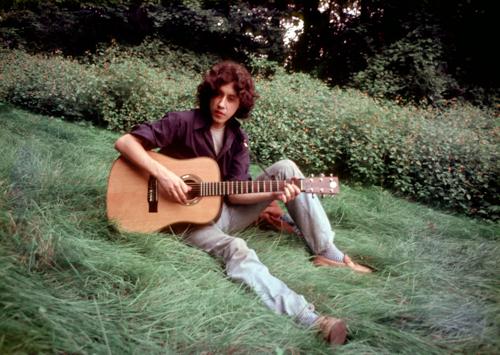
Arlo Guthrie discusses his career
Oct. 31, 1980 Arlo Guthrie discusses his approach to songwriting and how storytelling in song writing has changed. He also talks about what it's like to become known for performing works written by others. Arlo Guthrie's music is played and discussed throughout the interview: "Manzanillo Bay", "Week on the Rag", "Buffalo Skinners", "City of New Orleans", "Darkest Hour", "Massachusetts", and "Last Train to Glory". Music has been removed for copyright reasons.