Listen to New Voices on Studs Terkel our partnership with 826CHI-here! Read the Story


Showing 1 - 10 of 18 results
-

Charles E. Silberman and his wife Arlene Silberman discuss education
Sep. 15, 1970 Charles E. Silberman and his wife Arlene Silberman discuss education and Charles Silberman's book "Crisis in the Classroom". Includes a clip of Studs Terkel interviewing a student.
-
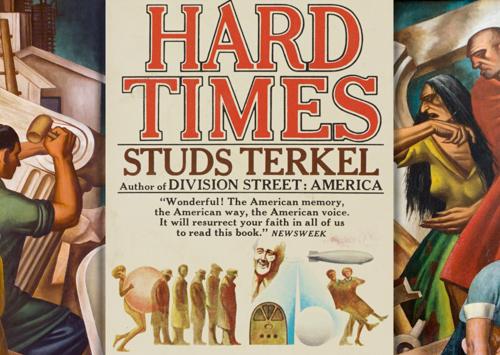
Inteviewees discuss a variety of topics from the Hard Times: an Oral History of the Great Depression program; excerpts part 1
Excerpts from different episodes of "Hard Times: an Oral History of the Great Depression". A Fairy Tale: Montage of young voices that talk about their parents' stories of surviving the Depression. The March: Jimmy Sheridan talks about what life was like on the rails as part of the Bonus March. Born Losers: Ed Paulsen discusses trying to find work in San Francisco and upon failing, marching to City Hall, which then led to rioting with the police. Hard Travelin': Pauline Kael remembers her mother feeding beggars that came to the back door.
-
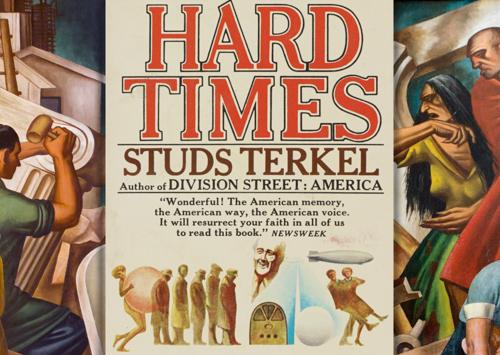
Inteviewees discuss a variety of topics from the Hard Times: an Oral History of the Great Depression program; excerpts part 2
Excerpts from different episodes of "Hard Times: an Oral History of the Great Depression". Bonnie Laboring Boy: Joe Morrison talks about generational differences in laborers. Evelyn Finn talks about trying to unionize at clothing factories. Two Strikes: Jose Yglesias talks about strikes in cigar factories and the lifelong stigmas of strikebreakers. Bob Stinson discusses working at General Motors and the sit-down strike. The Farmer is the Man: Oscar Heline explains farmer's actions in response to farm foreclosures.
-
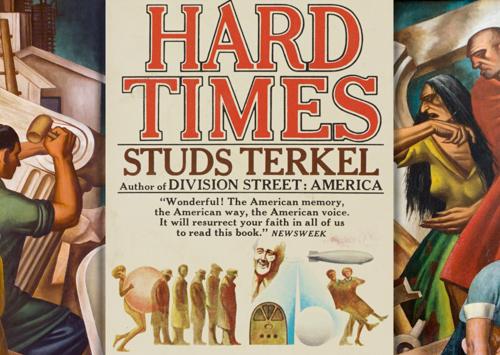
Terkel comments and presents "Hard Times: an Oral History of the Great Depression"; Chapter 3
1971 Presenting "Hard Times: An Oral History of the Great Depression" Chapter 3: Big Business & A Portrait of Two Women. William Benton credits Pepsodent's survival of the Great Depression to Amos 'n Andy. Arthur Robertson talks about the initial aftermath of the 1929 crash as a Wall Street businessman. Sidney Weinberg discusses the confusion on Wall Street after the crash and praises FDR's programs. Jimmy McPartland talks about the importance of working and the success of WPA to boost morale.
-
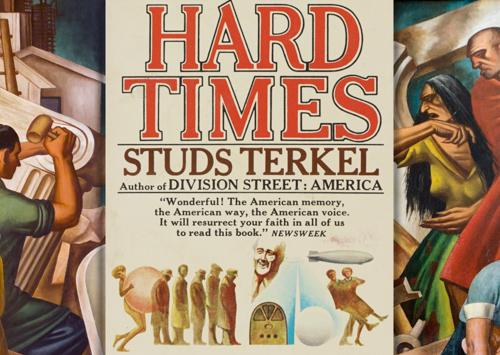
Terkel comments and presents "Hard Times: an Oral History of the Great Depression"; Chapter 9
1971 Presenting "Hard Times: An Oral History of the Great Depression" Chapter 9: God Bless the Child. In this section, interviewees are children that grew up during the Great Depression they talk about their experiences. Jane Yoder and her son Tom Yoder discuss the shame that can accompany poverty and the importance of warmth and food over all else. Bob Leary is a cab driver that talks about his father's lack of self-confidence even when able to find work. Daisy Singer remembers the need to keep up appearances.
-

Terkel comments and presents "A search for innocence" a monologue with Rose a teenager of St. Timothy Episcopal Church, Chicago
1970 Studs Terkel discusses life in the Vietnam era with children from Father Charles Pond's St. Timothy Episcopal Church Parish in Chicago. Rose is the featured speaker at 16 years of age she is no longer in school but is very well spoken. Acknowledging that people with mental illnesses are not always able to make sound decisions which are needed for individuals to make group decisions. She sees one of the problems in the world being that people are losing their individuality to a group mentality.
-
Del Close discusses hipsters and comedy
May. 15, 1970 Del Close discusses hipsters, what is hip, and comedy. Includes a clip of Del Close and his colleague John Brent from the beatnik satire "How to Speak Hip".
-
-
-