Listen to New Voices on Studs Terkel our partnership with 826CHI-here! Read the Story


Showing 291 - 300 of 427 results
-

Studs Terkel talks with Erich Lüth on his first hand experiences living in Hamburg through the rise and fall of Hitler ; part 1
1968 Erich Lüth discusses his experiences, observations, and accounts of life in Hamburg, Germany during the rise and fall of Hitler. He recounts how as a member of Parliament he brought in Hitler's, "Mein Kampf" and read portions aloud and was laughed at by his colleagues. He states they were blind to what Hitler declared in his book he would do and some are still blind by wanting to rub out their past, their history.
-

Erich Lüth talks with Studs Terkel on life under Hitler and its aftermath ; part 2
1968 Studs continues his interview with Erich Luth in Hamburg, Germany. The audio breaks at 25:23 and continues on a Sat at 25:28 till its conclusion at 35:43. Erich Luth conveys stories of humanity by both German prisoners towards Russian prisoners whose treatment was dictated by the Nazi party to not offer any winter clothing or shoes to provide comfort. The German laborers provided a human solidarity that brought them food, clothes, and soap.
-

Studs Terkel concludes his interview with Erich Lüth going more in depth on the aftermath of the war on Germany's youth ; part 4
1968 Erich Lüth's discussion with Studs Terkel is similar to part 3 but Luth offers a more in-depth conversation on the role of teachers in schools and how the time of Hitler is taught. There were those teachers that joined the party to continue their love of teaching and those teachers that were brought into the Nazi Party to follow their convictions. This lack of courage to resist influences pupils today because teachers are not saying they were cowards. The relationship is altered out of shame, and embarrassment.
-
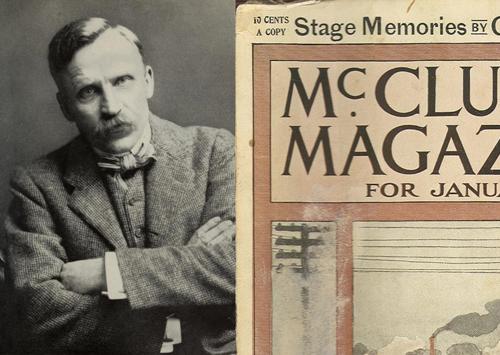
Peter Lyon discusses the book "Success Story: The Life and Times of S. S. McClure"
Aug. 1, 1967 Peter Lyon discusses the book "Success Story: The Life and Times of S. S. McClure." Includes recitation of "Immortality" by William Jennings Bryan.
-

Norman Mailer discusses the meaning and future of space exploration
Jan. 29, 1971 Norman Mailer discusses how recent trips to the moon fit into the American consciousness, technology and machines in modern life, individuality, and the future of space exploration. Studs and Mailer read excerpts from "Fire on the Moon."
-

Soviet intellectuals discuss Soviet arts and culture
May. 28, 1962 Soviet intellectuals Tamara Mamedova, Nicolai Pogodin, and Anatol Safronov talk with Studs Terkel about their work with the Institute for Soviet-American Relations (U.S.) and Soviet arts and culture.
-
Interviewing Vincent Canby
Mar. 28, 1975 Long-time film critic Vincent Canby talks about his first novel, Living Quarters, which explores the impermanence of life.*Please note: some sections have been edited out from the original recording due to copyright considerations
-
A discussion with Sarah Hobson
Sep. 24, 1979 The British journalist and travel writer discusses her book, Masquerade: Adventure in Iran. In her research, she traveled the country while disguised as a man. She felt that it allowed her more of an ability to blend into the surroundings.*Please note: some sections have been edited out from the original recording due to copyright considerations
-

Mike Royko and Herman Kogan interview Studs Terkel
Jan. 16, 1967 In a rare turn of events, Mike Royko and Herman Kogan interview Studs Terkel about his book, "Division Street: America." Kogan is in awe of how Studs was able to get people to talk to him and give in-depth interviews. When asked by Royko, "What would you do if you were God?", Studs answered that he'd let man be man.
-
Interviewing Jessica Mitford
May. 17, 1979 The English journalist and social critic discusses her life and her work as a muckraker. Her book, Poison Penmanship: The Gentle Art of Muckraking, collects some of her most well-known essays and can also serve as a manual for investigative journalists.*Please note: some sections have been edited out from the original recording due to copyright considerations