Listen to New Voices on Studs Terkel our partnership with 826CHI-here! Read the Story


Showing 81 - 90 of 1040 results
-
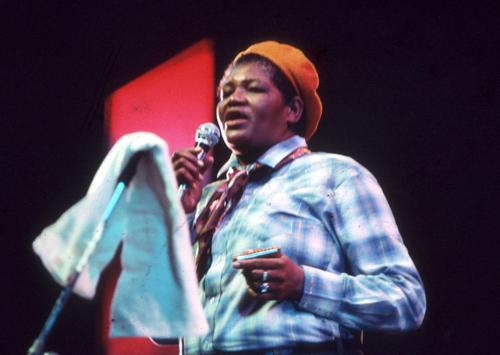
Willie Dixon, Sunnyland Slim and Big Mama Thornton discuss their careers in the blues and describe some of their songs
1970 Studs interviews blues singers Willie Dixon, Sunnyland Slim, and Willie Mae Big Mama Thornton about the blues. They discuss the blues festival in Chicago for which they are all in town for and name other musicians who will be performing. Sunnyland Slim talks about being on the road and the hard times. Thornton describes the blues as music made from life experiences.
-

George Esteves discusses the music that will be performed by the Chicago Chamber Choir in the Mother's Day concert
Apr. 17, 1980 Studs interviews George Esteves, the director of the Chicago Chamber Choir. They discuss the musical numbers that the choir will perform in their Mother's Day concert. Dexter Bailey will accompany. Esteves reads the lyrics in Italian of "Ecco Mormorar L'Onde" a Torquato Tasso poem, and Studs reads it in English. Esteves also reads some lyrics of the "Contate Irene Kiesewetter" by Schubert Franz. Esteves shares how members of the choir are recruited. Esteves names all the soloist members of the choir.
-
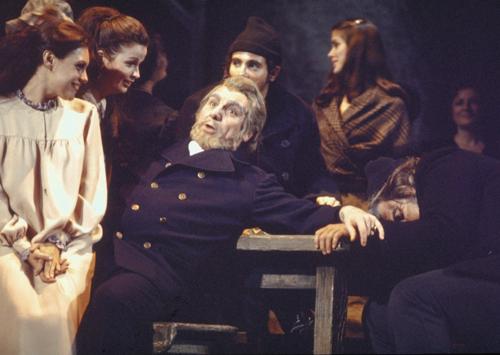
Sir Geraint Evans discusses his career as an operatic performer
Oct. 2, 1974 Sir Geraint Evans discusses opera and his time as a performer. Includes an in-depth discussion of the opera Peter Grimes.
-
Lukas Foss discusses his career as a composer of classical music and conductor of the Milwaukee Symphony Orchestra
Mar. 14, 1983 Studs interviews Lukas Foss about his career as a classical composer and conductor. Foss talks about his work with the Milwaukee Symphony Orchestra. He reflects on how teachers influenced his career and how he learns from each orchestra that he works with. He shares his love for poetry and explains how he makes music from poems and uses "Thirteen Ways of Looking at a Blackbird," a poem by Wallace Stevens, to illustrate. They discuss how Foss composes and how it is very similar to the way Jazz is composed with improvisation.
-
Lawrence (Bud) Freeman discusses his career as a tenor sax jazz musician
Dec. 1, 1980 Studs interviews Bud Freeman about his career in Jazz and his book, "Working" as well as his album, "Complete Bud Freeman." Freeman shares stories about his dad and brother during his childhood. He discusses various songs from his album and shares stories about his interactions with other jazz musicians. Studs reads a few passages from Freeman's book. They discuss how Freeman's creative practices and how his music has changed over the years. Musical pieces are removed from this edited version of the original recording.
-
Lawrence (Bud) Freeman discusses his career as a jazz tenor sax player and his album "Complete Bud Freeman"
Apr. 15, 1982 Studs interviews Lawrence Freeman about his career in jazz. Studs notes that he first interviewed Freeman in 1939 as his first guest on his radio program with WGES. Freeman shares the names and events of influences in his life. He describes his interactions with other jazz musicians throughout his career and shares some stories about his brother, father, and childhood. Studs quotes Mark Miller of the Toronto Globe, music critic, for what he notes about Freeman.
-

Mirella Freni discusses her career
Oct. 10, 1979 Mirella Freni discusses her career, her colleagues, and opera.
-
Phyl Garland discusses her book "Sound of Soul" and the history of black music in America ; part 2
Nov. 25, 1968 Studs interviews Phyl Garland about her book "Sound of Soul." They discuss various musicians that she mentions in her book and their influence on black music. Garland explains the music of young black artists and how commercialization of music gave blacks an opportunity that they would not have had otherwise. Garland talks about how Fannie Lou Hamer used music to express her message in the Civil Rights Movement and as a women's rights activist. Studs and Garland discuss various black female artists and their music.
-
Oscar Ghiglia discusses the history of classical guitar music in different cultures
Feb. 14, 1977 Oscar Ghiglia discusses studying under Andres Segovia and reviews different types of guitars and composers through history, including Weiss, Villa-Lobos, and Scarlatti. Music is played throughout: "Prelude, Fugue and Allegro in E-Flat Major, BWV 998 (Arr. for Guitar) : I. Prelude" composed by J.S. Bach, "Canarios (Air De Danse)","La Maja De Goya", "Fantasia in E-Minor" composed by S.L. Weiss, "Five Preludes, W. 419: No. 1 in E Minor (Andantino expressivo)" composed by Heitor Villa-Lobos, "Sonata In G, L.79" composed by Domenico Scarlatti, and "Tarantella, Op.
-
Interview with Jeremy Taylor, Andrew Tracey and Paul Tracey
1963 Interviewing Jeremy Taylor, Andrew Tracey and Paul Tracey in conversation and song (parts 2 and 3) while Studs was in South Africa.