

-
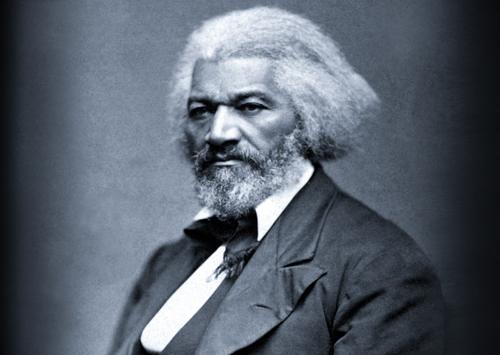
Studs Terkel presents a program in honor of the birthday of abolitionist and African American leader Frederick Douglass
Feb. 15, 1971 Studs Terkel presents a program in honor of the birthday of abolitionist and African American leader Frederick Douglass, including excepts from Terkel's 1964 interview with African-American scholar, author and social historian Lerone Bennett. Terkel reads at length from Douglass' autobiography, "My Bondage and My Freedom," focusing on Douglass' interactions with slave owners Hugh and Sophia Auld.
-

Studs Terkel presents a performance of the Rhos Welsh Choir
Aug. 23, 1988 Terkel comments and presents musical performance by the Rhos Welsh Choir
-
-
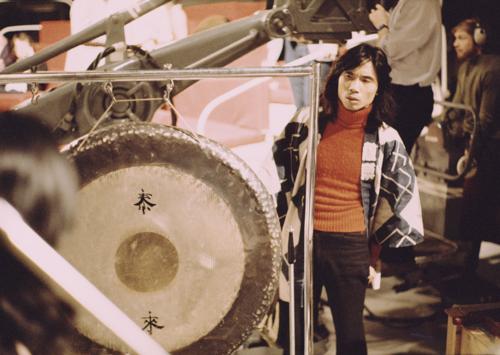
Studs Terkel interviews Japanese percussionist Stomu Yamash'ta
Jun. 24, 1969 The virtuoso percussionist, Stomu Yamash'ta, sits down with Studs Terkel and discusses from his heart how he creates the sound of his music. Sound is created in your head and heart. The ocean creates a different sound by day and night. Yamash'ta writes down his thoughts on the sounds he hears and creates the music. For the Akira Kurasawa film "YoJimbo" where he did solo musical work, he analyzed the character and what type of sound was in his mind and thought how to create it and convey that to his audience musically. Technology is not the answer to the development of sound.
-
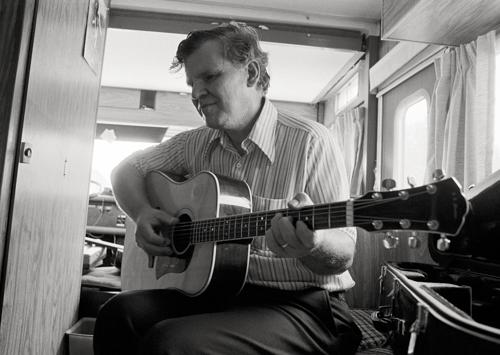
Studs Terkel interviews Doc Watson about his music career
Dec. 10, 1971 Studs Terkel interviews Doc Watson about his music career. The interview includes recordings and live sections of different songs that have shaped his career.
-
-
Studs Terkel in conversation with Buffy Sainte-Marie
Apr. 21, 1972 Studs Terkel interviews Canadian singer-songwriter Buffy Sainte-Marie.
-
Studs Terkel discusses, through music, inventions that made the lives of men and women easier
Jun. 10, 1988 Songs include "Hello, Frisco" sung by Sam Ash and Elida Morris; "He'd Have to Get Under - Get Out and Get Under (To Fix Up His Automobile)" sung by Will Halley; "Come Josephine in my Flying Machine" sung by Blanche Ring; "Jay Gould's Daughter" sung by Ed McCurdy; "Mr.
-
Studs Terkel discusses the WPA Arts Project
Sep. 14, 1989 The influence of the WPA on the music of the 1930's. The heroic sounds heard in song, movies, and theater. He provides Bing Crosby's version of Yip Harburg's "Brother Can You Spare a Dime". As well as the Almanac Singers performing "Roll the Union On". Both Moll's Song and the final scene of Blitzstein's, "The Cradle Will Rock" are performed. Terkel provides a host of other songs which highlight the music of the 1930's. Extensive discussion on "The Cradle Will Rock" with its producer John Houseman.
-
Studs Terkel discusses the songs by Steve Goodman and songwriter John Prine
Jul. 29, 1975 Studs Terkel comments on folk music entertainers Stever Goodman and John Prine. He discusses a little about their life and names a variety of their song titles. The musical performances have been erased from this edited version of the recording. Includes an excerpt from a previous interview with John Prine who speaks about his grandfather and a song he wrote about him.
-
Studs Terkel discusses the global status of theater with Croatian director Vlado Habunek
Apr. 25, 1962 Vlado Habunek, the Director of The Croatian National Theater, also a teacher at the University of Zagreb and board member for the Debrovnik Summer Festival discusses how all arts are seeking new revelations with Studs Terkel. Terkel asks Habunek to compare American Actors with Croatian actors because they are subsidized by the state. He sees Croatian actors as too secure and admires the ambition of American actors. The fact that theater reflects life and life is difficult begins a discussion on the status of theater today.
-
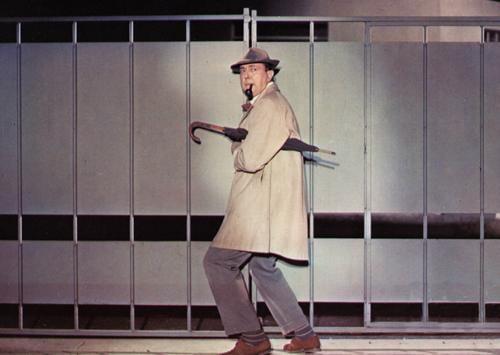
Studs Terkel discusses the film "Mon Oncle"with creator Jacques Tati
Dec. 12, 1958 Studs Terkel reintroduces this 1958 broadcast with Jacques Tati in a 1992 rebroadcast. At 39:06, Terkel includes a musical epilogue to the conversation with Jacques Tati with French children's songs such as "Cadet Rousselle". Tati discusses his films "Mr. Hulot's Holiday" and" Mon Oncle" and his emphasis as writer, director, actor, and producer to maintain a naturalness. He doesn't want lights, cameras or action to influence the actors. Naturalness will respect independence and keeping it simple and real will create pride and invite people in.
-
Studs Terkel discusses songs about domestic violence against women
Aug. 5, 1981 Terkel presents songs that discuss the subject of domestic violence against women. Songs range from ballads in musicals, to jazz torch songs, to popular music at the time.
-
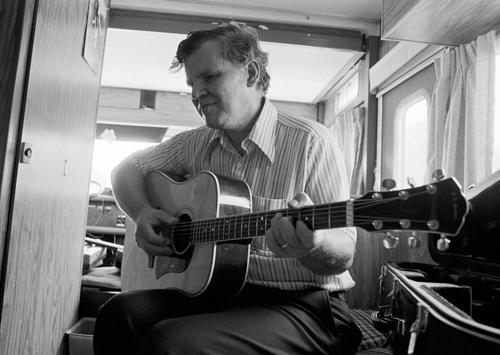
Studs Terkel discusses folk music with Doc Watson
Feb. 20, 1969 Studs Terkel interviews and discusses the history and cultural significance of folk music with Doc Watson. Topics include Watson's personal history and biography, the origins of some of the songs he sings, sacred music.
-
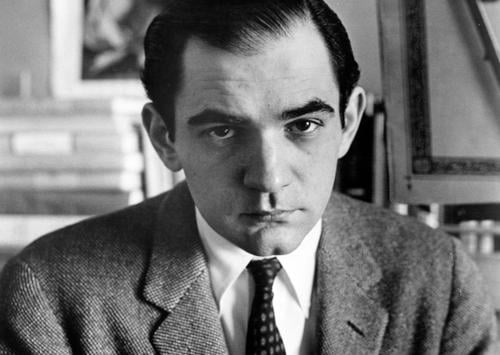
Studs Terkel discusses contemporary American music with composer and trombonist Bill Russo
May. 18, 1983 Discussing the origins of three schools of contemporary American music, their influence upon each other, and the new directions composers are taking with their music with composer and trombonist Bill Russo.