

-

Tavern owner Eva Barnes discusses her life experiences
1968 Content Warning: This conversation has the presence of outdated, biased, offensive language. Rather than remove this content, we present it in the context of twentieth-century social history to acknowledge and learn from its impact and to inspire awareness and discussion. In the 2nd of 4 parts of "Division Street: America," Eva Barnes talks about her background. Barnes recalls when she was little, her family was poor and they had to move from place to place.
-
Talking with and presenting a retrospective of the work of folksinger, guitarist, and labor activist Win Stracke
May. 19, 1983 While reminiscing about their 46-year friendship, Studs Terkel presents of retrospective of Win Stracke's work. Stracke said he was surprised that Studs hadn't outgrown their friendship. A few excerpts from past interviews are included in this interview.
-
Talking about Chicago's night life, with Rick Kogan
Dec. 11, 1979 The Chicago newspaperman gives Studs some insight into what's happening in the city's many taverns, folk clubs, and blues bars, as further described in his book, Dr. Night Life's Chicago: An Intimate & Informative Guide to the City's Best Entertainment.*Please note: some sections have been edited out from the original recording due to copyright considerations
-
Sydney Lewis reads from and discusses her book "Hospital"
Jan. 31, 1995 "Hospital: An Oral History of Cook County Hospital" covers what was once the largest public hospital in the United States. With 6,000 employees, Sydney Lewis learned that County Hospital was a small city onto itself. One may have a long wait at the hospital, but Lewis found because of it's good health care, there was a kind of a loyalty toward County. With Chicago and its diversity, it was good for the people to see African American doctors and nurses that were Black and brown, too.
-
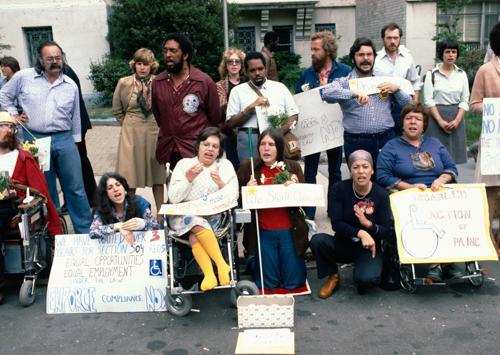
Susan Nussbaum and Michael Pachovas discuss the Disabled Americans Freedom Rally with Studs Terkel
Feb. 28, 1981 Susan Nussbaum, founder of Access Living and Michael Pachovas founder of Disabled Prisoners Program discuss the upcoming Disabled Americans Freedom Rally in the backdrop of the International Year of the Disabled Persons and President Reagan's budget cuts. Society needs to understand that expenditures are required to secure the rights of disabled people to live active, productive lives. They need to be able to get out of their apartment buildings or homes, travel on sidewalks and ride buses. That may require access ramps, working elevators, cut curbs, and hydraulic buses to lower steps.
-
Studs visits the Illinois Institute of Technology to view student work about Vietnam
May. 24, 1970 Interviewing guests at the Institute of Design memorial in Crown Hall on the campus of the Illinois Institute of Technology. The student work on view is a collaboration between the Schools of Architecture and Planning, and the Institute of Design.
-
Studs Terkel talks with members of the Mattachine Midwest organization
Feb. 19, 1970 Content Warning: This conversation includes racially and/or culturally derogatory language and/or negative depictions of Black and Indigenous people of color, women, and LGBTQI+ individuals. Rather than remove this content, we present it in the context of twentieth-century social history to acknowledge and learn from its impact and to inspire awareness and discussion. Discussing homosexuality and American society and interviewing members of the Mattachine Midwest organization: Jim Bradford, Valerie Taylor (pen name of Velma N. Tate, 1913-1997), and Henry Weimhoff.
-
Studs Terkel joins the Evanston Township High Schools' "The spirit of soul" with musical director Avon Gillespie
1970 Studs Terkel listens in on Evanston Township High Schools', soul choral group, "The Spirit of Soul" as they rehearse for an upcoming concert. Musical director, Avon Gillespie, describes how the vocal improvisation of "The Spirit of Soul" singers brings an on the spot sense of joy. This reflection of African Heritage through song closes the gap between Africa and American shores and teaches Black people that their heritage is real, alive, and strong!
-

Studs Terkel interviews Curtiss Brooks, Jane Weston and Philip Hauser on the status of Blacks and housing, jobs and education in Chicago ; part 4
1965 Discussing "Discrimination in metropolitan Chicago" with Curtiss Brooks, employment specialist, Chicago Urban League, Jane Weston, housing specialist, American Friends Service Committee, and Philip Hauser, Sociology Department of University of Chicago. Brooks, Weston and Hauser provide data, reports and statistics to debunk the myths concerning the Black market for housing in Chicago. Weston states that public attitudes have changed and Real Estate must listen and accommodate open occupancy. Another myth that is discussed is that property values will go down if Blacks move in.
-

Studs Terkel interviews author Sandra Cisneros
Jun. 30, 1991 Sandra Cisneros recounts the creation of her works from her new release "Woman Hollering Creek and Other Stories" as well as "House on Mango Street". The following have been removed due to copyright restrictions: "Eleven", "Mexican Movies", "Eyes of Zapata", "Bien Pretty" and "One Holy Night". From "House on Mango Street" she reads "A Smart Cookie", "Hips", "My Name", and "Mi Tocayo," "Those Who Don't."
-
-
Studs Terkel gets reactions on the upcoming destruction of McLaren school and a newly created mural by the school children
Jul. 20, 1978 Studs Terkel returns to his alma mater, McLaren school, prior to its destruction to gain reactions on the loss of a newly created mural by the school children. Terkel provides the reactions of the student artists who can't understand why they were told to complete the oceanography mural when it was to be destroyed with the building. He also talks with parents, teachers and administrators about this loss. Parents pledge $500 to create negatives of mural to save as photographs.
-
Studs Terkel discusses use of the drug Cylert (Pemoline) with Richard Kasperson and Robert Janicki of Abbott Labs
Feb. 23, 1976 Studs Terkel interviews two representatives from Abbott Laboratories: Richard Kasperson, V.P. of corporate regulatory affairs, and Dr. Robert Janicki, V.P. of corporate clinical research. The topic of conversation is the prescribed use of Cylert, which was a trade name for the drug Pemoline. Cylert was used to treat attention-deficit hyperactivity disorder (ADHD) and narcolepsy. Janicki and Kasperson respond to claims that the drug was overprescribed to school-aged children.
-
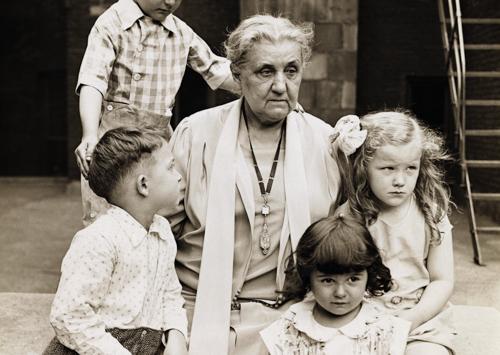
Studs Terkel discusses the life of Hull House founder, Jane Addams with her grand niece, Mrs. John B. Allen
Jul. 1, 1960 Mrs. John B. Allen recalls stories from Jane Addams' "The Long Road of Woman's Memory" and "Twenty Years at Hull House". She also recounts her own personal stories of Thanksgiving and Christmas at Hull House as well as her own volunteer service with The Immigrants Protective League. Jane Addams advocated for shorter hours, child labor laws, women's suffrage, youth, and peace. She prejudged no one and saw individuals as having various needs, desires, and each with their own gifts. She found reassurance that life is good through the spirit of youth. This interview ends at 45:03.
-

Studs Terkel discusses the history of Chicago architecture and its future with Carl Condit, Richard Nickel, and Ben Weese
1957 Studs Terkel rebroadcasts a discussion on the Chicago School of Architecture and its future in memory of Carl Condit. Carl Condit, Richard Nickel, and Ben Weese share their opinions on the Auditorium Theatre, University of Illinois-Circle Campus, Chicago Civic Center, Monadnock Building, and historical continuity.