Listen to New Voices on Studs Terkel our partnership with 826CHI-here! Read the Story


Showing 166 - 180 of 271 results
-

Interview with Johnny, Frankie, Paul and Fred Christy ; part 1
1968 Interviewing Johnny, Frankie, Paul and Fred Christy. This interview is done in two parts.
-
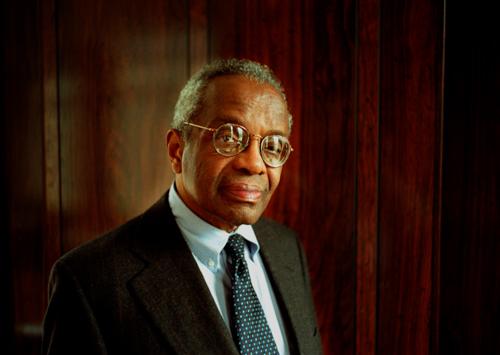
Interview with Derrick Bell
Oct. 25, 1967 Interviewing lawyer, activist and author Derrick Bell.
-
Interview with City Lit cast members
Dec. 29, 1982 Discussing the play "A solo song for Doc" by James Allan MacPherson and interviewing cast members of City Lit, Joseph Moore, Chuck Smith and Ernest Perry.
-
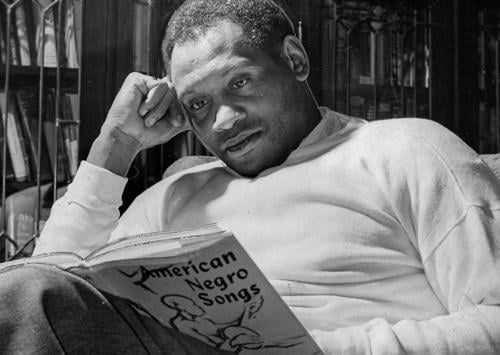
Interview with Avery Brooks
Feb. 7, 1991 Discussing Paul Robeson with actor, teacher, and musician Avery Brooks.
-
Horace Cayton discusses is book "Long Old Road" ; part 3
Sep. 7, 1966 Content Warning: This conversation includes racially and/or culturally derogatory language and/or negative depictions of Black and Indigenous people of color, women, and LGBTQI+ individuals. Rather than remove this content, we present it in the context of twentieth-century social history to acknowledge and learn from its impact and to inspire awareness and discussion.
-
Horace Cayton discusses his book "Long Old Road" ; part 2
Sep. 7, 1966 Content Warning: This conversation has the presence of outdated, biased, offensive language. Rather than remove this content, we present it in the context of twentieth-century social history to acknowledge and learn from its impact and to inspire awareness and discussion. Loneliness and hardships of both fitting in and finding a job are covered in the continuation of Horace Cayton's, "Long Old Road: An Autobiography." By living in a middle class home in Seattle with a full time Japanese servant, Cayton was seen as better off than most people.
-
Horace Cayton discusses his book "Long Old Road" ; part 1
Sep. 7, 1966 Content Warning: This conversation includes racially and/or culturally derogatory language and/or negative depictions of Black and Indigenous people of color, women, and LGBTQI+ individuals. Rather than remove this content, we present it in the context of twentieth-century social history to acknowledge and learn from its impact and to inspire awareness and discussion. In "Long Old Road: An Autobiography," Horace Cayton talks about growing up in Seattle in a well to do, mostly white neighborhood. Cayton's grandfather was the first Black man elected to the U.S.
-
Henry Louis Gates, Jr. discusses race and the magazine "Critical Inquiry"
Jan. 24, 1986 As the guest editor of “Critical Inquiry,” Henry Louis Gates, Jr. covered the importance of Black writers and their contributions. Because there is no color blindness is the western world, explained Gates, pointing out that one is a Black writer or a Black doctor is important to society. Gates also covers the issue of race not being solely about Black and white people but rather it has to do with multi-ethnic and multi-cultural people.
-
Harry Belafonte discusses jazz and folk music ; part 2
Jan. 6, 1955 The conversation continues with Belafonte talking about his album, "Belafonte Sings of the Caribbean". The songs, explained Belafonte, were both reflections of his childhood and things he was exposed to as an adult. Belafonte believed both Louis Armstrong and Jack Teagarden played important roles in jazz music.
-
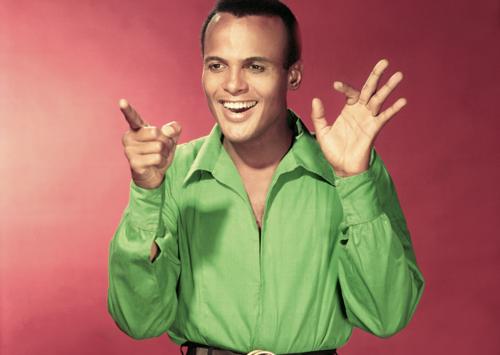
Harry Belafonte discusses jazz and folk music ; part 1
Jan. 6, 1955 Singer Harry Belafonte discusses Black music including spirituals and jazz and how it has contributed to American culture.
-
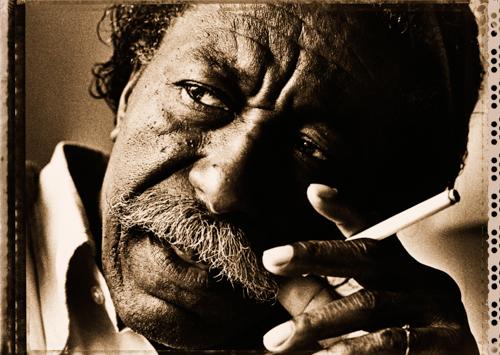
Gordon Parks discusses his book "Shannon"
Sep. 10, 1981 Discussing the book "Shannon" with the author Gordon Parks.
-
-
-
Gloria Wade-Gayles discusses her book “Pushed Back to Strength: A Black Woman’s Journey Home”
Dec. 3, 1993 Author and poet Gloria Wade-Gayles discusses and reads from her book “Pushed Back to Strength: A Black Woman’s Journey Home,” a collection of essays about race, faith, and family. She discusses how the title of the book was inspired by a phrase her grandmother used to say in which she acknowledges how segregation was pushing her back to her family, to community; pushing her back to strength, stories, ritual, and safety. Studs plays “God Bless the Child” - Billie Holiday (1956), "Wade In The Water" - Brother John Sellers (1960), and "Medley of Spiritual" - Belleville A Cappella Choir.
-
Gilbert Moses discusses The Free Southern Theater and his play "Blues for Mister Charlie" with Studs Terkel ; part 2
Aug. 10, 1966 Studs interviews Gilbert Moses about his play, "Blues for Mister Charlie" and The Free Southern Theater. They discuss a variety of plays that include, "White America," "Roots," and "Blues of Mister Charlie."