

-

Win Stracke discusses other musicians he's known
Jun. 22, 1979 Changing up the conversation, Win Stracke talks about artists he's admired like Bill Broonzy and Jim Post. According to Stracke, although Broonzy was a blues musician, he liked humor found in songs. Stracke said he really liked Jim Post, who singled out people who were the best at what they did. As a result, Post asked Stracke to record an album of hymns with him.
-
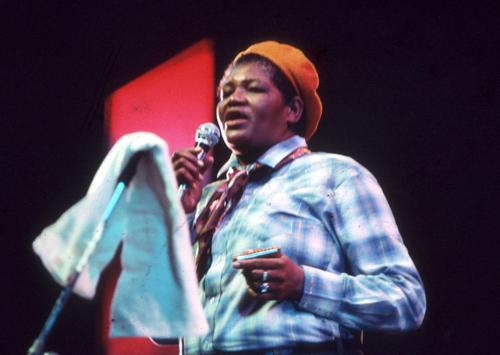
Willie Dixon, Sunnyland Slim and Big Mama Thornton discuss their careers in the blues and describe some of their songs
1970 Studs interviews blues singers Willie Dixon, Sunnyland Slim, and Willie Mae Big Mama Thornton about the blues. They discuss the blues festival in Chicago for which they are all in town for and name other musicians who will be performing. Sunnyland Slim talks about being on the road and the hard times. Thornton describes the blues as music made from life experiences.
-
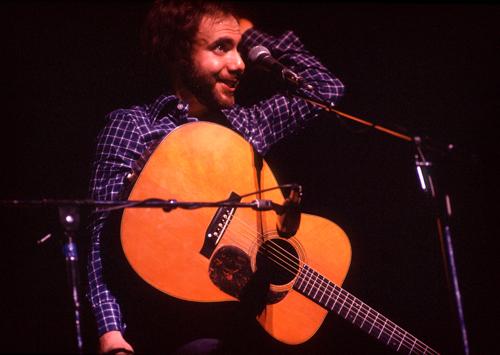
Steve Goodman discusses his album "Words We Can Dance To"
Apr. 30, 1976 Studs Terkel presents a “musical portrait” of Steve Goodman with the musician joining him in the studio to discuss, listen to, and play songs from his album “Words We Can Dance To.” Goodman begins by performing the blues song “Glory of Love,” and Terkel plays a clip from Big Bill Broonzy’s rendition of the song; Goodman cites Big Bill as one of his many influences. Goodman also plays an old jazz song called “When the Red, Red Robin,” with Terkel connecting that song to his first memories of jazz.
-
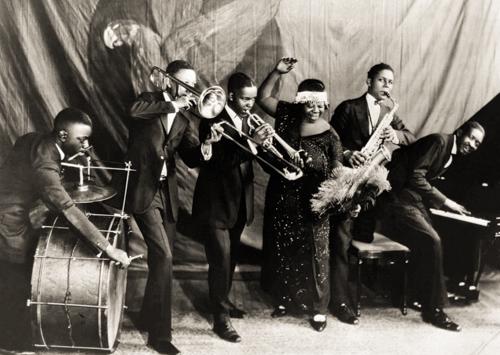
Sandra Lieb discusses the book "Mother of the Blues: A Study of Ma Rainey"
Jan. 12, 1982 Sandra Lieb discusses the book "Mother of the Blues: A Study of Ma Rainey." Includes songs sung by Ma Rainey such as "Runaway Blues," "See See Rider," "Moonshine Blues," and "Oh, Papa Blues." Includes poem "Ma Rainey" by Sterling Brown. Includes "Oh, Daddy," by Ethel Waters. Includes "Young Woman's Blues" by Bessie Smith.
-
Phyl Garland discusses themes from her book "Sound of Soul" and the black influence on music ; part 1
Nov. 25, 1968 Studs interviews Phyl Garland about her book "Sound of Soul." They discuss the history of music and how black music influenced white music. Studs reads a quote from her book where she quoted Lerone Bennett. Garland also reads from her book a few times. They discuss how music changed over time for blacks from spirituals to slave songs to the blues because it was a reflection of their lives. Garland explains how blacks used music to help them through their trials and frustrations.
-
Maya Angelou discusses her early life and African American culture and people
Apr. 1, 1960 Angelou discusses: her early life; her international travels; dancing; blues and jazz music; and the book "Youngblood" by John Oliver Killens. In this program "In the Evening (When the Sun Goes Down)" and "Joe Turner No. 2 (Blues of 1892)" by Big Bill Broonzy, "I Ain't Gonna Pick No More Cotton" by Sam Lightnin' Hopkins is played, as well as other musical selections.
-
Maya Angelou discusses her early life and African American culture and people
Apr. 1, 1960 Angelou discusses: her early life; her international travels; dancing; blues and jazz music; and the book "Youngblood" by John Oliver Killens. Musical selections have been removed due to copyright.
-
Mary Collins discusses her husband, Lee Collins, autobiography “Oh, Didn’t He Ramble” and his career as a Jazz musician
Sep. 3, 1974 Studs interviews Mary Collins about her husband, Lee Collins. They discuss the book that she and Lee wrote together until his death in 1960. Mary shares interesting stories of Lee’s experiences when he toured. She and Studs reflect on the other artists that Lee Collins worked with and those that influenced his music. Mary shares the story of how she and Lee reconnected in Chicago. She explains how Lee’s depression because of his health led to his attempted suicide and the horrible way he was treated at the psychiatric hospital.
-
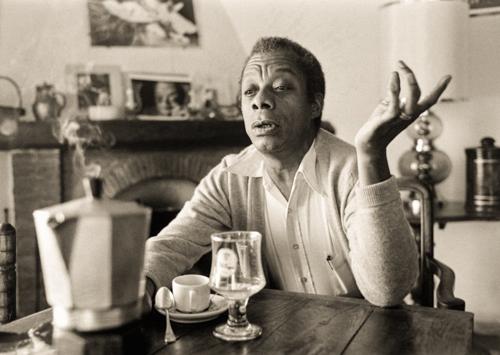
James Baldwin discusses his book," Nobody knows my name: more notes of a native son"
Jul. 15, 1961 Interviewing novelist and fighter for civil rights for all, James Baldwin and discussion on the book "Nobody Knows My Name more notes of a native son". They discuss the book and Mr. Baldwin's political beliefs and his work towards change in the civil rights movement.
-
-
Horace Cayton discusses his book "Long Old Road" ; part 2
Sep. 7, 1966 Content Warning: This conversation has the presence of outdated, biased, offensive language. Rather than remove this content, we present it in the context of twentieth-century social history to acknowledge and learn from its impact and to inspire awareness and discussion. Loneliness and hardships of both fitting in and finding a job are covered in the continuation of Horace Cayton's, "Long Old Road: An Autobiography." By living in a middle class home in Seattle with a full time Japanese servant, Cayton was seen as better off than most people.
-
Gana M'Bow discusses Senegalese folk music
Oct. 1, 1965 In addition to talking about Senegalese music, Gana M'Bow goes over the history of the "talking drum." M'Bow also plays various songs from Senegal and West Africa. Through the State Department, M'Bow was touring various cities across the US.
-
Fela Sowande discusses his career and Nigerian music ; part 2
Jul. 3, 1962 Fela Sowande discusses his career, different types of Nigerian and African music, the Yoruba people, and religion. Includes clips of an African Yoruba pagan hymn "Oyigiyigi," a Christian version of that hymn, and an organ version of that hymn. Includes Sowande's song "Roll de Ol' Chariot." Quotes a poem by [Anthony Gregascoigne], an English poet he met in England.
-
Eulogy for three non-adjusted men: Big Bill Broonzy, John Ciardi's father and Robert Redfield
Feb. 6, 1959 Terkel comments and presents a eulogy for three non-adjusted men. Broonzy, Big Bill ; Ciardi, John ; Redfield, Robert
-
Elegy for three non-adjusted men: Big Bill Broonzy, John Ciardi and Robert Redfield ; part 2
Feb. 6, 1959 Terkel comments and presents a eulogy for three non-adjusted men. Broonzy, Big Bill ; Ciardi, John ; Redfield, Robert