Listen to New Voices on Studs Terkel our partnership with 826CHI-here! Read the Story


-

Marlon Brando discusses his views on mankind ; part 1
Apr. 19, 1963 Content Warning: This conversation includes racially and/or culturally derogatory language and/or negative depictions of Black and Indigenous people of color, women, and LGBTQI+ individuals. Rather than remove this content, we present it in the context of twentieth-century social history to acknowledge and learn from its impact and to inspire awareness and discussion. Self-righteousness and values are topics covered by Marlon Brando. Here in the states, Brando said, we are living a dream. We do not want strife in our lives, and yet he says it seems as though we seek it.
-
Margaret Webster discusses Shakespeare and his plays
Apr. 21, 1961 American-British actress Margaret Webster, talks about the unsophisticated audience members that go to see plays by Shakespeare. Upon seeing a play, they're afraid to go at first but once they are there, they realize how much they are truly enjoying themselves.
-
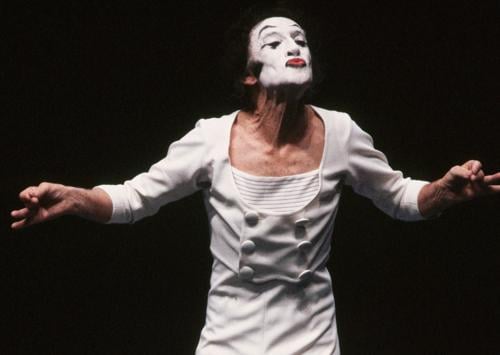
Marcel Marceau talks with Studs Terkel
Oct. 6, 1960 French actor and mime Marcel Marceau discusses the art of pantomime and many of his performances including "The Overcoat" by Gogol and "The Mask Maker". Marceau also discusses the history of pantomime, his inspirations, and how he came to be a mime.
-
Marcel Marceau discusses the art of mime ; part 2
Mar. 21, 1973 Marcel Marceau, world renown mime, talks about when he performed in prisons in France, Germany, and Chicago, including death row inmates who he could not see. He also discusses moments where he met famous silent actors such as Charlie Chaplin, Harpo Marx, and Stan Laurel. They then discuss childhood and aging. Content Warning: This conversation has the presence of outdated, biased, offensive language. Rather than remove this content, we present it in the context of twentieth-century social history to acknowledge and learn from its impact and to inspire awareness and discussion.
-
Marcel Marceau discusses the art of mime ; part 2
Feb. 1, 1982 Marcel Marceau, a French mime, discusses the art behind mime including silence, humanity, and astonishment. Parts of an earlier interview with Marceau are also played.
-
Marcel Marceau discusses the art of mime ; part 1
1970 Marcel Marceau, world renown mine, discusses the art and history of pantomime. Marceau talks about mime throughout history from Ancient Rome to the 20th century. He discusses some well-known mimes such as Pierrot and Charlie Chaplin. From aging, to humor and tragedy, and different cultures, Marceau explores about how the art of mime affects and reflects society. They also discuss how Marceau created and plays Bip and how the audience interacts with his character.
-
Lois Wheeler Snow discusses her book "China on Stage"
Dec. 19, 1972 The Peking Opera and "Taking Tiger Mountain by Strategy" are among topics discussed in Lois Wheeler Snow's book, "China on Stage: An American Actress in the People's Republic". While visiting China, Snow learned the Chinese plays were both of the traditionally old ways and of the new revolutionary ways. Snow also adds that performances of Chinese acrobatics is like nothing in the United States.
-
Lillian Hellman in conversation with Studs Terkel
Jul. 2, 1984 Tribute to Lillian Hellman
-
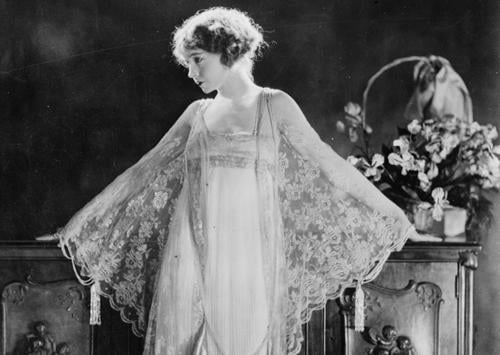
Lillian Gish discusses the play "Passage to India" and her career
Jan. 16, 1963 Actress Lillian Gish joins Studs Terkel to talk about her role in the play “Passage to India.” Gish connects the play based on a book by E. M. Forster to “Uncle Tom’s Cabin,” and discusses the relevance and importance of historical works like those mentioned. Studs asks Gish about working with D. W. Griffith, and the two praise Griffith’s impact on the world of film; Gish comments on her experience with working with Charles Laughton too.
-
Lila Kedrova discusses her background
Apr. 1, 1965 Although she came from a family with a musical background, Lila Kedrova went into acting. A friend of her father, Feodor Chaliapin, played a part in influencing Kedrova into performing. Kedrova said she's been acting since she was eight. After her role as Madame Hortense, Kedrova said she wanted to explore other types of roles.*Please note: some sections have been edited out from the original recording due to copyright considerations
-
Larry Arrick, Tom Earhart and James Patterson discuss their upcoming performance at the Playwrights Theater ; part 2
Dec. 14, 1961 Theater director Larry Arrick and actors Tom Earhart and James Patterson discuss the one-act play Zoo Story written by Tony award-winning playwright Edward Albee.
-
Kaye Ballard talks with Studs Terkel
Aug. 3, 1960 Musical theater and television actress/comedienne Kaye Ballard discusses her role as Helen in the 1954 American opera The Golden Apple, musician and writer John La Touche, her family, her accompanist Arthur Siegel and their mutual love for the Peanuts comic strip, the parakeet sketch she wrote with Mel Brooks, her background in burlesque and vaudeville, and her comic and musical inspirations.
-
Julie Harris discusses the poetry of Emily Dickinson
Mar. 11, 1976 In preparation to play Emily Dickinson in, "The Belle of Amherst" Julie Harris read both the letters and the poems written by Dickinson. Harris said she had become fascinated by Dickinson's persona. This interview includes two excerpts: "Because I could not stop for Death," and "Before I got my eye put out."
-
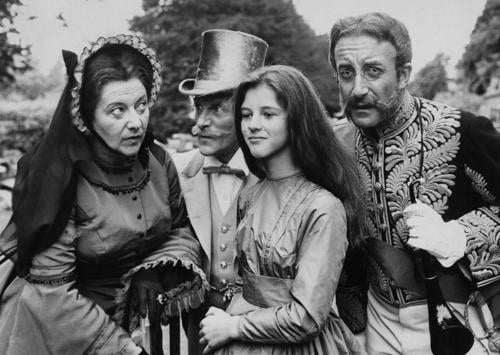
Jonathan Miller discusses English society and class and Alice in Wonderland; part 2
Feb. 5, 1968 Jonathan Miller discusses English society and class post WW2 and his TV movie Alice in Wonderland; part 2.
-
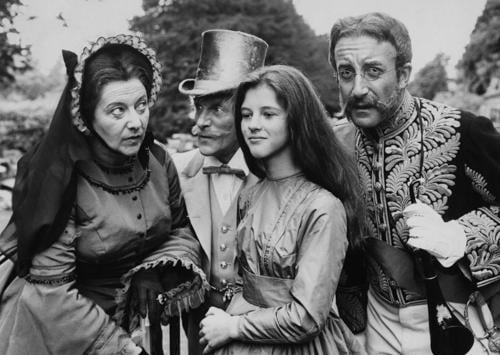
Jonathan Miller discusses English society and class and Alice in Wonderland; part 1
Feb. 5, 1968 Jonathan Miller discusses English society and class post WW2 and his TV movie Alice in Wonderland; part 1.