Listen to New Voices on Studs Terkel our partnership with 826CHI-here! Read the Story


Showing 76 - 90 of 326 results
-

Paul Boyer discusses his book "By the Bomb's Early Light"
Jan. 9, 1986 In the book, "By the Bomb's Early Light: American Thought and Culture at the Dawn of the Atomic Age," Paul Boyer covers people's feelings and attitudes after the bomb was dropped in Hiroshima. Boyer admits he, himself, when he was a young boy, he sent away for a free atomic ring that was being advertised. The program includes an excerpt of David Lilienthal talking.
-
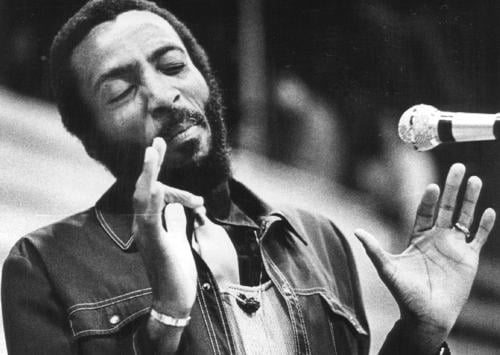
Panel at University of Chicago Law School discuss ending capital punishment, part 3
Feb. 19, 1965 Dick Gregory satirizes capital punishment in the United States, calls for the churches to take action, and talks about potential actions from "demonstrators." Other panel members answer audience questions (Father James Jones, Norval Morris, Hans W. Mattick, and Arthur Wineberg). Hosted by the University of Chicago. (Part 3 of 3)
-
Nicholas Von Hoffman discusses his novel, "Two Three Many More" with Studs Terkel
1970 Nicholas Van Hoffman discusses the characters of his novel, "Two Three Many More" about campus protests against the Vietnam War. Political viewpoints, regulations, and character analysis are discussed. Von Hoffman opens the interview with a reading from the opening of the book that mentions peace, solidarity, and disunity. Terkel and Von Hoffman read excerpts together from the book.
-
Newton Minow discusses broadcasting
Jan. 11, 1964 Interviewing Newton Minow, Chicago lawyer and chairman of the Federal Communications Commission. He discusses broadcasting as a public service and spends a great deal of time on the history of commercials and how they changed over time.
-
Nelson Algren discusses capital punishment
1965 Discussing capital punishment with author Nelson Algren. Includes interviews with William (Bill) Witherspoon, a death row inmate; Jack Johnson, warden of Cook County Jail; and an [unidentified woman] who marched in protest at the execution of James Dukes in 1962.
-
Nat Hentoff in conversation with Studs Terkel
Oct. 31, 1992 Discussing the book "Free Speech For Me--But Not For Thee: How the American Left and Right Relentlessly Censor Each Other," (published by HarperCollins) with the author Nat Hentoff.
-
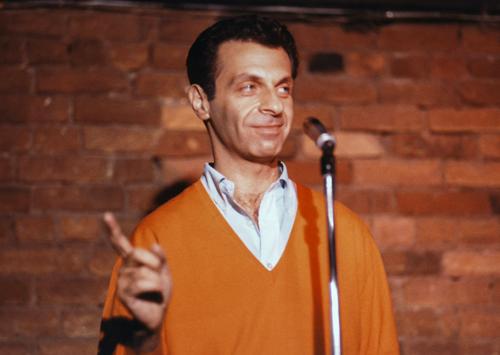
Mort Sahl discusses comedy, social satire, politics, and humorists
Feb. 17, 1960 Mort Sahl the comedian discusses comedy, social satire, and humorists. He discusses the difference between sick humor and social commentary. He discusses politics in America. Includes a speech by humorist Will Rogers towards the end of the program.
-
Mildred Loomis discusses the green revolution and the back to the land movement ; part 2
Mar. 6, 1968 Discussing the green revolution and the "modern homestead" and interviewing Mildred Loomis. Mildred Loomis discusses the back to the land movement.
-
Mike Royko discusses his book "I May Be Wrong, but I Doubt It"
1970 Author-journalist Mike Royko's book, "I May Be Wrong, but I Doubt It" includes 65-70 of Royko's past articles. Royko talks about how his columns come to life. Never having been one to sit in an office, he talks about going out into the world to get the story and to report the facts. Royko includes a funny tale about the word, "clout," in his book.*Please note: some sections have been edited out from the original recording due to copyright considerations
-
Michael Rosenberg Meeropol discusses his book, "We Are Your Sons: The Legacy of Ethel and Julius Rosenberg"
May. 29, 1975 Michael Rosenberg Meeropol discusses his book, ""We Are Your Sons: The Legacy of Ethel and Julius Rosenberg," and talks about his life growing up in the shadow of the execution of his parents. He recalls his memories leading up to their arrest and trial and the legal battle for him and his brother, Robert, to be adopted. He also talks about growing up ashamed of his last name, but eventually coming to terms with his identity and starting the fight for his parents' exoneration.
-
Michael Burton discusses John Henry Faulk and John Henry Faulk discusses American history and politics
May. 3, 1982 This interview contains two parts. The first focuses on writer and John Henry Faulk biographer, Michael Burton, in which Burton discusses John Henry Faulk’s life as an American storyteller as well as his book entitled “John Henry Faulk: The Making of a Liberated Mind.” Burton makes mention of how the Hollywood Blacklist affected Faulk’s career.
-
Maya Angelou discusses her early life and African American culture and people
Apr. 1, 1960 Angelou discusses: her early life; her international travels; dancing; blues and jazz music; and the book "Youngblood" by John Oliver Killens. In this program "In the Evening (When the Sun Goes Down)" and "Joe Turner No. 2 (Blues of 1892)" by Big Bill Broonzy, "I Ain't Gonna Pick No More Cotton" by Sam Lightnin' Hopkins is played, as well as other musical selections.
-
Maya Angelou discusses her early life and African American culture and people
Apr. 1, 1960 Angelou discusses: her early life; her international travels; dancing; blues and jazz music; and the book "Youngblood" by John Oliver Killens. Musical selections have been removed due to copyright.
-
Maya Angelou discusses her book “Gather Together in My Name”
May. 13, 1974 Writer and poet Maya Angelou talks about her life, Creole influences, and her book “Gather Together in My Name” with Studs Terkel. Angelou reads an excerpt from the book and the recording opens with Angelou reading one of her poems.
-
Maya Angelou discusses her book "I Know Why the Caged Bird Sings"
Mar. 13, 1970 Angelou discusses her book "I Know Why the Caged Bird Sings" and recites "When I Think About Myself." She talks about growing up in Stamps, Arkansas, and her family. Copyrighted material has been removed.