

-

Wright Morris in conversation with Studs Terkel
1980 The interview begins with Wright Morris reading from a essay he had presented at a conference on Arts in Public. Wright Morris, an American novelist and essayist , discusses how society no longer participates in consuming the arts, only skimming the surface by reading a review. Mr Morris argues that the bulk of society does not embrace or learn from the past mostly due to the fact there is no knowledge and a lack of curiosity to gain that knowledge.
-
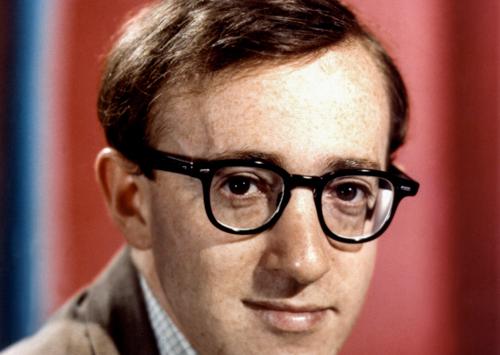
Woody Allen discusses his work as a comedic writer and performer
Jun. 1, 1965 Woody Allen discusses his life and art, the influence of both success and failure on his work, and how he finds comedy in life’s difficulties and trials. He discusses his first screenplay, “What’s Up Pussycat?” and other comedians who have influenced the development of his own comedic work, including Mort Sahl, Charlie Chaplin, the Marx Brothers, and George S. Kaufman.
-
Win Stracke, Bill Adelman, and Bill Neebe discuss May Day and the Haymarket Square Riot
Apr. 29, 1976 Win Stracke, Bill Adelman, and Bill Neebe discusses the Haymarket Riot and the following trials and hangings which changed the labor movement around the world. The group discusses the American labor movement and police brutality that led to the protest and the eventual accusal of eight men. They also explore the roles George Pullman, Marshall Field, and the police force played and how they used the protest to weed out union leaders they did not like. The group briefly discusses the future of the labor movement.
-
Willie Sutton in conversation with Studs Terkel
Sep. 16, 1976 Content Warning: This conversation has the presence of outdated, biased, or offensive language. Rather than remove this content, we present it in the context of twentieth-century social history to acknowledge and learn from its impact and to inspire awareness and discussion.
-
William Ury discusses his book "Getting to yes"
Oct. 13, 1981 Discussing the book "Getting to yes: negotiating agreement without giving in" with William Ury.
-
William Least Heat-Moon discusses his book "PrairyErth: (A Deep Map)"
Nov. 5, 1992 Discussing the book "Blue highways: a journey into America" with William Least Heat Moon.
-
William Kennedy discusses his book "Very Old Bones"
May. 13, 1992 Discussing the book "Very Old Bones" (published by Viking Press) with the author William Kennedy.
-
William Kennedy discusses his book "The Flaming Corsage"
Jun. 4, 1996 Discussing the book "The Flaming Corsage" (published by Viking) with the author William Kennedy.
-
William Kennedy discusses his book "Riding the Yellow Trolley Car"
May. 18, 1993 Author William Kennedy, explains how he came up with the title for his book, "Riding the Yellow Trolley Car: Selected Nonfiction." Also in the interview, Kennedy talks about other writers: Patrick Kavanagh, James Joyce, Bernard Malamud and J.P. Donleavy.
-
William Gibson discusses writing plays
1969 Now being a professional playwright, William Gibson talked about being able to write one of his plays in 8 days. A lot of the discussion is about his play, "The Miracle Worker". After reading one of Annie Sullivan's letters, and learning about a battle royale that Sullivan had with Helen Keller, Gibson envisioned what that battle royale would look like. It became a now famous part of the play.
-
William Friedkin in conversation with Studs Terkel
Oct. 1, 1985 Discussing the films "The People vs. Paul Crump", "To Live and Die in Los Angeles," and "The French Connection," with director and screenwriter William Friedkin.
-
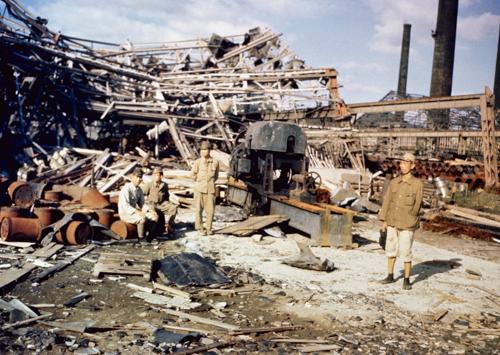
William Craig talks to Studs Terkel
William Craig discusses his book "The Fall of Japan: The Final Weeks of World War II In the Pacific." He speaks mostly on the atomic bombings of Hiroshima and Nagasaki. Includes several excerpts from the book.
-
William Brashler talks about his book "Bingo Long's Traveling All-Stars and Motor Kings"
Dec. 10, 1973 Mr. Brashler converses with Studs about his research for the novel and the players he had spoken with to gather information for the book. The novel tells the story of a baseball team that revolts from a tyrannical Negro League owner and spends the 1939 season barnstorming around the Midwest. Includes two excerpts of a Cool Papa Bell interview talking about their travel as "barnstormers". Studs and Mr. Brashler read several exchanges of dialogue from the book.
-
Willard R. Espy in conversation with Studs Terkel
Nov. 1, 1977 The clever writer and editor, fond of wordplay and literary forms, shares with Studs some insight into his satirical biography, The Life and Works of Mr. Anonymous.*Please note: some sections have been edited out from the original recording due to copyright considerations
-