Listen to New Voices on Studs Terkel our partnership with 826CHI-here! Read the Story


Showing 61 - 75 of 151 results
-

-
Lillian Smith discusses her books; part 3
Nov. 11, 1961 Content Warning: This conversation includes racially and/or culturally derogatory language and/or negative depictions of Black and Indigenous people of color, women, and LGBTQI+ individuals. Rather than remove this content, we present it in the context of twentieth-century social history to acknowledge and learn from its impact and to inspire awareness and discussion. Lillian's Smith first book was "Strange Fruit." Smith said people that were reading that book covered up the book jacket so no one could see the title of the book.
-
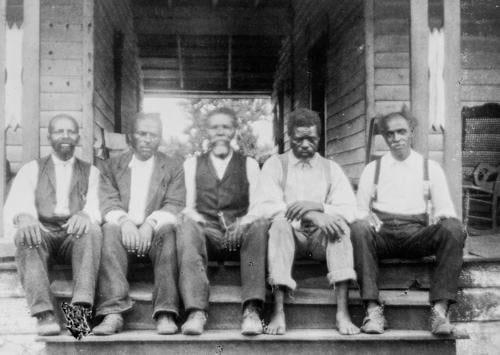
Lerone Bennett, Jr., John Hope Franklin and Hoyt Fuller discuss the book "Distortions of Negro History"
Jun. 3, 1965 Discussing "Distortions of Negro History" and interviewing Lerone Bennett, Jr., John Hope Franklin and Hoyt Fuller.
-
Lawrence Durrell discusses his new book "Nunquam"
British novelist Lawrence Durrell discusses his new book "Nunquam," the second installment in his series "The Revolt of Aphrodite." Durrell also discusses the first book in the series, "Tunc."
-

Laurie Abraham reads from and discusses her book "Mama Might Be Better Off Dead"
Oct. 1, 1993 What started out as a 5-piece article on health care became Laurie Abraham's book, "Mama Might Be Better Off Dead: The Failure of Health Care in Urban America". Through her stories, Abraham points out the many hardships and catch-22 scenarios of some poor families. One woman, after caring for her mother all day, Julie, wanted to work part time in the evenings. However, she soon learned that she'd be making too much money and she'd no longer be eligible for Medicaid for herself and her children.
-
Laurent de Brunhoff reads from and discusses the book "Babar's Anniversary Album"
Nov. 11, 1981 Discussing the book "Babar's anniversary album" with the author Laurent de Brunhoff.
-
Langston Hughes, John Sellers, James Cotton and Otis Spann discuss blues music
Jul. 15, 1960 Langston Hughes, John Sellers, James Cotton, and Otis Spann discuss their origins and blues music. The interview focuses heavily on Langston Hughes and how deeply he is influenced by the blues. Hughes also discusses his upcoming book "An African Treasury" at length. Hughes, Sellers, Spann, and Cotton perform a number of songs during the interview, they have been removed due to copyright.
-
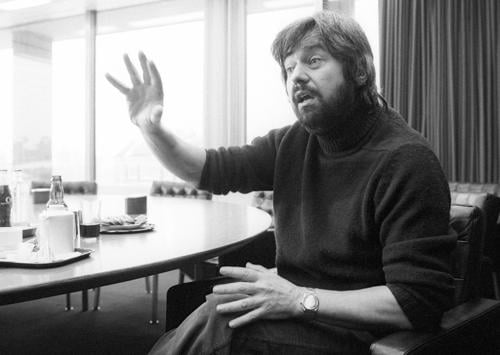
Jurek Becker discusses his background
1986 While in his home in Berlin, Jurek Becker covers various topics. He first talks about being arrested back in 1978 in New Orleans. Becker also talks about his lack of memories from being in the concentration camp. When he was 3, 4, or 5, Becker said that when he was there, there was nothing, and therefore, there's nothing to remember.
-
Judith Wax reads from and discusses her book "Starting in the Middle"
Apr. 16, 1979 Reflections on Judith Wax's life are part of her book, "Starting in the Middle." Ms. Wax talks about being the perfect wife and mother, when she always secretly wanted to be a writer. Being an ignored female guest at dinner parties was always interesting, too, as male guests would often ask her, "What does your husband do?"
-
Jose Yglesias reads from and discusses his book "Goodbye Land"
1967 In "Goodbye Land," Jose Yglesias travels to Galicia, Spain, his father's native province. Yglesias found a number of cousins who remembered his father. Time was spent in a tavern owned by one of his cousins, talking about what they recalled about Yglesias' father. His cousins viewed Yglesias' travels to Spain as an event; a millionaire traveling to Spain and they showered him with an abundance of gifts.
-
Jonathan Yardley discusses his book about Ring Lardner
Sep. 15, 1977 Terkel interviews author Jonathan Yardley on his latest book. This book titled "Ring" is a biography of the sports writer columnist Ring Lardner.
-
Jonathan Wordsworth discusses William Wordsworth
Oct. 4, 1982 Terkel interviews Jonathan Wordsworth about his great-great uncle William Wordsworth.
-
John Wicklein discusses his book "The Electronic Nightmare"
Jul. 1, 1981 Content Warning: This conversation includes racially and/or culturally derogatory language and/or negative depictions of Black and Indigenous people of color, women, and LGBTQI+ individuals. Rather than remove this content, we present it in the context of twentieth-century social history to acknowledge and learn from its impact and to inspire awareness and discussion.
-
John D. Weaver discusses his book "The Brownsville Raid"
Apr. 6, 1971 Events not recorded in history books is what prompted John D. Weaver to write "The Brownsville Raid: The Story of America's Black Dreyfus Affair". Weaver had heard the story of Black Army soldiers causing a raucous, when they were actually set up. Without even being granted a trial, President Theodore Roosevelt, dismissed those soldiers from the United States Army, Weaver explained.
-
Joan Didion reads from and discusses her novel "A Book of Common Prayer"
Apr. 7, 1977 Joan Didion describes the main characters Charlotte and Charlotte's ex-husbands, Warren and Leonard of her novel, "A Book of Common Prayer". Didion said she based her novel from the song, "If I Ever Cease to Love You". A fan of Didion, who after reading her novel, made the comparison and asked Didion, "So you knew my ex-husband, too?"