Listen to New Voices on Studs Terkel our partnership with 826CHI-here! Read the Story


Showing 361 - 375 of 3671 results
-
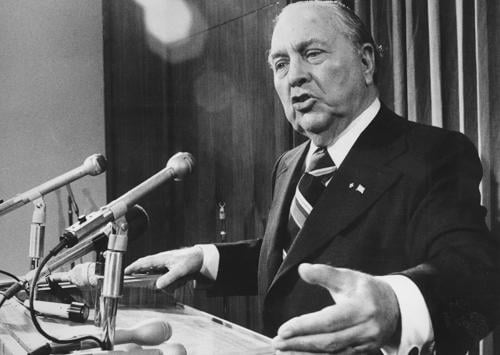
Studs Terkel discusses contemporary Chicago politics with Dick Simpson and Mike Royko
Jul. 22, 1971 Discussing Mayor Daley and nepotism in government with Alderman Dick Simpson, and author-journalist Mike Royko. Includes clips of Mayor Daley defending his appointment of Thomas P. Keane, son of Alderman Tommy E. Keane. Also includes Mike Royko reading his column from the "Chicago Daily News" July 22, 1971.
-

Studs Terkel discusses commercial and public broadcasting Nicholas Johnson of the FCC
Apr. 1, 1971 Studs Terkel discusses television and advertising with Nicholas Johnson, Commissioner at the Federal Communications Commission. Johnson had recently delivered a speech in Dubuque, IA about possibilities for the future of broadcasting, and had released a book a year prior, "How to Talk Back to Your Television Set". Topics of conversation include censorship, the role of advertising and corporate sponsorship of radio and television, and the hope and promise of public television.
-
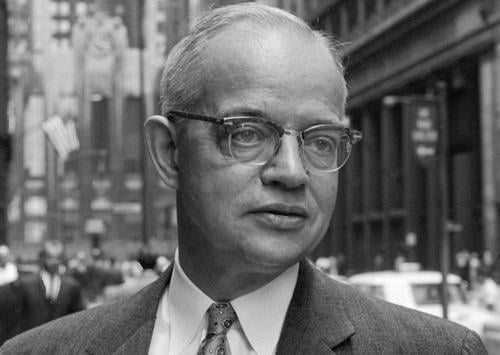
Studs Terkel discusses church architecture with William Cooley and Martin Marty
Apr. 27, 1965 Studs Terkel discusses church architecture William Cooley, a church architect, and Martin E. Marty, a theologian and scholar at the University of Chicago.
-
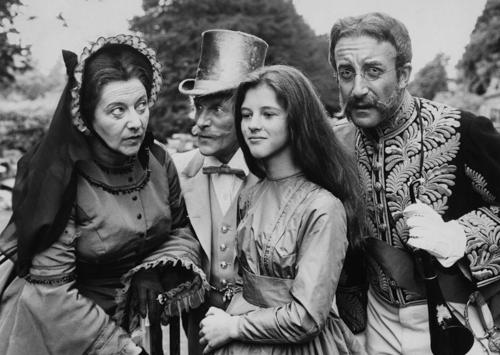
Studs Terkel discusses childhood, imaginiation, science, social history, politics, medicine and theater with Jonathan Miller in London, England
Jonathan Miller reminisces about his childhood in Regent Park, London and offers his opinion on philosophy and the changing English class structure with the loss of the Indian empire. His remake of "Alice in Wonderland" for BBC 1 is reviewed and he states he is most interested in the human imagination.
-
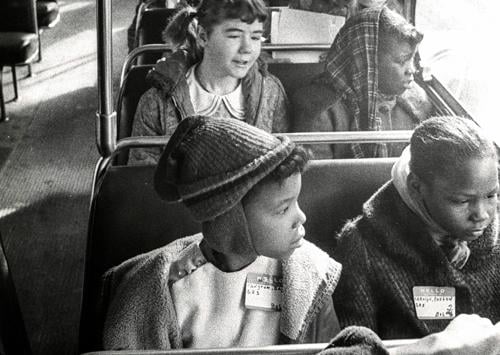
Studs Terkel discusses busing for school integration with psychologist Thomas J. Cottle
Oct. 11, 1976 Studs Terkel discusses the transportation of students for school integration with psychologist Thomas J. Cottle. The main topic of conversation is Cottle's book, "Busing" (1976, Boston, MA, Beacon Press). Terkel and Cottle discuss busing in several cities, focusing on Boston, MA, where Cottle did his research and writing. They each read passages from the book, and discuss the relationship between busing and racism in America.
-
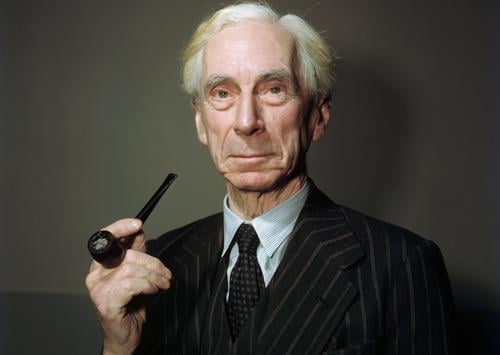
Studs Terkel discusses and presents a memoir of British philosopher, logician, mathematician, historian, writer, social critic, political activist and Nobel laureate Lord Bertrand Russell
Feb. 3, 1970 Studs talks of British philosopher, logician, mathematician, historian, writer, social critic, political activist and Nobel laureate Lord Bertrand Russell, and presents a recorded discussion with Lord Russell from December of 1961. Lord Russell speaks of a strong stance on nuclear disarmament, and the current climate of politics, science and society.
-

Studs Terkel discusses adults with young adults
1966 Discussing adults with young people. Subjects are: Ed Bocsel, age 16 Becky Milton, age 24 Chick Marmor, age 19 Stacy Goings, age 22 Danny Paul Yates, age 17 Paul Me, age 19 Jerry J., age 20 Lucky Miller, age 19 Lily, age 16 Topics include: Relationships with adults and family members, social alienation, religion, the Vietnam War, and the rise of corporate America overtaking local businesses.
-
Studs Terkel discusses "The Man Who Mistook His Wife For a Hat and Other Clinical Tales" with Oliver W. Sacks
Mar. 3, 1986 Oliver Sacks sits down with Studs Terkel to discuss aspects of "other clinical tales" from his book "The Man Who Mistook His Wife for a Hat and Other Clinical Tales". Sacks discusses the important role played by the visual arts, music, drawing and math in the lives of people suffering from autism, Parkinson's disease, and mental challenges. He also discusses the repercussions and loss of unique abilities to make patients more socially acceptable.
-
Studs Terkel discusses "How I Won the War" with the film's creator, Richard Lester, in London, England
Studs Terkel and Richard Lester discuss the impact of "How I Won the War" on both audiences and critics. Insight is offered on the unjustness of even just wars like World War Two. The film offers insight into the mindless acceptance of death. Terkel then closes the show with his impressions of London during his stay that includes a mention of race, culture, nightlife, and sports.
-
Studs Terkel continues his interview with Erich Luth in Hamburg discussing the aftermath of the war on Germany's youth ; part 3
1967 There is a silence in the tape from 3:48 to 3:58 due to Studs changing the tape. It should be noted that the word "clever" in this discussion means intelligent. The interview concludes at 35:36 where Studs offers his reflections on his stay. Luth is the retired Press Chief of Hamburg and has also helped with remunerations for the Jewish people in the aftermath of World War II. He has also facilitated detente between Israel and West Germany.
-

Studs Terkel concludes his interview with Erich Lüth going more in depth on the aftermath of the war on Germany's youth ; part 4
1968 Erich Lüth's discussion with Studs Terkel is similar to part 3 but Luth offers a more in-depth conversation on the role of teachers in schools and how the time of Hitler is taught. There were those teachers that joined the party to continue their love of teaching and those teachers that were brought into the Nazi Party to follow their convictions. This lack of courage to resist influences pupils today because teachers are not saying they were cowards. The relationship is altered out of shame, and embarrassment.
-
Studs Terkel comments and presents the Sophiatown Church of Christ the King ; part 3
1963 Presenting performances at the Sophiatown Church of Christ the King while Studs was in South Africa. They talked how they brought folk music back to South Africa.
-
Studs Terkel comments and presents the Sophiatown Church of Christ the King ; part 2
1963 Presenting performances at the Sophiatown Church of Christ the King while Studs was in South Africa. They talked how they brought folk music back to South Africa.
-

Studs Terkel comments and presents the Sophiatown Church of Christ the King ; part 1
1963 Presenting performances at the Sophiatown Church of Christ the King while Studs was in South Africa. They talked how they brought folk music back to South Africa.
-
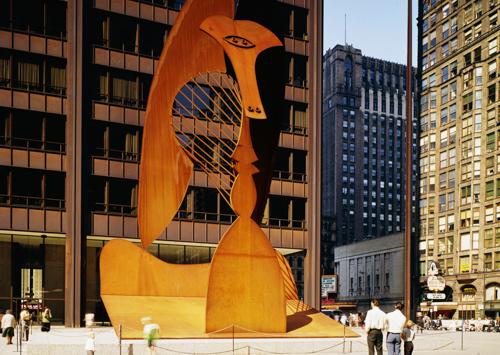
Studs Terkel comments and presents Picasso unveiling ceremony on its 30th anniversary
Aug. 15, 1997 Presenting at the Picasso unveiling: dedication ceremony and comments 30th anniversary.