Listen to New Voices on Studs Terkel our partnership with 826CHI-here! Read the Story


Showing 481 - 495 of 558 results
-

Connie Kolb and Ursula Bender discuss life in Germany
Sep. 1, 1986 Connie Kolb and Ursula Bender discuss life in Germany, specifically Berlin. Connie Kolb discusses her life struggles, lack of confidence, and her work in journalism.
-

Composer, singer and guitarist, Ferron, discusses her music
Mar. 12, 1990 A self-proclaimed underground artist, Ferron, says she may not sell tons of records but she does have a good following of fans. Ferron says people like her music because they're seeking balance in their lives. She further explains that a lot of her lyrics have to do with understanding our purpose in life.
-
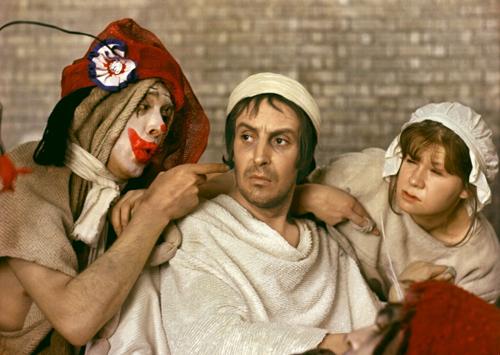
Composer Richard Peaslee discusses his work for the film "Marat/Sade"
Feb. 1, 1967 Richard Peaslee discusses his work as a composer in the film "Marat/Sade" directed by Peter Brook and based off Richard Weiss' 1964 play.
-
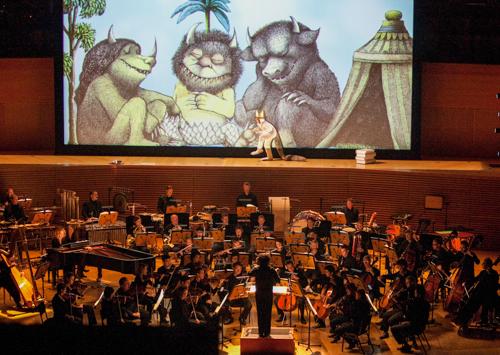
Composer Oliver Knussen discusses his opera adaptation of "Where the Wild Things Are"
Dec. 13, 1988 Oliver Knussen discusses his adaptation of "Where the Wild Things Are", which was beginning production at the Chicago Opera Theater, Chicago.
-
Collier Family, Dr. Kawalak, and Augustine Stevens discuss Sierra Leone and the Peace Corps; part 2
Jul. 26, 1966 Discussing Sierra Leone and interviewing the Collier Family, Dr. Kawalak and Augustine Stevens. They also discuss the languages, culture, religion, and history of Sierra Leone. Includes a clips of Sierra Leone (African music).
-
Claudia Cassidy discusses her career as a critic ; part 2
Nov. 30, 1966 Claudia Cassidy discusses being a critic of theater and opera etc. Includes about 1.5 minutes of another interview.
-
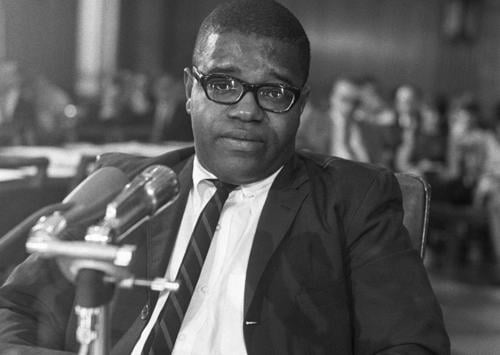
Claude Brown talks with Studs Terkel
Sep. 13, 1965 Discussing the book "Manchild in the Promised Land" with Claude Brown. Brown also discusses growing up in Harlem, New York as an African American man. Includes a clip of a man speaking from the county jail. Includes a song sung by Mahalia Jackson. Includes a clip of children singing.
-
Christopher Moore discusses his career
1987 Studs Terkel discusses the Chicago Children's Choir with the director and founder, Christopher Moore. They discuss the following: how to produce the sound; training units; patience; age spread; sing-a-long; child vs. adult projects; and various types of heritage music that makes up their repertoire. The following musical excerpts are presented: "Dark Winter Days"; "Angels and Shepherds"; "Illinois"; and "Go Tell It on the Mountain".
-
Christopher Keene and Gian Carlo Menotti discuss their careers
Jan. 3, 1972 Conductor Christopher Keene and composer Gian-Carlo Menotti discuss how they became aware of each other and meeting to discuss a collaboration. They talk about spending time in Spoleto, Italy for the Festival of Two Worlds, a summer music and opera festival created by Gian Carlo Menotti. The two also discuss creating art in all forms, including music. Music is played to start and to end: "To This We've Come" sung by Eileen Farrell from Menotti's opera "The Consul" and the allegro from Menotti's "Piano Concerto", with Earl Wild as the pianist.
-
Christopher Keene and Gian Carlo Menotti discuss the opera
Sep. 6, 1973 Conductor Christopher Keene and composer Gian-Carlo Menotti dscuss the major themes of the opera"Tamu-Tamu", other opera performances, and the kind of work that goes into creating these works. Recordings are played during the interview: "Aria", sung by Eileen Farrell from the opera "The Consul", "Gloria" sung by an ensemble from the opera "The Saint of Bleecker Street", and "Have You Seen a Child" sung by an ensemble from the opera "Ahmal and the Night Visitors". Music has been removed for copyright reasons. This also includes part of an earlier recorded interview with both subjects.
-
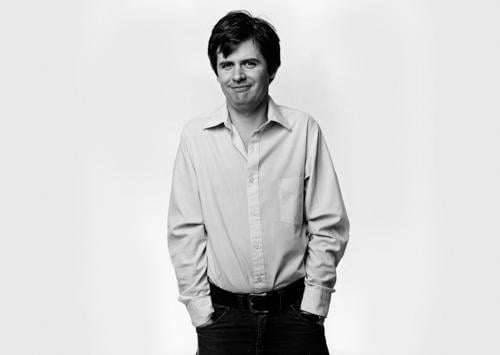
Christopher Durang discusses his play "A History of the American Film" and "Sister Mary Ignatius Explains It All For You"
Dec. 7, 1984 Studs interviews Christopher Durang, playwright, about his plays. "A History of the American Film" is the highlight of the interview, which is playing at the Heron Theater in Chicago. Durang describes parts of the play and it's characters. He explains that it portrays the different eras and famous moments of movies and references real actors and actresses. Durang reads several times from the play, but all musical numbers are removed from this edited version of the original recording.
-
Chris Ethridge and Gram Parsons discuss their album 'The Gilded Palace of Sin'
Mar. 1, 1969 Studs Terkel interviews two of the band members, Chris Ethridge and Gram Parsons. The following topics discussed are: the artists' backgrounds; their musical perspective; their songwriting; Los Angeles; earthquakes; their early life; their lyrics; life in the south (America); and instrumentation. The following musical excerpts have been removed due to copyright restrictions: "Wheels"; "Sin City"; "My Uncle"; "Do You Know How It Feels"; and "Hippie Boy".
-
Chinese pianist Fei-Ping Hsu discusses his musical career
Apr. 5, 1982 Fei-Ping Hsu speaks about growing up in China and how he came to be a pianist.
-
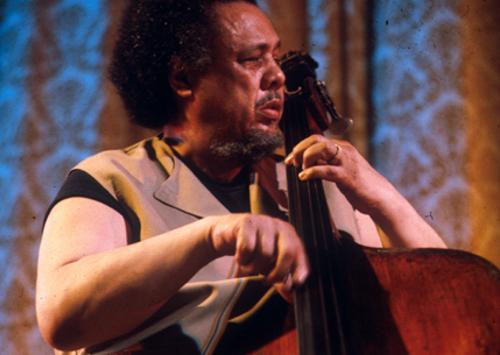
Charles Mingus discusses his book "Beneath The Underdog"
May. 20, 1971 Studs Terkel speaks with Charles Mingus about his life and work in the context of his autobiography "Beneath The Underdog".
-
Charles Delaunay and André Réwéliotty discuss jazz
May. 1, 1960 Charles Delaunay, jazz expert, and André Réwéliotty, jazz musician, talk about Jazz. Sidney Bechet, mentor of André Réwéliotty, is discussed at length. The two also debate the popularity of classic jazz compared to modern jazz as the genre develops.