Listen to New Voices on Studs Terkel our partnership with 826CHI-here! Read the Story


Showing 196 - 210 of 302 results
-

Garry Davis discusses renouncing his American citizenship ; part 1
May. 23, 1973 May 25, 1973, is the 25th anniversary of when Garry Davis renounced his American citizenship. Davis explained it is a grave injustice to be governed by laws that were set up by people who are now dead. The problem says Davis, is the laws have to catch up to the 20th century. Davis goes on to talk about the World Service Authority.
-
Gale Cincotta discusses community organizing
Jul. 6, 1982 The song "America the Beautiful" always reminded Gale Cincotta about how great it was to live in America, the land with great schools and great jobs. It wasn't until Cincotta became a community organizer that she realized all schools and all jobs are not great for everyone. Cincotta's hope was to give people the power to make their lives better, not solely by pointing out problems but by doing something about them.*Please note: some sections have been edited out from the original recording due to copyright considerations
-
Gage Park residents discuss race relations and racial integration at Gage Park High School ; part 1
Aug. 4, 1970 A diverse panel of Gage Park residents discuss racial integration at Gage Park High School, neighborhood change, and race relations in general.
-
From the Wax Museum - 009 - South African writer Alan Paton discusses life in South Africa
1963 South African writer Alan Paton likened the white South African people to the ostrich. Paton said the ostrich keeps its head in the sand, and some people do the same in South Africa, too. With their heads in the sand, they don’t see any problems existing. Paton said he can not understand his country’s government. He can’t understand why the Black people are not allowed to own homes. Because of the government, Paton also talks about having to be careful about what he writes and he says the Americans are very lucky to have their U.S. Constitution.
-
Four peace marchers discuss The Continental Walk
Sam Day, Susan Laflamme, Bernie Noven, and Seldon Osbourne are all participants of The Continental Walk for disarmament and social justice. They're taking part in the walk to make the public aware of how much money is put into military and nuclear weapons. As a group, they feel strongly about not wanting people's lives and their worlds to blow up around them.*Please note: some sections have been edited out from the original recording due to copyright considerations
-
Folk singer Mary Travers talks about music and her career
Nov. 18, 1976 Folk singer Mary Travers - of the group Peter, Paul & Mary - talks about some of the artists that inspired her, like Pete Seeger and The Weavers.*Please note: some sections have been edited out from the original recording due to copyright considerations
-
-
-
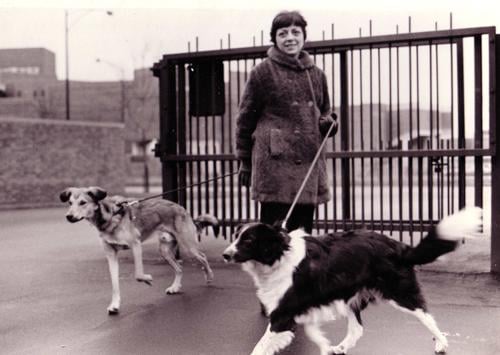
Florence Scala discusses her friendship with Jessie Binford of Hull House
Jul. 18, 1966 Even after Jessie Binford left Hull House due to its demolition, she corresponded with Florence Scala through hand-written letters. Scala learned that Binford was a country girl who lived in the big city of Chicago. Scala reads some of her letters from Binford. There is also an excerpt of Jessie Binford.
-
Florence Scala and Studs Terkel on the site of Hull House as it is dismantled ; part 2
Jul. 9, 1963 The tour continues on Maxell and Halsted Streets. Anita is sad to be leaving a place where she was born & raised. Mrs. Belmont said the mayor promised housing but they're currently living in a hotel. A 17-year resident of Hull House, Mrs. Morales says there will never be another place like it. The general feeling from everyone was that of sadness in having to leave their homes and businesses.
-
Florence Scala and Studs Terkel on the site of Hull House as it is dismantled ; part 1
Jul. 9, 1963 Florence Scala gives Studs Terkel a guided tour of the area around Hull House. Terkel talks to people in the neighborhood. Mr. Briata spoke of how he would go to Hull House once a week to take a bath. Mrs. Picardi liked the area because it had good schools for her kids. Together they visit Scala's favorite butcher, who will have to relocate his business after 40 years.
-
-
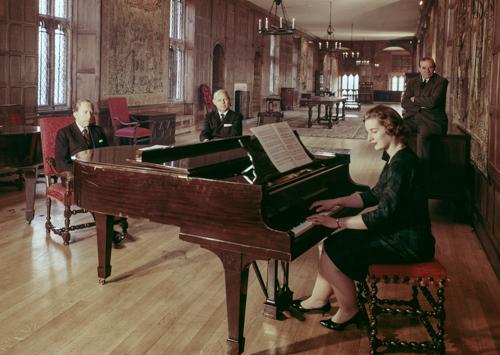
Ferdinand Lundberg discusses his book "The rich and the super rich"
1967 Ferdinand Lundberg discusses his book "The rich and the super-rich" and the current state of wealth distribution and political, cultural, and social power in the United States. Topics of discussion include inherited wealth, the wealthy “Eastern Establishment” families compared to wealthy families in the American southwest, wealth and crime, and corporations. Studs reads an excerpt from F. Scott Fitzgerald’s short story “The Rich Boy” at the beginning of the program and an excerpt of an interview Studs conducted with a man who comments on his ability to get rich.
-
Father Roy Bourgeois discusses why the School of the Americas must be closed down
Mar. 24, 1994 Father Roy Bourgeois travels the country, talking to groups of people who aren't aware that their tax dollars go to fund the School of the Americas. Bourgeois discovered that money provided was for military weapons & for the training of soldiers to torture and to kill people of Latin American countries.
-

Erich Lüth talks with Studs Terkel on life under Hitler and its aftermath ; part 2
1968 Studs continues his interview with Erich Luth in Hamburg, Germany. The audio breaks at 25:23 and continues on a Sat at 25:28 till its conclusion at 35:43. Erich Luth conveys stories of humanity by both German prisoners towards Russian prisoners whose treatment was dictated by the Nazi party to not offer any winter clothing or shoes to provide comfort. The German laborers provided a human solidarity that brought them food, clothes, and soap.