Listen to New Voices on Studs Terkel our partnership with 826CHI-here! Read the Story


Showing 31 - 40 of 554 results
-

Stanislaw Pchenikov and Valentin Nikolaevich Pluchek discuss theater with Studs Terkel ; part 2
Jan. 19, 1962 Studs Terkel discusses Russian theater with Stanislaw Pchenikov and Theater director Valentin Nikolaevich Pluchek.
-
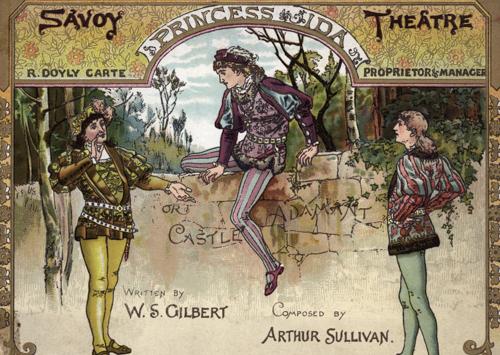
Jane Stedman discusses the works of Gilbert and Sullivan ; part 1
Jan. 25, 1965 Jane Stedman discusses the lives of W.S. Gilbert and Arthur Sullivan and the works they created jointly as Gilbert and Sullivan with emphasis on their comic opera "Utopia, Limited."
-
Rita Streich discusses her upcoming recital and Studs plays selections ; part 3
Feb. 17, 1962 Studs Terkel interviews Rita Streich about her recital coming up. He also plays selections from her work for viewers to listen to. She also talks about music during World War II.
-
Elisabeth Schwarzkopf discusses her roles and interpretation ; part 1
Apr. 11, 1962 Studs Terkel talks with Elisabeth about her career in opera. She discusses her thoughts of her overall career.
-
-
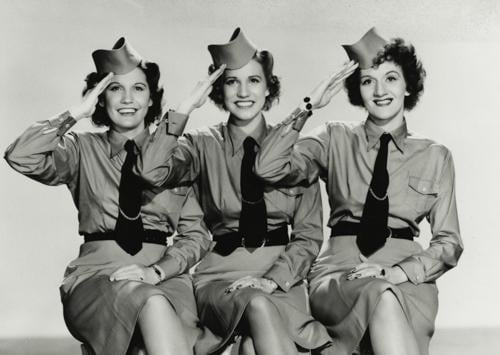
Terkel interviews Maxene Andrews of The Andrews Sisters
Aug. 23, 1982 Maxene Andrews reminisces over Andrews Sisters songs with Studs Terkel. She acknowledges the heavy influence the Boswell Sisters played in the creation of their image. She relays musical stories surrounding songs in Abbott and Costello such as "Bugle Boy" from their movie "Buck Privates". How they found the song "Mir Bist Du Schon" and Sammy Cahn and Saul Chaplin helped with the lyrics. How song pluggers brought The Andrews Sisters "Tip-Pi-Tin". How "Apple Blossom Time" helped an injured soldier at Oak Knoll Hospital upon his return to the states.
-
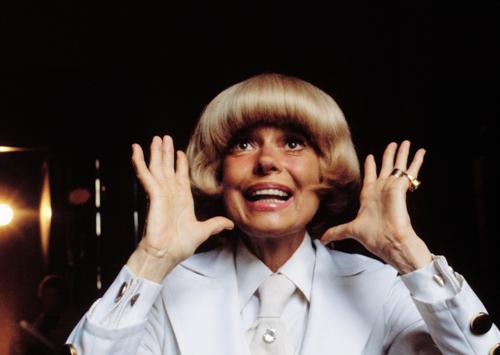
Carol Channing discusses her film and stage career
Jan. 28, 1972 This interview features singer and actress Carol Channing which discusses: the film "Shinbone Alley"; production of "Lorelei"; her grandmother; and her career. It begins with a musical excerpt from the animated movie "Shinbone Alley" featuring Channing singing as the alley cat Mehitabel. It also includes excerpts from the Broadway production called "Lorelei", examples of her character acting/comedy (as Cecilia Sisson), her reading of "Madeline and other Bemelmans", and a portion of the song "So Long Dearie" from the play "Hello, Dolly!".
-
Barbara Cook discusses her musical Broadway career and shift into opera with her soprano voice
Feb. 13, 1981 Studs interviews Barbara Cook about her work in musical theater from Broadway to opera. Cook speaks about the composers and writers she has worked with. She explains some of her songs such as “Ice Cream” and “Grass Harp” and describes her first Carnegie concert. Studs quotes Leonard Bernstein, who speaks to Cook’s talent. Cook describes how she went from Broadway to opera and shares how she chooses the songs that she performs. She discusses the art of her talent. The musical pieces are removed from this edited version of the original recording.
-
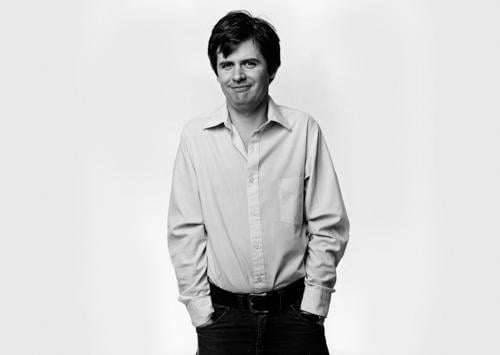
Christopher Durang discusses his play "A History of the American Film" and "Sister Mary Ignatius Explains It All For You"
Dec. 7, 1984 Studs interviews Christopher Durang, playwright, about his plays. "A History of the American Film" is the highlight of the interview, which is playing at the Heron Theater in Chicago. Durang describes parts of the play and it's characters. He explains that it portrays the different eras and famous moments of movies and references real actors and actresses. Durang reads several times from the play, but all musical numbers are removed from this edited version of the original recording.
-
John Eliot Gardiner discusses his career in Baroque music as conductor of the Monteverdi Choir and the English Baroque Soloist
Feb. 20, 1989 Studs interviews John Eliot Gardiner about his career in baroque music and his background and interests. Studs announces that Gardiner is performing at Orchestra Hall in Chicago. Gardiner explains the instruments that his group uses and how they are different and capture the original sounds of pieces. He also describes the history and time period of baroque music. Gardiner explains various pieces that the choir performs such as Handel's "Israel in Egypt" and Henry Purcell's "King Arthur." The musical numbers are removed from this edited version of the original recording.