Listen to New Voices on Studs Terkel our partnership with 826CHI-here! Read the Story


Showing 171 - 180 of 261 results
-
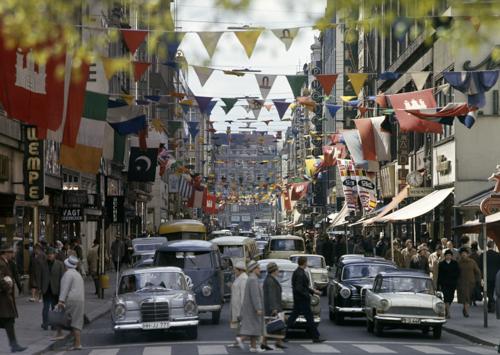
Studs Terkel concludes his interview with Erich Lüth going more in depth on the aftermath of the war on Germany's youth ; part 4
1968 Erich Lüth's discussion with Studs Terkel is similar to part 3 but Luth offers a more in-depth conversation on the role of teachers in schools and how the time of Hitler is taught. There were those teachers that joined the party to continue their love of teaching and those teachers that were brought into the Nazi Party to follow their convictions. This lack of courage to resist influences pupils today because teachers are not saying they were cowards. The relationship is altered out of shame, and embarrassment.
-

Interviewing Vincent Canby
Mar. 28, 1975 Long-time film critic Vincent Canby talks about his first novel, Living Quarters, which explores the impermanence of life.*Please note: some sections have been edited out from the original recording due to copyright considerations
-
Hildegard Knef discusses her book, "The Gift Horse: Report on a Life" and the experiences of her life in Nazi Germany and as an actress in America post World War II
1971 Studs interview with Hildegard Knef, actress and writer. They discuss her life in Nazi Germany during the war and her experience as an actress when she came to America. Studs and Hildegard read together from her book, "The Gift Horse." Knef describes her family, Nazi Germany, survival, and her experience as a German in American post WWII. Her husband, David Anthony Palastanga, also reads an excerpt from her book.
-
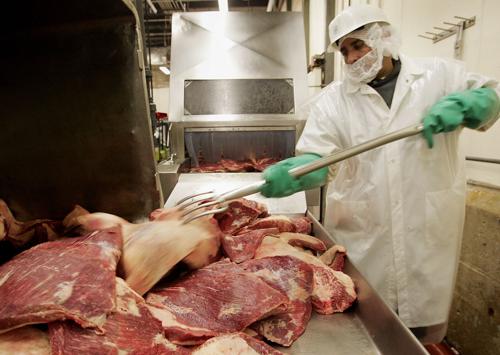
Barbara Kopple discusses her documentary "American Dream"
Mar. 20, 1992 Academy Award winning documentarian Barbara Kopple talks with Studs about her documentary "American Dream" and the battle fought and lost by union workers in Austin, Minnesota during the mid-80s. They set the backdrop in the small, tight-knit community that Hormel Foods had such a profound impact on, how the UFCW international union declined to support the local union, the gripping dynamics between family members who crossed picket lines, and the healing that occurred when the film was screened in the town several years later.
-
Talking about Groucho Marx, with Charlotte Chandler
Jul. 20, 1978 The biographer discusses the early life of comedian Groucho Marx, his stage career, his brothers, and their mother/manager, all further described in the book, Hello, I Must be Going: Groucho & His Friends.*Please note: some sections have been edited out from the original recording due to copyright considerations
-
Stan Brakhage discusses cinematography
Oct. 19, 1970 According to Stan Brakhage, being a cinematographer is being a writer of movement. Here, he talks with Studs about film and magic, and always finding new techniques to make pictures move.*Please note: some sections have been edited out from the original recording due to copyright considerations
-
Dalton Trumbo reads from and discusses his book "Additional Dialogue ; part 1
Nov. 27, 1970 In his book, "Additional Dialogue: Letters of Dalton Trumbo, 1942-1962," Dalton Trumbo gives his audience a better understanding of why he was believed to have been warty, abrasive and stubborn. Trumbo believed people have the right to silence and they have the right to speak. He was angered when a book review was written about one book but another author's book was ignored. Trumbo spent time in prison where he was not allowed to write anything negative about the living conditions.
-
Frederick Wiseman discusses public welfare
Feb. 20, 1976 Discussing public welfare and interviewing Frederick Wiseman, director of the documentary film, "Welfare."
-
Marcel Marceau talks about adapting his work to film
Oct. 17, 1974 The famed French mime and actor discusses illusion and reality, as depicted in the surrealist horror film, Shanks.*Please note: some sections have been edited out from the original recording due to copyright considerations
-
A conversation with Jeanne Moreau
Nov. 5, 1979 The famed French actress, singer, screenwriter, and director discusses her film, L'Adolescente (The Adolescent), about a young girl's coming-of-age in the French countryside before the start of World War II.*Please note: some sections have been edited out from the original recording due to copyright considerations