Listen to New Voices on Studs Terkel our partnership with 826CHI-here! Read the Story


Showing 1 - 10 of 36 results
-
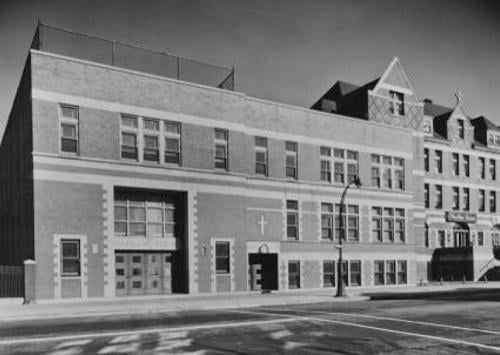
Sister Mary William discusses the importance of Marillac House
Apr. 10, 1968 Content Warning: This conversation includes racially and/or culturally derogatory language and/or negative depictions of Black and Indigenous people of color, women, and LGBTQI+ individuals. Rather than remove this content, we present it in the context of twentieth-century social history to acknowledge and learn from its impact and to inspire awareness and discussion. When she was a teenager, Sister Mary William told her parents that she wanted to become a nun. Sister Mary wanted to become a nun so that she could love and help many people.
-

Chicago residents Alice and Bob Taylor talk with Studs Terkel
1970 Recorded in the Taylor's home against a backdrop of sounds created by a nine-children family, Studs, Alice and Bob discuss aspects of a white family living in a predominately African-American amidst an exodus of the white, Christian community. Includes a performance of "Onward, Christian Soldiers" by the family around their piano, and "Jesus Loves Me" by two of the children.
-
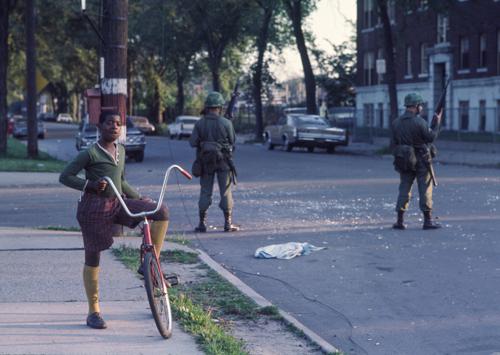
Rita Buscari interviews inner-city youth in Chicago
1968 Rita Buscari interviews inner-city youth in Chicago in the aftermath of the 1968 riots. Several pre-teen and teenaged African American youth are featured, discussing their experiences during the Chicago riots of April 1968. Topics include: Relationships between children and adults, relationships between police and civilians, relationships between blacks and whites, and the impact that Martin Luther King Jr.
-
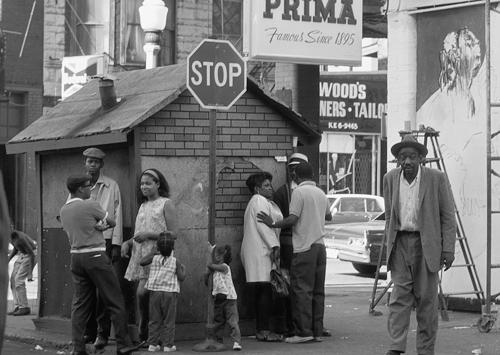
Studs Terkel interviews Curtiss Brooks, Jane Weston and Philip Hauser on the status of Blacks and housing, jobs and education in Chicago ; part 4
1965 Discussing "Discrimination in metropolitan Chicago" with Curtiss Brooks, employment specialist, Chicago Urban League, Jane Weston, housing specialist, American Friends Service Committee, and Philip Hauser, Sociology Department of University of Chicago. Brooks, Weston and Hauser provide data, reports and statistics to debunk the myths concerning the Black market for housing in Chicago. Weston states that public attitudes have changed and Real Estate must listen and accommodate open occupancy. Another myth that is discussed is that property values will go down if Blacks move in.
-
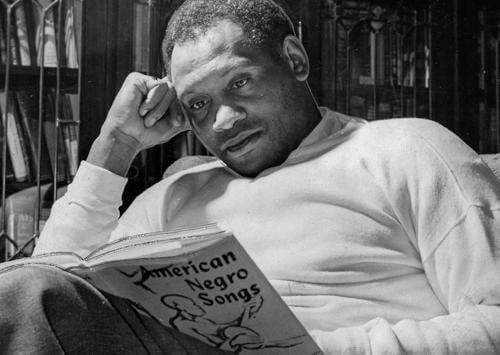
Gathering of friends discussing Paul Robeson
May. 8, 1970 Recorded live on Chicago's South Side. Robeson is ill at the time of recording. Speakers: Earl Dickerson, Etta Moten Barnett, Judge Sidney Jones, J. Mayo "Ink" Williams, Joan Brown (possibly Abena Joan Brown), Charles Hamilton, Margaret Burroughs, [John Gray's sister], [Stevens?]
-
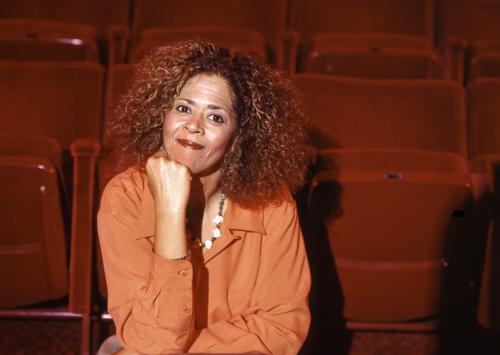
Anna Deavere Smith discusses her career
May. 4, 1995 Anna Deavere Smith discusses and demonstrates her unique character portrayals from her works "Fires in the Mirror" and "Twilight: Los Angeles, 1992."
-
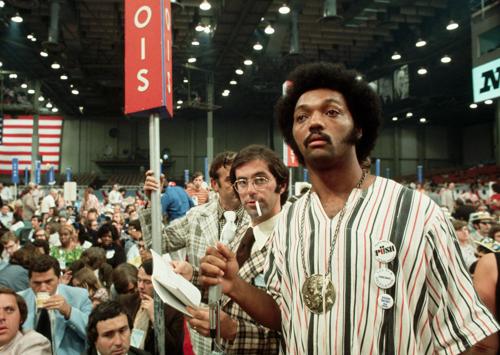
Barbara Reynolds discusses her book "Jesse Jackson, the Man, the Movement, the Myth"
May. 27, 1975 Discussing "Jesse Jackson, the Man, the Movement, the Myth" and interviewing the author Barbara Reynolds.
-

Laurie Abraham reads from and discusses her book "Mama Might Be Better Off Dead"
Oct. 1, 1993 What started out as a 5-piece article on health care became Laurie Abraham's book, "Mama Might Be Better Off Dead: The Failure of Health Care in Urban America". Through her stories, Abraham points out the many hardships and catch-22 scenarios of some poor families. One woman, after caring for her mother all day, Julie, wanted to work part time in the evenings. However, she soon learned that she'd be making too much money and she'd no longer be eligible for Medicaid for herself and her children.
-
Studs Terkel comments and presents Fiesta: a Chicago Happening ; part 1
Aug. 23, 1969 Terkel interviews Jose "Cha Cha" Jiménez during a social gathering. He also interviews Brian McCutcheon of the 43rd Ward.
-
Studs Terkel comments and presents Fiesta: a Chicago Happening ; part 2
Aug. 23, 1969 Studs Terkel interviews José "Cha Cha" Jiménez, founder of the Young Lords. At the time of the interview, Jiménez is preparing a picnic for the local Puerto Ricans. However, he is being harassed by the police.