Listen to New Voices on Studs Terkel our partnership with 826CHI-here! Read the Story


Showing 191 - 200 of 312 results
-

Jack Nelson discusses his book "Hunger for Justice: The Politics of Food and Faith"
Jan. 31, 1980 Discussing the book, "Hunger for Justice: The Politics of Food and Faith," and interviewing the author Jack Nelson.
-
Dr. Carlo Levi discusses his exile and humanity in southern Italy after WW2; part 1
1962 Dr. Carlo Levi talks about his book "Christ Stopped at Eboli", the human condition, and compassion for those suffering during and after World War 2.
-
Dr. Carlo Levi discusses Italian literature; Julio & Phillipo sing nursery rhymes, Maria Caniglia discusses opera; part 2
1962 Dr. Carlo Levi talks about the differences in Italian and American literature in the first part. In the second part, children Julio and Phillipo sing Italian nursery rhymes. In the last part, Maria Caniglia and husband Pino Donati discuss opera; part 2.
-
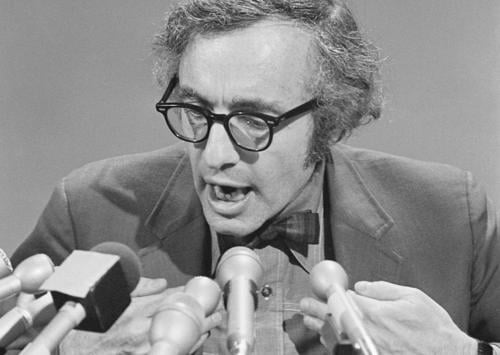
Robert Jay Lifton discusses his book "Living and Dying"
Jan. 6, 1975 With his book, "Living and Dying," Robert Jay Lifton, said the point he wanted to make clear is that individuals have to confront death in order to live well. Lifton also talks about deniers of death and their numbing feelings. Social change with regards to death, explained Lifton, will need to occur.
-
Dr. Robert Jay Lifton discusses the psychological impact of the nuclear arms race
1980 Dr. Robert Jay Lifton, psychiatrist and psycho-historian, discusses the acceptance and embrace of nuclear disaster, doctors' opposition to nuclear weapons, difference in Americans' and Europeans' opposition to nuclear weapons, psychological impact of nuclear bombings in Japan, and the mental disconnect experienced by those who build atomic weapons who then see the bombs' effects.
-
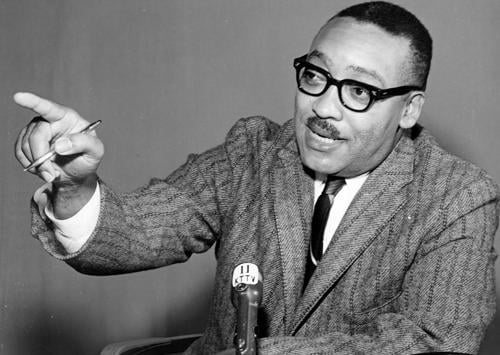
Louis Lomax discusses the book "Thailand: The War That Is, The War That Will Be"
1967 Discussing Thailand and interviewing journalist Louis Lomax. Includes passage from book.
-
Studs Terkel continues his interview with Erich Luth in Hamburg discussing the aftermath of the war on Germany's youth ; part 3
1967 There is a silence in the tape from 3:48 to 3:58 due to Studs changing the tape. It should be noted that the word "clever" in this discussion means intelligent. The interview concludes at 35:36 where Studs offers his reflections on his stay. Luth is the retired Press Chief of Hamburg and has also helped with remunerations for the Jewish people in the aftermath of World War II. He has also facilitated detente between Israel and West Germany.
-

Studs Terkel talks with Erich Lüth on his first hand experiences living in Hamburg through the rise and fall of Hitler ; part 1
1968 Erich Lüth discusses his experiences, observations, and accounts of life in Hamburg, Germany during the rise and fall of Hitler. He recounts how as a member of Parliament he brought in Hitler's, "Mein Kampf" and read portions aloud and was laughed at by his colleagues. He states they were blind to what Hitler declared in his book he would do and some are still blind by wanting to rub out their past, their history.
-

Studs Terkel concludes his interview with Erich Lüth going more in depth on the aftermath of the war on Germany's youth ; part 4
1968 Erich Lüth's discussion with Studs Terkel is similar to part 3 but Luth offers a more in-depth conversation on the role of teachers in schools and how the time of Hitler is taught. There were those teachers that joined the party to continue their love of teaching and those teachers that were brought into the Nazi Party to follow their convictions. This lack of courage to resist influences pupils today because teachers are not saying they were cowards. The relationship is altered out of shame, and embarrassment.
-
Jane Kennedy talks about her anti-war activism, crimes and experience in prison
Nov. 6, 1975 Jane Kennedy (part of the group Beaver 55) went to prison for the scrambling of magnetic tapes at the Dow Chemical napalm producing plant in Midland, Michigan, and, a week later, the destruction of draft files in Indianapolis, Indiana. Both companies were profited from the Vietnam War.