Listen to New Voices on Studs Terkel our partnership with 826CHI-here! Read the Story


Showing 71 - 80 of 117 results
-

Survivors of the Hiroshima atomic bomb discuss the event and nuclear nonproliferation
May. 31, 1982 Discussing Hiroshima and nuclear nonproliferation with survivors of the Hiroshima bomb of August 6, 1945 and activists organizing against nuclear proliferation.
-
Martin Broszat discusses Germany
1967 Interviewing historian Martin Broszat while visiting Munich, Germany at the Institute of Contemporary History(Institut für Zeitgeschichte). They discuss National Socialism(Nazism) in German & European History between World War I and World War II. As well as a brief discussion of the Neo-Nazi Movement in the 1960's in Germany.
-
Harrison Salisbury discusses his book "The 900 Days: The Siege Of Leningrad" and Isabella Zorina discusses a trip to mass graves
Jul. 1, 1982 Harrison Salisbury discusses his book “The 900 Days: The Siege Of Leningrad” and the lasting impact of the siege on the Soviet Union and life in Leningrad during the siege. Salisbury reads a poem by Olga Bergholz.Isabella Zorina discusses a trip to mass graves, including the many young people who were also visiting, some as part of wedding ceremonies, and the music played at the graves. Terkel plays Beethoven's Symphony No. 3, conducted by Leonard Bernstein, at the end of the program.
-
Hamilton Fish III discusses American history
Colonel Hamilton Fish III discusses American history. Major topics include The Great Depression, Franklin D. Roosevelt, World War II, and Communism. Fish also reads a personal letter sent to him from Martin Dies, Jr. Content Warning: This conversation has the presence of outdated, biased, offensive language. Rather than remove this content, we present it in the context of twentieth-century social history to acknowledge and learn from its impact and to inspire awareness and discussion.
-
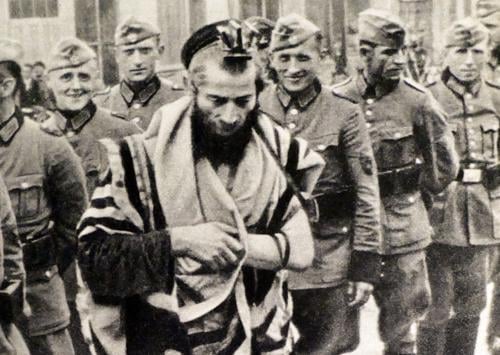
Heinrich Gruber and Howard Schomer discuss Nazi Germany and resistance
1968 German theologian Heinrich Gruber and pastor Howard Schomer discuss Nazi Germany and resistance
-
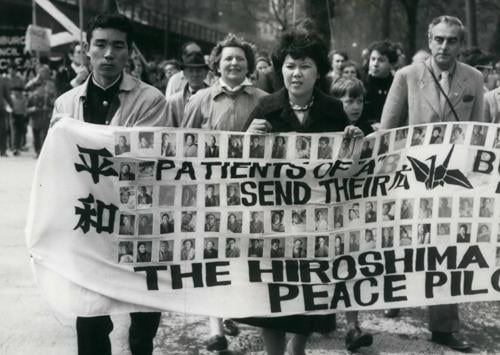
Miyoko Matsubara discusses her experiences as a survivor of the atomic bombing of Hiroshima
Mar. 29, 1962 Miyoko Matsubara, a Japanese survivor of the atomic bomb dropped on Hiroshima, discusses her experiences through translator Joan Takada. Later in life, she went on to work with disadvantaged children and as an advocate for world peace and the prevention of nuclear testing and warfare.
-
Dr. Carlo Levi discusses his exile and humanity in southern Italy after WW2; part 1
1962 Dr. Carlo Levi talks about his book "Christ Stopped at Eboli", the human condition, and compassion for those suffering during and after World War 2.
-
Studs Terkel continues his interview with Erich Luth in Hamburg discussing the aftermath of the war on Germany's youth ; part 3
1967 There is a silence in the tape from 3:48 to 3:58 due to Studs changing the tape. It should be noted that the word "clever" in this discussion means intelligent. The interview concludes at 35:36 where Studs offers his reflections on his stay. Luth is the retired Press Chief of Hamburg and has also helped with remunerations for the Jewish people in the aftermath of World War II. He has also facilitated detente between Israel and West Germany.
-

Erich Lüth talks with Studs Terkel on life under Hitler and its aftermath ; part 2
1968 Studs continues his interview with Erich Luth in Hamburg, Germany. The audio breaks at 25:23 and continues on a Sat at 25:28 till its conclusion at 35:43. Erich Luth conveys stories of humanity by both German prisoners towards Russian prisoners whose treatment was dictated by the Nazi party to not offer any winter clothing or shoes to provide comfort. The German laborers provided a human solidarity that brought them food, clothes, and soap.
-
Hildegard Knef discusses her book, "The Gift Horse: Report on a Life" and the experiences of her life in Nazi Germany and as an actress in America post World War II
1971 Studs interview with Hildegard Knef, actress and writer. They discuss her life in Nazi Germany during the war and her experience as an actress when she came to America. Studs and Hildegard read together from her book, "The Gift Horse." Knef describes her family, Nazi Germany, survival, and her experience as a German in American post WWII. Her husband, David Anthony Palastanga, also reads an excerpt from her book.