Listen to New Voices on Studs Terkel our partnership with 826CHI-here! Read the Story


Showing 11 - 20 of 200 results
-

Dale Clevenger discusses his career as a Jazz musician and member of the Chicago Symphony Orchestra
Nov. 29, 1977 Studs interviews Dale Clevenger about his music with the Chicago Symphony and his jazz group, Ears, playing at Orphans in Chicago. They discuss the improvisation of Jazz and Bach. Clevenger mentions various Jazz musicians and their style. The music is removed from this edited version of the original recording.
-
Dale Clevenger discusses his career as a Jazz musician and member of the Chicago Symphony Orchestra
May. 13, 1980 Studs interviews Dale Clevenger about his music with the Chicago Symphony and his jazz group, Ears, playing at Orphans in Chicago. Clevenger discusses his work with the symphony. He explains why he credits David Amram for his interest in Jazz music. He names artists like Billie Holiday, Jack Teagarden, and Clark Terry as musical influences in his life. The music is removed from this edited version of the original recording.
-
Mary Collins discusses her husband, Lee Collins, autobiography “Oh, Didn’t He Ramble” and his career as a Jazz musician
Sep. 3, 1974 Studs interviews Mary Collins about her husband, Lee Collins. They discuss the book that she and Lee wrote together until his death in 1960. Mary shares interesting stories of Lee’s experiences when he toured. She and Studs reflect on the other artists that Lee Collins worked with and those that influenced his music. Mary shares the story of how she and Lee reconnected in Chicago. She explains how Lee’s depression because of his health led to his attempted suicide and the horrible way he was treated at the psychiatric hospital.
-
Terkel comments and presents musical performance of Pat Ferreri, Ron Steele and Jim Crockett
Jun. 30, 1980 Presenting music and interviewing studio musicians Pat Ferreri, Ron Steele and Jim Crockett editor of Guitar Play Magazine.
-
-
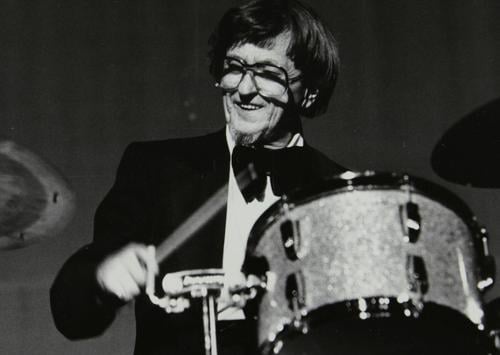
Barrett Deems discusses jazz drumming
Mar. 27, 1979 Barrett Deems discusses his upbringing where he began drumming at age 4 and recalls touring with Louis Armstrong and other musicians. He also talks about meeting drummers in Africa. Music is played throughout: "Flip"- Joe Venuti, "Shine"- Barrett Deems Hottet, "Now You Has Jazz"- Bing Crosby and Louis Armstrong (from "High Society"), "Muskrat Ramble"- Louis Armstrong, "Struttin' with Some Barbecue"- Louis Armstrong, "Slipped Disc"- Benny Goodman, "Stompin' at the Savoy"- Louis Armstrong. Music has been removed from this recording for copyright reasons.
-
Terkel comments and presents musical performance of old jazz duets with Don DeMichael
Sep. 20, 1978 Don DeMichael, editor-in-chief of DownBeat, has brought a collection of jazz duets and critiques and evaluates the songs with Studs Terkel.
-
Lawrence (Bud) Freeman discusses his career as a tenor sax jazz musician
Dec. 1, 1980 Studs interviews Bud Freeman about his career in Jazz and his book, "Working" as well as his album, "Complete Bud Freeman." Freeman shares stories about his dad and brother during his childhood. He discusses various songs from his album and shares stories about his interactions with other jazz musicians. Studs reads a few passages from Freeman's book. They discuss how Freeman's creative practices and how his music has changed over the years. Musical pieces are removed from this edited version of the original recording.
-
Lawrence (Bud) Freeman discusses his career as a jazz tenor sax player and his album "Complete Bud Freeman"
Apr. 15, 1982 Studs interviews Lawrence Freeman about his career in jazz. Studs notes that he first interviewed Freeman in 1939 as his first guest on his radio program with WGES. Freeman shares the names and events of influences in his life. He describes his interactions with other jazz musicians throughout his career and shares some stories about his brother, father, and childhood. Studs quotes Mark Miller of the Toronto Globe, music critic, for what he notes about Freeman.
-
Phyl Garland discusses her book "Sound of Soul" and the history of black music in America ; part 2
Nov. 25, 1968 Studs interviews Phyl Garland about her book "Sound of Soul." They discuss various musicians that she mentions in her book and their influence on black music. Garland explains the music of young black artists and how commercialization of music gave blacks an opportunity that they would not have had otherwise. Garland talks about how Fannie Lou Hamer used music to express her message in the Civil Rights Movement and as a women's rights activist. Studs and Garland discuss various black female artists and their music.