Listen to New Voices on Studs Terkel our partnership with 826CHI-here! Read the Story


Showing 121 - 130 of 135 results
-

Fleming Brown plays the banjo and discusses his career with Studs Terkel
Jan. 12, 1982 Fleming Brown, banjo player, discusses the influences Uncle Dave Macon, Pete Seeger, The Almanac Singers, and his teacher, Doc Hopkins had on him. He and Terkel also discuss the influence of WLS's Barn Dance radio show in Chicago and the Grand Ole Opry's WSM had on folk music. Fleming plays "Uncle Buddy" by Arthur Smith, to open and close the show. He also discusses the themes of Appalachian music such as lost love, mystery and murder, and plays examples for the audience.
-
Burr Tillstrom discusses the Kuklapolitans
Oct. 1, 1978 Having seen a one-man puppet show at a young age, creator and puppeteer Burr Tillstrom knew that's what he wanted to do. Kukla was the first puppet Tillstrom created. Kukla was Tillstrom's right-hand man, as Tillstrom always and only used his right hand to make Kukla come alive.
-
-
Interviewing Italian radio broadcaster Lisa Sergio
Feb. 20, 1984 Lisa Sergio was known as the "Golden Voice of Rome" for her radio broadcasts in French, English, and Italian in Italy from 1932-1937. Sergio also worked as a translator of Benito Mussolini's speeches.
-
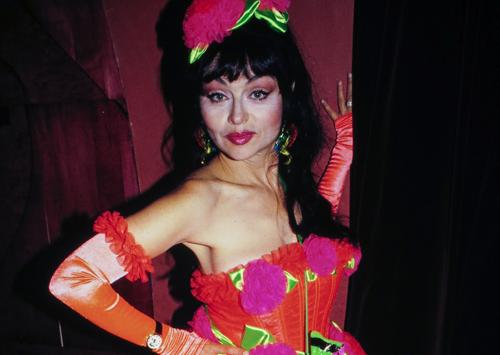
Judy Tenuta discusses being a Love Goddess
Self-proclaimed Love Goddess, Judy Tenuta, was also known as the Aphrodite of the Accordion, to her fans. Tenuta talks about how she saw Elvis in her Cheese Whiz and he told her to start her own religion, which is known as Judyism. Calling herself the Love Goddess came to be after her brothers literally kissed her hands and feet when she asked them to. This is a very short conversation that ends abruptly.
-
Sid Caesar and Imogene Coca talk about comedy and their work together
Sep. 26, 1990 Comedians Sid Caesar and Imogene Coca talk about their work together. They explore the meaning and emotions behind comedy, improv, and pantomime and how the audience is involved with their shows. Sid recalls several of their skits and does a few examples of his dialects.
-
Vic Greco and Fred Willard discuss their original comedy skits
Oct. 4, 1962 While performing some of their original material, comedians Vic Greco and Fred Willard talk about how they come up with their ideas for their shows. Always the entertainers, and while talking over one another, Greco and Willard explain that most of what they do on stage is improvisation.
-
Irv Kupcinet discusses his autobiography "Kup: A Man, An Era, A City"
Dec. 8, 1988 Irv Kupcinet said he was embarrassed to admit how many hours he'd spend per day working on one story for his column. Kup explained his work life, his social life and personal life all gelled together because he was working about 18 hours a day. Reading papers every morning and making phones to his various contacts were the main ways Irv Kupcinet got his information.
-
John Henry Faulk discusses politics and storytelling
1980 Content Warning: This conversation has the presence of outdated, biased, offensive language. Rather than remove this content, we present it in the context of twentieth-century social history to acknowledge and learn from its impact and to inspire awareness and discussion. American storyteller and radio show host John Henry Faulk discusses his experience lecturing in universities, the value of young people's activism in the United States, and speaks as several characters from his stories.
-
Michael Burton discusses John Henry Faulk and John Henry Faulk discusses American history and politics
May. 3, 1982 This interview contains two parts. The first focuses on writer and John Henry Faulk biographer, Michael Burton, in which Burton discusses John Henry Faulk’s life as an American storyteller as well as his book entitled “John Henry Faulk: The Making of a Liberated Mind.” Burton makes mention of how the Hollywood Blacklist affected Faulk’s career.