Listen to New Voices on Studs Terkel our partnership with 826CHI-here! Read the Story


Showing 21 - 29 of 29 results
-

Studs Terkel talks with Erich Lüth on his first hand experiences living in Hamburg through the rise and fall of Hitler ; part 1
1968 Erich Lüth discusses his experiences, observations, and accounts of life in Hamburg, Germany during the rise and fall of Hitler. He recounts how as a member of Parliament he brought in Hitler's, "Mein Kampf" and read portions aloud and was laughed at by his colleagues. He states they were blind to what Hitler declared in his book he would do and some are still blind by wanting to rub out their past, their history.
-

Erich Lüth talks with Studs Terkel on life under Hitler and its aftermath ; part 2
1968 Studs continues his interview with Erich Luth in Hamburg, Germany. The audio breaks at 25:23 and continues on a Sat at 25:28 till its conclusion at 35:43. Erich Luth conveys stories of humanity by both German prisoners towards Russian prisoners whose treatment was dictated by the Nazi party to not offer any winter clothing or shoes to provide comfort. The German laborers provided a human solidarity that brought them food, clothes, and soap.
-
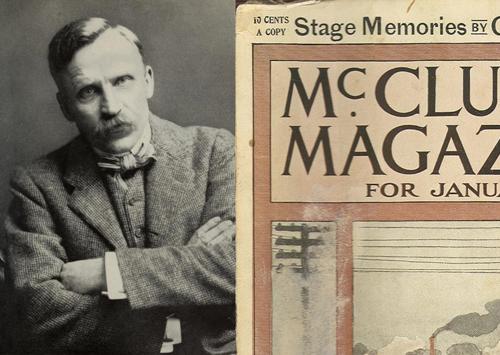
Peter Lyon discusses the book "Success Story: The Life and Times of S. S. McClure"
Aug. 1, 1967 Peter Lyon discusses the book "Success Story: The Life and Times of S. S. McClure." Includes recitation of "Immortality" by William Jennings Bryan.
-

Soviet intellectuals discuss Soviet arts and culture
May. 28, 1962 Soviet intellectuals Tamara Mamedova, Nicolai Pogodin, and Anatol Safronov talk with Studs Terkel about their work with the Institute for Soviet-American Relations (U.S.) and Soviet arts and culture.
-
Interviewing Rev. Bill Schultz, President of the Unitarian Universalist Association (UUA), and Roy Larson, editor of the Chicago Reporter
Oct. 26, 1987 The Chicago Reporter documents the city's struggles with issues of race and poverty, and the UUA is a liberal religious organization.
-
Helen Vlachos discusses her career and her book "House Arrest"
1970 In 1967, because Helen Vlachos spoke freely and called someone in the junta a clown, she was placed under house arrest. Artists took part in a type of silent resistance, as there was no new music, no new paintings, no new poems or writings that were created. Freedom isn't allowed, explained Vlachos, as people aren't allowed to use their own minds.
-
Terkel comments and reads prose from Spain and Poland
Jun. 1983 Reading prose from Spain and Poland by editor of Northwestern Literary Magazine "Tri-Quarterly" with editor Reginald Gibbons.
-
James Weinstein discusses the independent socialist magazine “In These Times”
Jul. 14, 1997 Weinstein states how at the time of creation for this magazine, most newspapers were bipartisan, intended to serve and satisfy as many people as possible, which allowed for less and less variation of opinion; Weinstein sought to combat this by producing a magazine that was very assured in its views. Studs plays "We Shall Not Be Moved" - Pete Seeger (1955).
-