Listen to New Voices on Studs Terkel our partnership with 826CHI-here! Read the Story


Showing 11 - 20 of 23 results
-
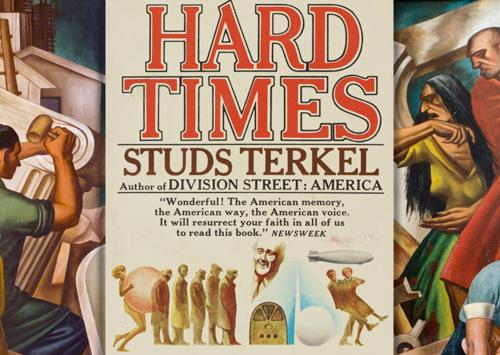
Terkel comments and presents "Hard Times: an Oral History of the Great Depression", Chapter 9
1971 Presenting "Hard Times: an Oral History of the Great Depression", Chapter 9: Concerning The New Deal. Ed Paulsen talks about conflicting feelings regarding the New Deal and how the government seemed more present in daily life. Hank Oettinger remembers how his town celebrated after the first round of relief checks were received. Gardner C. Means explains how the New Deal was created to help save the country.
-
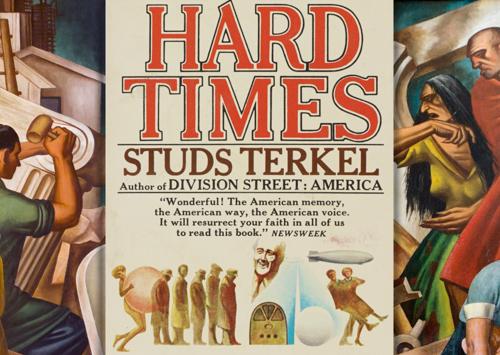
Terkel comments and presents "Hard Times: an Oral History of the Great Depression"; chapter 6
1971 Presenting "Hard Times: An Oral History of the Great Depression" Chapter 6: Three Strikes. Bob Stinson discusses working at General Motors and how the sit-down strike began. Justin McCarthy discusses his job conditions at Ford Assembly Plant prior to the unions implementation. Mike Widman remembers heading up union negotiations and the strike at the Ford Plant in 1940-41. Dr. Lewis Andreas talks about being at the 1937 Memorial Day massacre and providing medical care during the Depression.
-
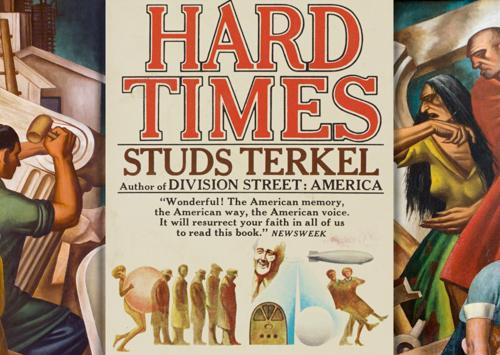
Terkel comments and presents "Hard Times: an Oral History of the Great Depression" ; Chapter 7
1971 Presenting "Hard Times: an Oral History of the Great Depression" High Life, Sixteen Ton: Chapter 7. Sally Rand talks about the creation of her signature fan dance and predictions for future depressions. Doc Graham discusses his upbringing, Chicago mobs, and Count Victor Lustig. Tony Soma talks about prohibition before and after the 1929 crash. Jerome Zerbe talks about inventing paparazzi photography, spending two weeks working in a coal mine, and the New Deal. Buddy Blankenship recalls working 16 hour days in West Virginia coal mines. Mary Owsley remembers life as a coal miner's wife.
-
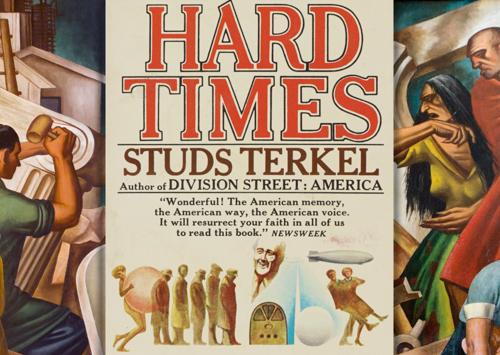
Terkel comments and presents "Hard Times: an Oral History of the Great Depression"; Chapter 8
1971 Presenting "Hard Times: an Oral History of the Great Depression" The Farmer is the Man: Chapter 8. Harry Terrell remembers the Farm Holiday Movement. Oscar Heline explains deficit financing and farmer's actions in response to farm foreclosures. Frank and Rome Hentges recall the threatening of a judge in Le Mars, IA by farmers protesting foreclosures. Orin Kelley was mistakenly arrested in connection with the judge assault and discusses his time in jail. Emil Loriks gives his perspective of the Farmer's Holiday Association. Ruth Loriks talks about grasshopper swarms.
-
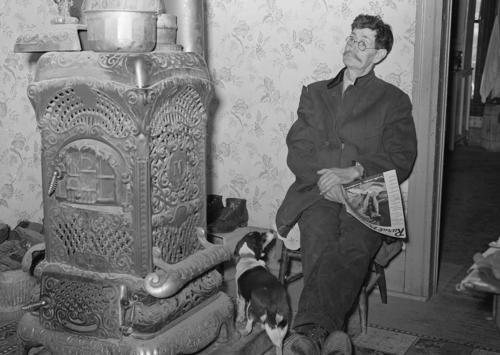
Nick Cherniavsky and Barbara (Bobbe) Herndon discuss capturing the oral history of the Progressive Mine Workers
Jul. 20, 1976 Nick Cherniavsky and Barbara (Bobbe) Herndon share their work of collecting oral histories of the coal miners of Southern Illinois who were members of the Progressive Mine Workers of America during the 1930s. The following oral history segments are played: Frank Bertetti, Joe Ozanic, Jack Battuello, James (Jim) Hopley, and Irene Allard.
-

Terkel comments and presents"Hard Times: an oral history of the great depression" ; part 1
May. 27, 1971 Presenting an award-winning summary program of "Hard Times: an oral history of the great depression" series 1971-72: "A gathering of survivors" (part two) with Jim Sheridan, Pauline Kael, Emma Tiller, Frank Czerwonka, Cesar Chavez, William Benton, Sidney Weinberg. Chapter 12.
-
Terkel comments and presents "Hard Times: an Oral History of the Great Depression"; chapter 6
1971 Presenting "Hard Times: An Oral History of the Great Depression" Chapter 6: Three Strikes. Dr. Lewis Andreas talks about being at the 1937 Memorial Day massacre and providing medical care during the Depression. Justin McCarthy discusses his job conditions at Ford Assembly Plant prior to the unions implementation. Mike Widman remembers heading up union negotiations and the strike at the Ford Plant in 1940-41. Bob Stinson discusses working at General Motors and how the sit-down strike began. Union songs performed by the Almanac Singers are played throughout the episode.
-
Ed Paulsen discusses the Great Depression its impact
Oct. 1, 1981 Ed Paulsen discusses the Great Depression its impact.
-
Interview with Katherine Haynes
1970 Content Warning: This conversation has the presence of outdated, biased, offensive language. Rather than remove this content, we present it in the context of twentieth-century social history to acknowledge and learn from its impact and to inspire awareness and discussion. Interviewing with Aunt Katherine Haynes while Studs was in Kentucky.
-
Hamilton Fish III discusses American history
Colonel Hamilton Fish III discusses American history. Major topics include The Great Depression, Franklin D. Roosevelt, World War II, and Communism. Fish also reads a personal letter sent to him from Martin Dies, Jr. Content Warning: This conversation has the presence of outdated, biased, offensive language. Rather than remove this content, we present it in the context of twentieth-century social history to acknowledge and learn from its impact and to inspire awareness and discussion.