Listen to New Voices on Studs Terkel our partnership with 826CHI-here! Read the Story


Showing 51 - 60 of 216 results
-
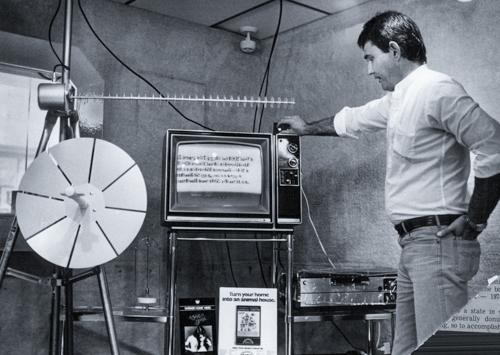
Studs Terkel discusses commercial and public broadcasting Nicholas Johnson of the FCC
Apr. 1, 1971 Studs Terkel discusses television and advertising with Nicholas Johnson, Commissioner at the Federal Communications Commission. Johnson had recently delivered a speech in Dubuque, IA about possibilities for the future of broadcasting, and had released a book a year prior, "How to Talk Back to Your Television Set". Topics of conversation include censorship, the role of advertising and corporate sponsorship of radio and television, and the hope and promise of public television.
-

Fred and LaDonna Harris discuss their thoughts on the working class in America
Aug. 4, 1975 One of the questions discussed by Fred and LaDonna Harris is whether or not the government is going to protect the interests of the average family or continue to protect the super-rich and the giant corporations. Former senator Fred Harris says people are being over-taxed by the government and that there needs to be a fairer distribution of wealth, income, and power in America.*Please note: some sections have been edited out from the original recording due to copyright considerations
-
Daniel Ellsberg discusses nuclear warfare and its worldwide impact
Feb. 14, 1994 Interviewing former government official, Vietnam War opponent, and political activist Daniel Ellsberg. Program includes an excerpt of a 1980 interview with Ellsberg. Includes a test tone lasting about 20 seconds. Content Warning: This conversation has the presence of outdated, biased, offensive language. Rather than remove this content, we present it in the context of twentieth-century social history to acknowledge and learn from its impact and to inspire awareness and discussion.
-
Sergeant Garland Davis discusses his profession ; part 2
Even though his life was threatened, when a young man told him his goal in life was to see Davis dead, Sergeant Garland Davis, continues to work in the youth crime division, in the hopes by be-friending the young people, they will do something positive with their lives. Davis also adds that the parents of these young people, along with the communities in which they live, play parts in the youths' behavior.
-
Sergeant Garland Davis discusses his profession ; part 1
An officer with the Chicago department, Sergeant Garland Davis, talks about his presence in the community, in hoping that some of the young people he works with see him as a friend and not solely as a cop. Davis also talks about the priority being helping the youth before their lives take a wrong turn into a life of crime.
-
Frank Mankiewicz discusses his book "Perfectly Clear"
Dec. 7, 1973 Watergate, wire tapping, and civil disobedience are among the topics covered in Frank Mankiewicz's book, "Perfectly Clear: From Nixon to Whittier to Watergate." According to Mankiewicz, Richard Nixon was involved in additional scandals, for example, how one year he only paid $700 in taxes when employees at the White House paid more than that.
-

Studs Terkel discusses television and advertising with Nicholas Johnson of the FCC
Apr. 3, 1970 Johnson had recently released a book, "How to Talk Back to Your Television Set". Topics of conversation include the history and role of advertising in television and radio programming, and how advertising revenue influences the media. Emphasis is placed on cigarette advertising, which was particularly prevalent and controversial at the time of this interview.
-
Allen Kaplan, Robert Nelson, and George [Troynell?] of the American Federation of Government Employees
Jan. 15, 1975 Interviewing three officials of unions of government employees: Allen Kaplan, Bob Nelson, George Troynell and discussing the importance of unions for workers rights.
-
Victor S. Navasky discusses his book "Kennedy Justice"
Dec. 10, 1971 Discussing the book "Kennedy Justice" and interviewing the author Victor S. Navasky.*Please note: some sections have been edited out from the original recording due to copyright considerations
-
Daniel Ellsberg discusses his family and his beliefs about the hydrogen bomb ; part 2
Dec. 31, 1979 Daniel Ellsberg, political activist, discusses the creation and use of the atomic and hydrogen bombs. He discusses his family including how his son helped him leak the Pentagon Papers and has since protested with him, including being jailed. He also talks about his father who quit his job over the creation of the hydrogen bomb and how his father's choice helped him to decide to release the Pentagon Papers.