Listen to New Voices on Studs Terkel our partnership with 826CHI-here! Read the Story


Showing 11 - 20 of 37 results
-

Interview with Tony Bouza
1980 Interviewing former police officer and author Tony Bouza.
-

Interview with Tony Bouza
Mar. 11, 1992 Interviewing former police officer and author Tony Bouza.
-
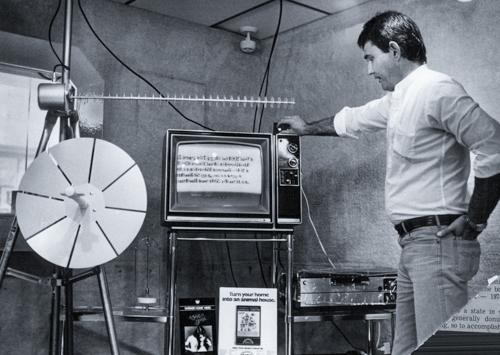
Studs Terkel discusses commercial and public broadcasting Nicholas Johnson of the FCC
Apr. 1, 1971 Studs Terkel discusses television and advertising with Nicholas Johnson, Commissioner at the Federal Communications Commission. Johnson had recently delivered a speech in Dubuque, IA about possibilities for the future of broadcasting, and had released a book a year prior, "How to Talk Back to Your Television Set". Topics of conversation include censorship, the role of advertising and corporate sponsorship of radio and television, and the hope and promise of public television.
-

Sergeant Garland Davis discusses his profession ; part 2
Even though his life was threatened, when a young man told him his goal in life was to see Davis dead, Sergeant Garland Davis, continues to work in the youth crime division, in the hopes by be-friending the young people, they will do something positive with their lives. Davis also adds that the parents of these young people, along with the communities in which they live, play parts in the youths' behavior.
-
Sergeant Garland Davis discusses his profession ; part 1
An officer with the Chicago department, Sergeant Garland Davis, talks about his presence in the community, in hoping that some of the young people he works with see him as a friend and not solely as a cop. Davis also talks about the priority being helping the youth before their lives take a wrong turn into a life of crime.
-
Frank Mankiewicz discusses his book "Perfectly Clear"
Dec. 7, 1973 Watergate, wire tapping, and civil disobedience are among the topics covered in Frank Mankiewicz's book, "Perfectly Clear: From Nixon to Whittier to Watergate." According to Mankiewicz, Richard Nixon was involved in additional scandals, for example, how one year he only paid $700 in taxes when employees at the White House paid more than that.
-

Studs Terkel discusses television and advertising with Nicholas Johnson of the FCC
Apr. 3, 1970 Johnson had recently released a book, "How to Talk Back to Your Television Set". Topics of conversation include the history and role of advertising in television and radio programming, and how advertising revenue influences the media. Emphasis is placed on cigarette advertising, which was particularly prevalent and controversial at the time of this interview.
-
Charles Hardin discusses his book, "Presidential Power and Accountability: Toward a New Constitution"
Jun. 26, 1974 Charles M. Hardin, political science professor, discusses his book, "Presidential Power and Accountability: Toward a New Constitution." Hardin discusses presidents from Roosevelt to Nixon and explores political parties and the Constitution and the role both play in the American Government. He explains his studies in political science and how he has come to believe that the Constitution should be re-written and creating more political parties could limit presidential powers, which he believes could cause problems in the future.
-
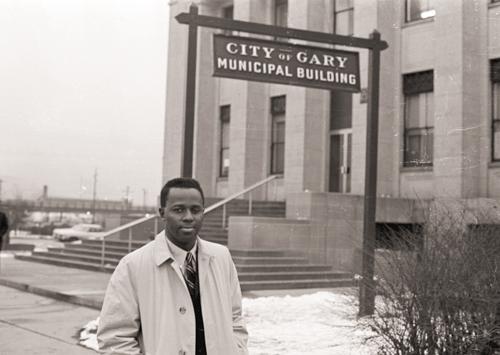
Richard G. Hatcher and Alexander Poinsett discuss Gary, Indiana, their book "Black Power: Gary Style," and politics
Jan. 18, 1971 Richard G. Hatcher and Alexander Poinsett discuss Gary, Indiana, their book "Black Power: Gary Style," politics, and race relations. They discuss the corruption in Gary, Indiana and Gary politics. Includes Richard G. Hatcher reading his old speech from his book "Black Power: Gary Style."
-
Bill Cunningham discusses court cases he has participated in
Jan. 5, 1979 Bill Cunningham, Jesuit priest and lawyer, discusses some court cases he has participated in. He talks about the Berrigan Brothers who protested against the Vietnam War. Cunnginham also talks about the Rice-Poindexter case, where two Black Panther Party members were charged for murder. He also discussed the Freedom of Information Act and the COINTELPRO the FBI's Counter Intelligence Program. Studs reads poetry from David Rice and plays a song by Hank Ferguson.