Listen to New Voices on Studs Terkel our partnership with 826CHI-here! Read the Story


Showing 11 - 20 of 21 results
-

James Cameron discusses journalist responsibility and expectations of political leaders with Studs in Ashburn Gardens, London ; part 2
1970 Studs Terkel interview with James Cameron, Brittish journalist. They discuss the objective truth and facts of journalism. Cameron shares his experience with a dying Winston Churchill and his views on science and human values. Politics, youth, and the atomic bomb are also topics in this interview. Studs quotes Albert Einstein and Sidney Burnstein, while Cameron quotes Oliver Cromwell. James Cameron's book, "Point of Departure" is also mentioned in the interview.
-
James Cameron discusses his experiences as a Brittish Journalist and his political and social beliefs ; part 4
Jun. 4, 1973 Studs Terkel interview with James Cameron, Brittish journalist. They discuss a variety of topics with politics and young people's attitudes the majority of the interview. This interview is done in Chicago, while the other three parts were done at Lewis and Clark College.
-
Ron Kovic discusses his autobiography "Born on the Fourth of July"
Jul. 29, 1977 Studs interviews Vietnam veteran and anti-war activist Ron Kovic upon the paperback release of his autobiography "Born on the Fourth of July." Kovic recounts his All-American upbringing and unblinking faith in the country and its ideals before volunteering for the Marines and Vietnam.
-
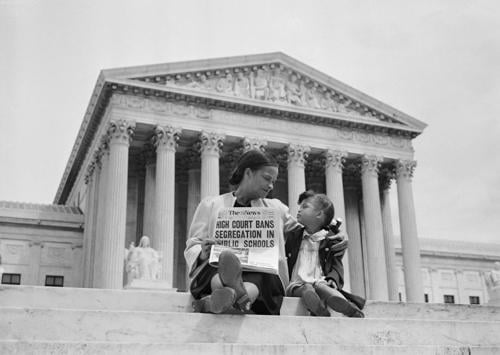
Ira B. Harkey discusses the south, civil rights, race relations, racism, his newspaper, and his career ; part 1
1966 Ira B. Harkey discusses the south, civil rights, race relations, racism, his newspaper, and his career. Includes Ira Harkey reading his writing from his newspaper the Mississippi "Chronicle-Star."
-
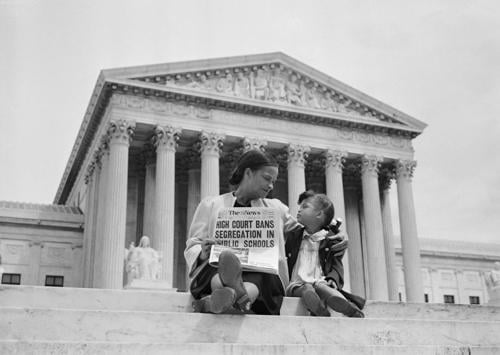
Ira B. Harkey discusses the south, civil rights, race relations, racism, his newspaper, and his career ; part 2
1966 Ira B. Harkey discusses the south, civil rights, race relations, racism, his newspaper, and his career. Includes Ira Harkey reading from his newspaper the Mississippi "Chronicle-Star".
-
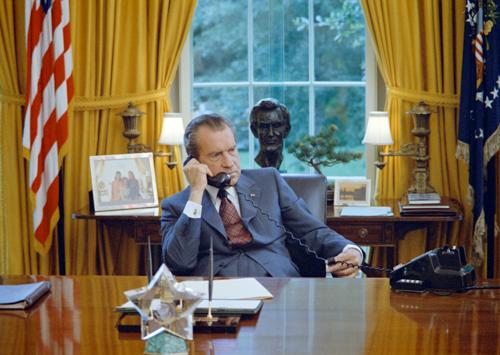
Frank Mankiewicz discusses his book "U.S. v. Richard M. Nixon: The Final Crisis"
Mar. 28, 1975 Frank Mankiewicz discusses the events surrounding the Watergate scandal and his new book, "U.S. vs Richard M. Nixon: The Final Crisis." A major theme of the book is the fact that legal issues were at the heart of the Watergate scandal, but the Nixon administration portrayed it as a public relations issue. Other topics of discussion include investigative journalism and the role of certain individuals in the prosecution of Richard Nixon.
-

Studs Terkel talks with Erich Lüth on his first hand experiences living in Hamburg through the rise and fall of Hitler ; part 1
1968 Erich Lüth discusses his experiences, observations, and accounts of life in Hamburg, Germany during the rise and fall of Hitler. He recounts how as a member of Parliament he brought in Hitler's, "Mein Kampf" and read portions aloud and was laughed at by his colleagues. He states they were blind to what Hitler declared in his book he would do and some are still blind by wanting to rub out their past, their history.
-
Elizabeth Drew discussing her book, "Washington Journal: The Events of 1973-1974"
Oct. 3, 1975 Elizabeth Drew discussing her book, "Washington Journal: The Events of 1973-1974," about the uncertain times during the Watergate scandal. She describes the Saturday Night Massacre and the military alert that were attempts to cover-up Watergate, along with how people working inside the White House felt during these events.
-
James David Barber discusses his book, "The Pulse of Politics: Electing Presidents in the Media Age," with the author James David Barber
May. 30, 1980 James David Barber, author and political scientist, discusses his book, "The Pulse of Politics: Electing Presidents in the Media Age." He explains the premise of his beliefs that presidential elections run a cycle of "conflict, conscience, conciliation," and how media affects this. He uses examples of elections from Teddy Roosevelt to Jimmy Carter. Presidential campaign songs are played throughout the interview. A record is played to hear the voices of Teddy Roosevelt and Franklin D. Roosevelt.
-
Daniel Ellsberg Discusses the publication of "The Pentagon Papers" ; part 1
1980 Daniel Ellsberg, political activist and former military analyst, discuses his release of the Pentagon Papers and his thoughts on how the Vietnam War played out. He also discusses what he believes the next war could look like and how America, and the world, would be affected by nuclear war.