Listen to New Voices on Studs Terkel our partnership with 826CHI-here! Read the Story


Showing 21 - 30 of 32 results
-
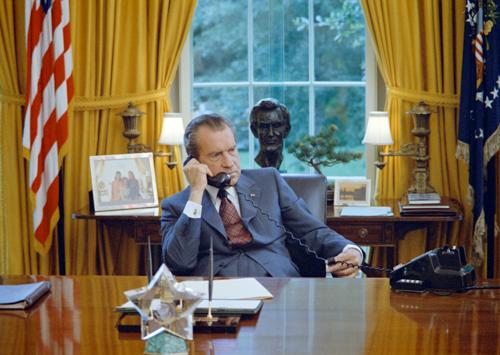
Frank Mankiewicz discusses his book "U.S. v. Richard M. Nixon: The Final Crisis"
Mar. 28, 1975 Frank Mankiewicz discusses the events surrounding the Watergate scandal and his new book, "U.S. vs Richard M. Nixon: The Final Crisis." A major theme of the book is the fact that legal issues were at the heart of the Watergate scandal, but the Nixon administration portrayed it as a public relations issue. Other topics of discussion include investigative journalism and the role of certain individuals in the prosecution of Richard Nixon.
-

Studs Terkel talks with Erich Lüth on his first hand experiences living in Hamburg through the rise and fall of Hitler ; part 1
1968 Erich Lüth discusses his experiences, observations, and accounts of life in Hamburg, Germany during the rise and fall of Hitler. He recounts how as a member of Parliament he brought in Hitler's, "Mein Kampf" and read portions aloud and was laughed at by his colleagues. He states they were blind to what Hitler declared in his book he would do and some are still blind by wanting to rub out their past, their history.
-

Interviewing Nicholas von Hoffman
Oct. 10, 1978 In his book, Make-Believe Presidents: Illusions of Power from McKinley to Carter, the American journalist Nicholas von Hoffman examines which presidents had power and which did not.*Please note: some sections have been edited out from the original recording due to copyright considerations
-
-
-
Garry Wills discusses his book "John Wayne's America: The Politics of Celebrity"
Mar. 10, 1997 Garry Wills, writer and historian, discusses his book "John Wayne's America: The Politics of Celebrity." He explores the popularity of John Wayne that took him from an actor and made him into an American symbol. He explores how the symbol of John Wayne is used by white male politicians to influence their decisions and how that affected the Vietnam War. Wills gives a biography of John Wayne, including the many influential people in his life such as his working partner, John Ford.
-
-
Elizabeth Drew discussing her book, "Washington Journal: The Events of 1973-1974"
Oct. 3, 1975 Elizabeth Drew discussing her book, "Washington Journal: The Events of 1973-1974," about the uncertain times during the Watergate scandal. She describes the Saturday Night Massacre and the military alert that were attempts to cover-up Watergate, along with how people working inside the White House felt during these events.
-
Richard Reeves his book "A Ford, not a Lincoln"
Oct. 30, 1975 Richard Reeves his book "A Ford, not a Lincoln," about Gerald Ford and the politics of the 1970s. He also discusses journalism and White House reporting.
-
James David Barber discusses his book, "The Pulse of Politics: Electing Presidents in the Media Age," with the author James David Barber
May. 30, 1980 James David Barber, author and political scientist, discusses his book, "The Pulse of Politics: Electing Presidents in the Media Age." He explains the premise of his beliefs that presidential elections run a cycle of "conflict, conscience, conciliation," and how media affects this. He uses examples of elections from Teddy Roosevelt to Jimmy Carter. Presidential campaign songs are played throughout the interview. A record is played to hear the voices of Teddy Roosevelt and Franklin D. Roosevelt.