Listen to New Voices on Studs Terkel our partnership with 826CHI-here! Read the Story


Showing 106 - 120 of 182 results
-

Horace Cayton discusses is book "Long Old Road" ; part 3
Sep. 7, 1966 Content Warning: This conversation includes racially and/or culturally derogatory language and/or negative depictions of Black and Indigenous people of color, women, and LGBTQI+ individuals. Rather than remove this content, we present it in the context of twentieth-century social history to acknowledge and learn from its impact and to inspire awareness and discussion.
-
Horace Cayton discusses his book "Long Old Road" ; part 1
Sep. 7, 1966 Content Warning: This conversation includes racially and/or culturally derogatory language and/or negative depictions of Black and Indigenous people of color, women, and LGBTQI+ individuals. Rather than remove this content, we present it in the context of twentieth-century social history to acknowledge and learn from its impact and to inspire awareness and discussion. In "Long Old Road: An Autobiography," Horace Cayton talks about growing up in Seattle in a well to do, mostly white neighborhood. Cayton's grandfather was the first Black man elected to the U.S.
-
Hilda Bernstein discusses her life and exile from South Africa
May. 21, 1975 Hilda Bernstein tells Studs about her and her husband's activism in South Africa, apartheid, and the Sharpville demonstration. Includes an excerpt from the program with Chief Albert John Luthuli (Wav ID 1895817-6-1).
-
Henry Fonda and John Houseman discuss the play "Clarence Darrow"
Henry Fonda and John Houseman talk about working with one another on "Clarence Darrow: A One-Man Play". Houseman is in awe of Fonda's portrayal of Clarence Darrow, explaining that in the play, the audience can really see the growth of Clarence Darrow, from a young lawyer to an experienced, wise one. Fonda talks about the opening scene when Darrow recalls his father talking to him when he was a young boy. Fonda reflects on times when his father talked to him. Fonda recalls being taught not to hate individuals.
-
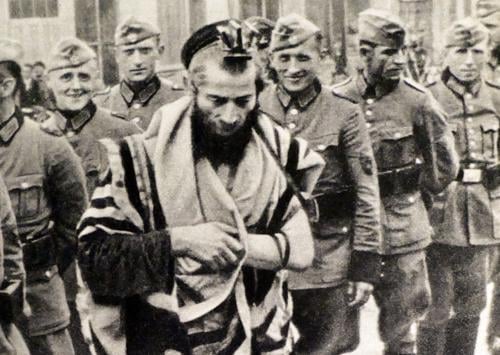
Heinrich Gruber and Howard Schomer discuss Nazi Germany and resistance
1968 German theologian Heinrich Gruber and pastor Howard Schomer discuss Nazi Germany and resistance
-
Harrison Evans Salisbury discusses his book "A Time of Change"
Mar. 18, 1988 His experiences as a journalist are what's covered in Harrison Evans Salisbury's book, "A Time of Change: A Reporter's Tale of Our Time". Salisbury believed as a reporter, one truly needed to be at the event, in order to obtain the true story. Once Salisbury questioned if he was living in America because he was asked to switch rooms at a hotel in Birmingham, only to find out later that there were special, bugged rooms for reporters.
-
Guy Carawan and Evan Carawan discuss the impact of the Highlander Folk School
Feb. 23, 1995 Interviewing activist and musician Guy Carawan and his son, musician Evan Carawan. They discuss the impact of the Highlander Folk School during the Civil Rights Movement and their relationship with folk music. Includes a test tone that lasts 20 seconds. Content Warning: This conversation has the presence of outdated, biased, offensive language. Rather than remove this content, we present it in the context of twentieth-century social history to acknowledge and learn from its impact and to inspire awareness and discussion.
-
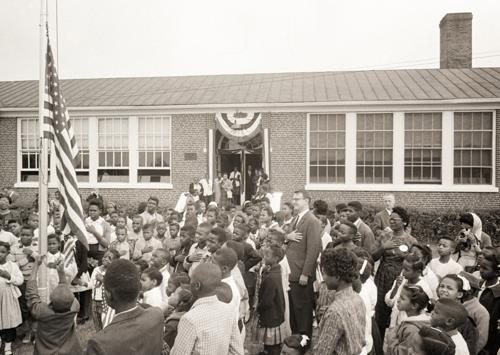
Gregory Coffin and Neil Sullivan discuss civil rights and school integration; part 2
1967 Interviewing school superintendents Gregory Coffin (Evanston) and Neil Sullivan (Berkeley) who discuss school integration and civil rights.
-
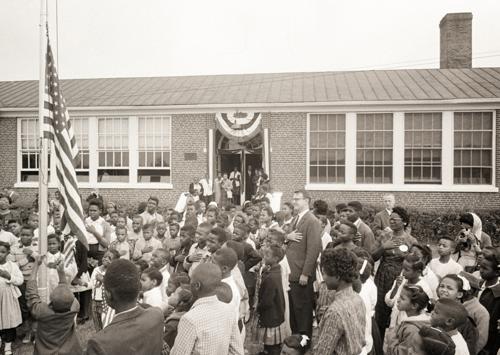
Gregory Coffin and Neil Sullivan discuss civil rights and school integration; part 1
1967 Interviewing school superintendents Gregory Coffin (Evanston) and Neil Sullivan (Berkeley) who discuss school integration and civil rights.
-
Gilbert Moses discusses The Free Southern Theater and his play "Blues for Mister Charlie" with Studs Terkel ; part 2
Aug. 10, 1966 Studs interviews Gilbert Moses about his play, "Blues for Mister Charlie" and The Free Southern Theater. They discuss a variety of plays that include, "White America," "Roots," and "Blues of Mister Charlie."
-
Gilbert Moses discusses "Waiting for Godot" and the Free Southern Theatre with Studs Terkel ; part 1
Aug. 10, 1966 Studs interviews Gilbert Moses about the Free Southern Theatre that performed throughout Mississippi depicting the lives of Southern blacks. Moses describes the audiences and their reactions to the plays and their own participation in acting out their lives.
-
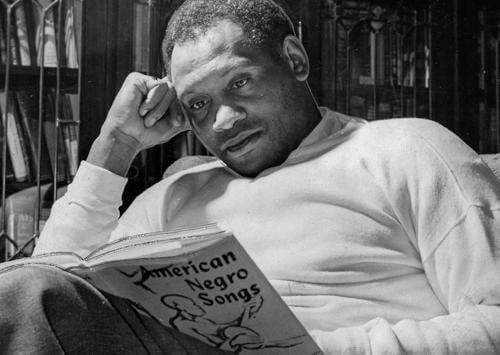
Gathering of friends discussing Paul Robeson
May. 8, 1970 Recorded live on Chicago's South Side. Robeson is ill at the time of recording. Speakers: Earl Dickerson, Etta Moten Barnett, Judge Sidney Jones, J. Mayo "Ink" Williams, Joan Brown (possibly Abena Joan Brown), Charles Hamilton, Margaret Burroughs, [John Gray's sister], [Stevens?]
-
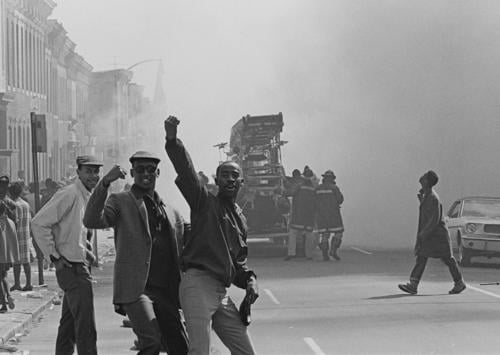
Garrett O'Connor discusses "Reflections in the rubble."
Feb. 1, 1970 Psychiatrist Dr. Garrett O'Connor discusses his article "Reflections in the rubble: some thoughts in the aftermath of civil disorder." Topics of conversation include his experiences working in community clinics with blue collar workers and African Americans; the ways that poverty, racism, and classism are maintained by the American economy; the Martin Luther King, Jr.
-
Frye Gaillard in conversation with Studs Terkel
1980 Discussing the book "Lessons From the Big House: One Family's Passage through the History of the South: a Memoir," (published by Down Home Press) with author Frye Gaillard.
-