

-

Suzanne Bloch discusses her career as a lute player and her appreciation for theater
Mar. 19, 1960 *Please note: some sections have been edited out from the original recording due to copyright considerations
-
Studs Terkel interviews Friedrich Luft in the home of Dr Erich Heller of Northwestern University
1968 Friedrich Luft, Chief Drama Critic for Die Welt discusses German theater and Bertolt Brecht as well as new playwrights such as Peter Weiss. Unlike American theaters, Germany has over 200 theaters that are subsidized and each town of 50,000 has a theater. Just like the days of The People's Stage (which still exists) the grocer and cobbler of Germany enjoy the theater. They are as devoted to the theater as going to a museum or church. They are treated to 12 to 16 new or old plays from Sophocles to Sartre or Pinter.
-
Studs Terkel interviews author-dramatist Frank Norman in his Bloomsbury Square Hotel, London ; part 2
1968 Terkel wraps up his discussion with Frank Norman. Norman gives his opinion on present conditions in prisons and orphanages. He opens up about his relationship with his daughter and a family he has never met.
-
Studs Terkel interviews author-dramatist Frank Norman at his Bloomsbury Square Hotel ; part 1
1968 Terkel delves into the life of Frank Norman, a London ex-con who turned his life around and became a novelist and playwright by writing on his experiences. He wrote "Bang to Rights" shortly after his prison release which brought him great fame. He followed that with "The Monkey Pulled it's Hair" that had a U.S. release under the name "Don't Darling Me Darling". Norman opened up to Terkel discussing his illegitimacy, his illiteracy till age 14, his institutionalization in an orphanage which he turned into the novel "Banana Boy".
-
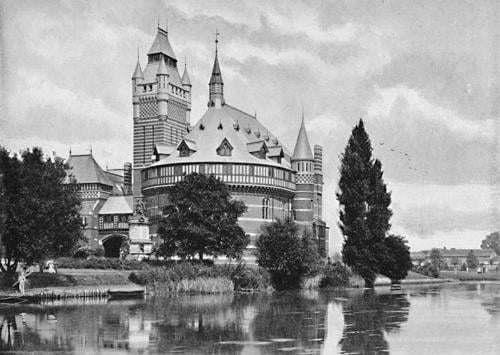
Studs Terkel in Stratford-Upon-Avon. At the National Theatre and at the Falcon Hotel ; part 1
1962 Studs Terkel heads to the British town of Stratford-upon-Avon (the birthplace of William Shakespeare) intending to interview Sir John Gielgud, and getting a few words before Studs realizes that Sir John is not intending to be interviewed. He speaks instead to other members of the company. Then he meets Mr. and Mrs. Lawrence in the Falcon Hotel.
-
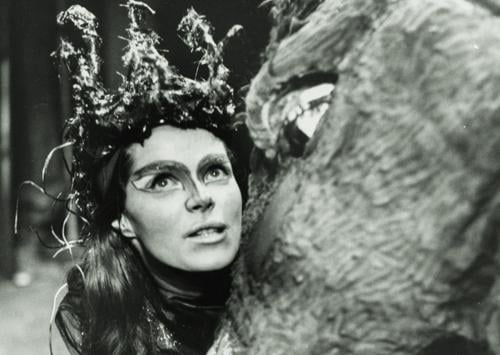
Studs Terkel dscusses the current British arts scene with Kenneth Allsop
Nov. 16, 1962 Kenneth Allsop, literary critic for the Daily Mail, BBC host of Tonight and author of "The Bootleggers and Their Era" sits down with Studs Terkel to discuss everything from the Social Realism of Arnold Wesker, Allen Sillitoe, and Shelagh Delaney known as the Backstreet Kids to the class warfare of "The Fourth of July" author David Benedictus. The two key groups of theater, the Royal Court led by George Devine and the Theater Workshop led by Joan Littlewood is also discussed.
-
Studs Terkel discusses the WPA Arts Project
Sep. 14, 1989 The influence of the WPA on the music of the 1930's. The heroic sounds heard in song, movies, and theater. He provides Bing Crosby's version of Yip Harburg's "Brother Can You Spare a Dime". As well as the Almanac Singers performing "Roll the Union On". Both Moll's Song and the final scene of Blitzstein's, "The Cradle Will Rock" are performed. Terkel provides a host of other songs which highlight the music of the 1930's. Extensive discussion on "The Cradle Will Rock" with its producer John Houseman.
-
Studs Terkel discusses the global status of theater with Croatian director Vlado Habunek
Apr. 25, 1962 Vlado Habunek, the Director of The Croatian National Theater, also a teacher at the University of Zagreb and board member for the Debrovnik Summer Festival discusses how all arts are seeking new revelations with Studs Terkel. Terkel asks Habunek to compare American Actors with Croatian actors because they are subsidized by the state. He sees Croatian actors as too secure and admires the ambition of American actors. The fact that theater reflects life and life is difficult begins a discussion on the status of theater today.
-
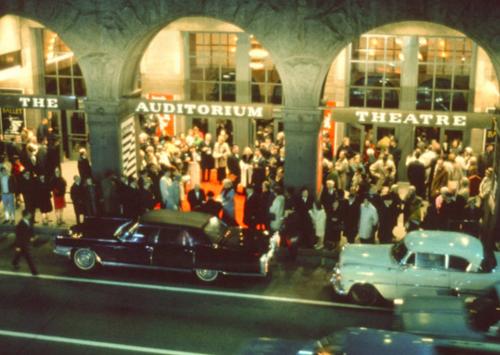
Studs Terkel discusses the Auditorium Theater with friends ; part 2
Jun. 1, 1967 Studs Terkel sits down with three guests who convey their memories of the Auditorium Theater in Chicago. Mary Garden, John Glickman and architect Harry Weese all agree that the theater's acoustics were extraordinary and there wasn't a bad seat in the house. Weese helped Chicago rediscover the Auditorium.
-
Studs Terkel discusses George Bernard Shaw with Stanley Weintraub
1970 Studs discusses the life and work of Irish playwright, critic, and political activist George Bernard Shaw with historian and biographer Stanley Weintraub. The focus of the interview is Weintraub's book, Journey to Heartbreak: The Crucible Years of Bernard Shaw 1914-1918.*Please note: some sections have been edited out from the original recording due to copyright considerations
-
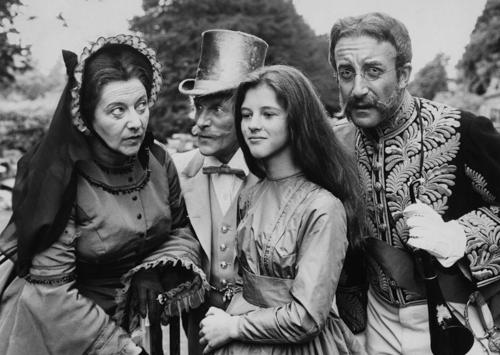
Studs Terkel discusses childhood, imaginiation, science, social history, politics, medicine and theater with Jonathan Miller in London, England
Jonathan Miller reminisces about his childhood in Regent Park, London and offers his opinion on philosophy and the changing English class structure with the loss of the Indian empire. His remake of "Alice in Wonderland" for BBC 1 is reviewed and he states he is most interested in the human imagination.
-
Studs Terkel discusses and comments the musical "The Cradle Will Rock"
Jan. 28, 1992 Studs Terkel presents The Cradle Will Rock, a 1937 musical play. Includes interview with Marc Blitzstein and Hiram Sherman talking about the challenges of presenting for the first time.
-
Studs Terkel comments and presents the Sophiatown Church of Christ the King ; part 3
1963 Presenting performances at the Sophiatown Church of Christ the King while Studs was in South Africa. They talked how they brought folk music back to South Africa.
-
Studs Terkel comments and presents the Sophiatown Church of Christ the King ; part 2
1963 Presenting performances at the Sophiatown Church of Christ the King while Studs was in South Africa. They talked how they brought folk music back to South Africa.
-

Studs Terkel comments and presents the Sophiatown Church of Christ the King ; part 1
1963 Presenting performances at the Sophiatown Church of Christ the King while Studs was in South Africa. They talked how they brought folk music back to South Africa.