Listen to New Voices on Studs Terkel our partnership with 826CHI-here! Read the Story


Showing 166 - 180 of 222 results
-
-
-
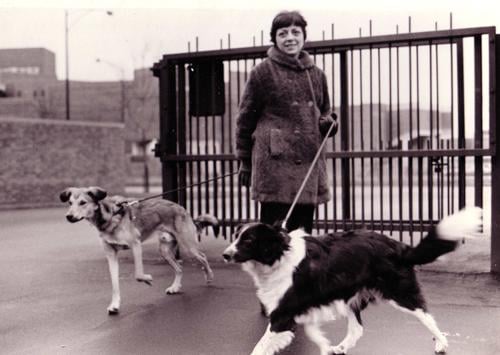
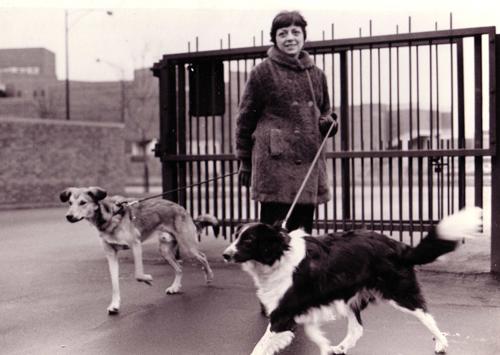
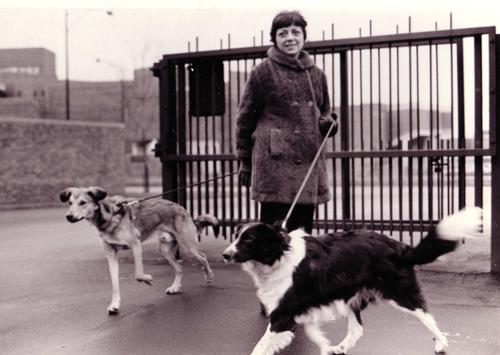
Florence Scala discusses her friendship with Jessie Binford of Hull House
Jul. 18, 1966 Even after Jessie Binford left Hull House due to its demolition, she corresponded with Florence Scala through hand-written letters. Scala learned that Binford was a country girl who lived in the big city of Chicago. Scala reads some of her letters from Binford. There is also an excerpt of Jessie Binford.
-

Florence Scala and Studs Terkel on the site of Hull House as it is dismantled ; part 2
Jul. 9, 1963 The tour continues on Maxell and Halsted Streets. Anita is sad to be leaving a place where she was born & raised. Mrs. Belmont said the mayor promised housing but they're currently living in a hotel. A 17-year resident of Hull House, Mrs. Morales says there will never be another place like it. The general feeling from everyone was that of sadness in having to leave their homes and businesses.
-
Florence Scala and Studs Terkel on the site of Hull House as it is dismantled ; part 1
Jul. 9, 1963 Florence Scala gives Studs Terkel a guided tour of the area around Hull House. Terkel talks to people in the neighborhood. Mr. Briata spoke of how he would go to Hull House once a week to take a bath. Mrs. Picardi liked the area because it had good schools for her kids. Together they visit Scala's favorite butcher, who will have to relocate his business after 40 years.
-
-
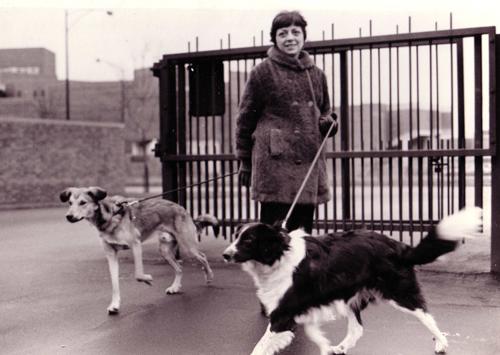
Father Jose Alas discusses his time spent in El Salvador
Oct. 7, 1985 In 1970, because he was considered a troublemaker when helping the peasants in El Salvador obtain a better life, Father Jose Alas was kidnapped by the National Guard and left for dead. Alas explains if he were to return to El Salvador, he would be killed because he is considered a traitor. Caitriona Ruane talks for a couple of minutes about her work helping the poor in the Latin American countries.
-
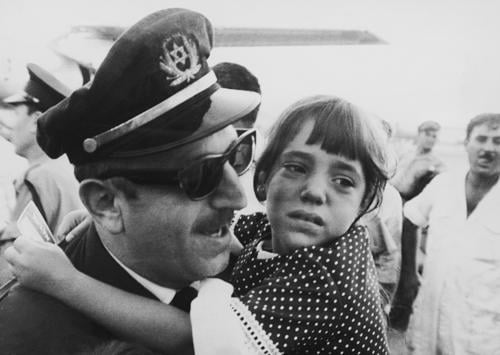
Elizabeth Rich discusses her book "Flying Scared: WhyWe Are Being Skyjacked and How to Put a Stop to It"
1970 After writing the book “Flying High” about her experiences as an airline stewardess, Elizabeth Rich moved on to research the trend of skyjacking in her second book “Flying Scared: Why We Are Being Skyjacked and How to Put a Stop to It.” Rich is one of the first people to conduct a study on these crimes, and criticizes both the US government and Federal Aviation Administration for essentially ignoring repeated skyjacking.
-
Elizabeth Janeway discusses her book "Man's World, Woman's Place"
1970 Elizabeth Janeway discusses her book "Man's World, Woman's Place" and the gender role women are taught since birth; reads passage from book; includes interview at 16:01 with a woman speaking against the Women's Movement during an outdoor protest.
-
Educator Harold Taylor talks with Studs Terkel ; part 1
1965 Harold Taylor and Studs look in-depth at the definition of what it means to be a "student," including on-campus protests, gaining life experience by teaching and challenging the mainstream social order. Includes a brief reading from Taylor's speech, "Preparation of American Teachers in the Field of World Affairs."
-
Edna Pardo, Eleanor Revell and Beth Kink discuss the work of The League of Women Voters
Mar. 7, 1990 Child labor laws, the eight hour work day, pensions, school reform, and low income housing are only some of the issues taken up by The League of Women Voters, as explained by Edna Pardo, Eleanor Revell and Beth Kink. Many believed theirs was solely a service organization to gain more women voters. The League of Women Voters is a good training ground for future women politicians, too.
-
Dr. Paul Lazar discusses the developmentally disabled and their care
Jan. 21, 1975 Interviewing Dr. Paul Lazar, chairman of the Lambs Farm, a home for developmentally handicapped adults that also provides an outdoor family activity and recreation center in Libertyville, Illinois. Dr. Paul Lazar talks about his developmentally disabled son.
-
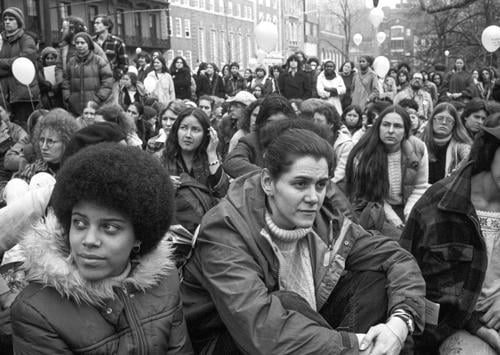
Dr. Marlene Dixon, Nancy Stokely and Janet Tenney discuss women's rights; part 1
Mar. 11, 1969 Discussing women and women's rights with Dr. Marlene, Nancy Stokely, and Janet Tenney. They discuss the women's suffrage movement, gender equality, and women's roles. Includes the women's suffrage song "The New America" by Elizabeth Knight.
-
Dr. Beatrice Tucker, Sheri Daniels, and Barbara Brasa discuss issues of training and legality in the midwifery profession
Mar. 15, 1978 CONTENT WARNING: This conversation has the presence of outdated, biased, offensive language. Rather than remove this content, we present it in the context of twentieth-century social history to acknowledge and learn from its impact and to inspire awareness and discussion.
-
Dorothy Granada discusses the Women’s Health Center in Mulukuku, Nicaragua
Apr. 28, 1994 Registered nurse and activist Dorothy Granada discusses the Women’s Health Center in Mulukuku, Nicaragua. Granada discusses her history with nonviolent activism and how this inspired her to help establish a women’s health center in Nicaragua that offers assistance to low-income communities and prioritizes the incorporation of traditional healing methods used by the indigenous people of the community. Studs plays "Yo soy de un Pueblo" - Luis Enrique Mejia Godoy (1984).