

-

-
Dr. Dalma Hunyadi Brunauer sings and discusses Bulgarian folk music ; part 2
Oct. 16, 1962 *Please note: some sections have been edited out from the original recording due to copyright considerations
-
Dr. Dalma Hunyadi Brunauer sings and discusses Bulgarian folk music ; part 1
Oct. 16, 1962 *Please note: some sections have been edited out from the original recording due to copyright considerations
-
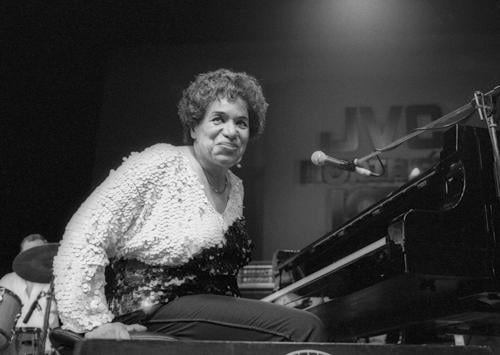
Dorothy Donegan in conversation with Studs Terkel
Dec. 27, 1994 Interviewing jazz pianist and composer Dorothy Donegan.
-
Donald Luce discusses the problems in Vietnam
Donald Luce had been living & helping the people of South Vietnam through the International Voluntary Service. Luce believed it was important to come back to the states to talk about the problems in Vietnam. Luce said the Vietnamese government could not provide its people waste disposal, electricity and running water. Luce went to Congress to voice his concerns. It was at the State Department who didn't seem to care all to much.
-
Donald Gramm discusses his career
Oct. 1, 1973 Donald Gramm discusses working with composers and comparing contemporary and classical opera. He also talks about his approaches to different performances and his experiences singing in multiple languages. Music is played throughout the interview and performances include his role as Creon from Stravinsky's "Oedipus Rex"and selections from Ned Rorem's "War Scenes": "As Adam", "O You Whom", "To You", "Look Down, Fair Moon", and "A Night Battle". Next, a performance as Leporello singing "Madamina, il catalogo è questo" from "Don Giovanni" and "Zwei Gesänge, Op. 1: I.
-
Don McLean discusses his career as a singer-songwriter
1979 American singer-songwriter Don McLean discusses his career and events in the 1960s and 1970s that have influenced his music.
-
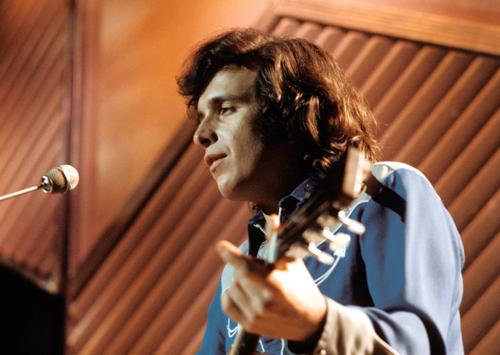
Don McLean discusses his career and his music
1980 Don McLean discusses his career and his music. Don McLean discusses his influences, life experiences, and his songwriting.
-
-
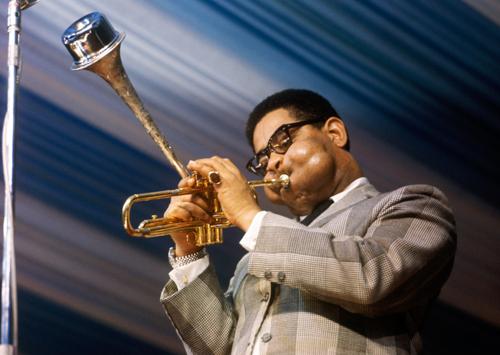
Dizzy Gillespie discusses the art of jazz ; part 2
Mar. 30, 1961 Part 2 of the program continues with Dizzy Gillespie discovering the following: his jazz style; his interactions with other musicians; and his latin musical influences. The following Gillespie musical excerpts are played: "Tin Tin Deo"; "La Lorraine"; and an musical piece (with an undisclosed title) is played to end the program.
-
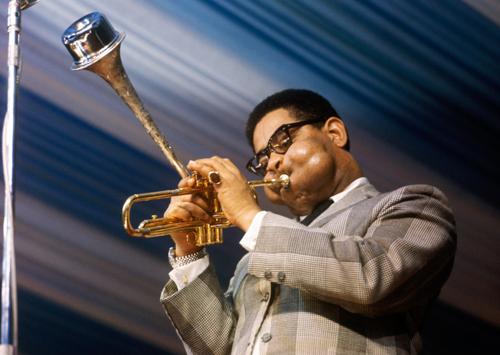
Dizzy Gillespie discusses the art of jazz ; part 1
Mar. 30, 1961 Part 1 of this program begins with Studs Terkel reading an excerpt from the book "Giants of Jazz" , which describes Dizzy Gillespie's early life. Gillespie discusses the following: the state of jazz; his fellow musicians; jazz contributors; jazz fundamentals; and his tours abroad. Gillespie's "Groovin' High" is played towards the end of this part of the program.
-
Disscussing the Balalaika and the Cimbalon with musician Alexander Eppler
Mar. 30, 1984 Eppler plays the cimbalom, an instrument descended from the hand-held hammered dulcimer found in Eastern Europe.
-
-
-