

-

Christopher Lasch discusses his book "The New Radicalism in America"
1968 Discussing the book "The New Radicalism in America" and interviewing the author Christopher Lasch"
-
Christopher Keene and Gian Carlo Menotti discuss their careers
Jan. 3, 1972 Conductor Christopher Keene and composer Gian-Carlo Menotti discuss how they became aware of each other and meeting to discuss a collaboration. They talk about spending time in Spoleto, Italy for the Festival of Two Worlds, a summer music and opera festival created by Gian Carlo Menotti. The two also discuss creating art in all forms, including music. Music is played to start and to end: "To This We've Come" sung by Eileen Farrell from Menotti's opera "The Consul" and the allegro from Menotti's "Piano Concerto", with Earl Wild as the pianist.
-
Christopher Keene and Gian Carlo Menotti discuss the opera
Sep. 6, 1973 Conductor Christopher Keene and composer Gian-Carlo Menotti dscuss the major themes of the opera"Tamu-Tamu", other opera performances, and the kind of work that goes into creating these works. Recordings are played during the interview: "Aria", sung by Eileen Farrell from the opera "The Consul", "Gloria" sung by an ensemble from the opera "The Saint of Bleecker Street", and "Have You Seen a Child" sung by an ensemble from the opera "Ahmal and the Night Visitors". Music has been removed for copyright reasons. This also includes part of an earlier recorded interview with both subjects.
-
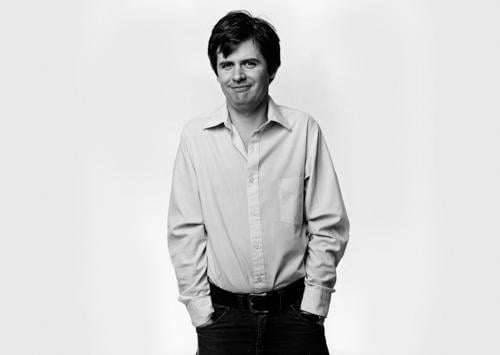
Christopher Durang discusses his play "A History of the American Film" and "Sister Mary Ignatius Explains It All For You"
Dec. 7, 1984 Studs interviews Christopher Durang, playwright, about his plays. "A History of the American Film" is the highlight of the interview, which is playing at the Heron Theater in Chicago. Durang describes parts of the play and it's characters. He explains that it portrays the different eras and famous moments of movies and references real actors and actresses. Durang reads several times from the play, but all musical numbers are removed from this edited version of the original recording.
-
Christine Fox, Annie Merrill, Jennie Wilkes of the BBC
1975 This interview is a follow up, four years later, to the first interview with these women (1965115-3-1)
-
Christine Fox, Annie Merrill and Jennie Wilkes discuss their work and upbringing in England
1970 Christine Fox, Annie Merrill and Jennie Wilkes discuss sexism in the television industry, their upbringings, and what life is like in England for young women. This is the first of two interviews, four years apart, with these women. 1965631-3-1 is the follow up.
-
Chris Ethridge and Gram Parsons discuss their album 'The Gilded Palace of Sin'
Mar. 1, 1969 Studs Terkel interviews two of the band members, Chris Ethridge and Gram Parsons. The following topics discussed are: the artists' backgrounds; their musical perspective; their songwriting; Los Angeles; earthquakes; their early life; their lyrics; life in the south (America); and instrumentation. The following musical excerpts have been removed due to copyright restrictions: "Wheels"; "Sin City"; "My Uncle"; "Do You Know How It Feels"; and "Hippie Boy".
-
Cho-Liang Lin in conversation with Studs Terkel
Jul. 19, 1991 Interviewing violinist Cho-Liang Lin.
-
Chinese pianist Fei-Ping Hsu discusses his musical career
Apr. 5, 1982 Fei-Ping Hsu speaks about growing up in China and how he came to be a pianist.
-
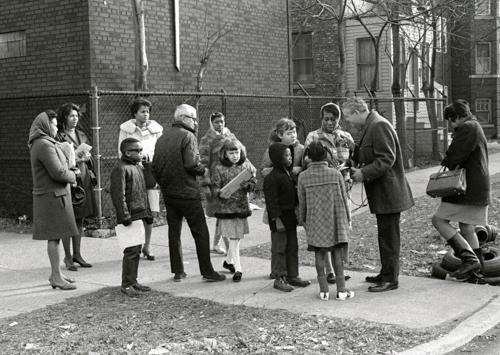
Chicago school teachers and principals discuss Chicago schools
1970 Discussing the state of West side Chicago schools with a panel of teachers and principals from four different schools.
-
Chicago residents Alice and Bob Taylor talk with Studs Terkel
1970 Recorded in the Taylor's home against a backdrop of sounds created by a nine-children family, Studs, Alice and Bob discuss aspects of a white family living in a predominately African-American amidst an exodus of the white, Christian community. Includes a performance of "Onward, Christian Soldiers" by the family around their piano, and "Jesus Loves Me" by two of the children.
-
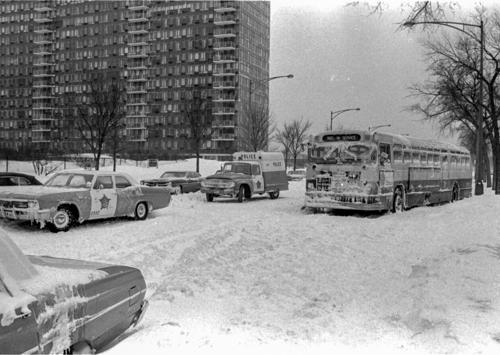
Chicago Blizzard field recordings: January 1967 snow-in ; part 2
May. 13, 1967 Terkel discussing the snow-in in Chicago in January 1967. Interviewee talks about how the human interaction differs during a blizzard then on a clear day.
-
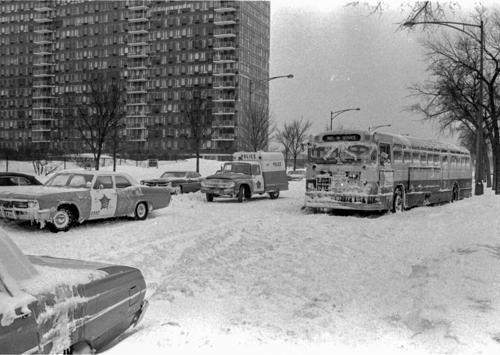
Chicago Blizzard field recordings: January 1967 snow-in ; part 1
May. 13, 1967 Studs Terkel talks to people on the street about their observations during the blizzard that caused many people to be snowed-in. A veteran news vendor said the deliveries are slower, there are no cars or taxis around and that everyone who works downtown is staying in the hotels downtown. A young police officer said he witnessed more people giving others rides. One gentleman told Terkel that to him, it was as though everyone knew each other, and there were no strangers in a blizzard.
-
Chicago area college teachers discuss recent grievances
1969 Discussing the role of the teacher and the Chicago Junior College teachers' grievances with Dr. Mary Mainwaring, Gordon Murray, Dr. Peter Senn and Dr. Morris Springer.
-
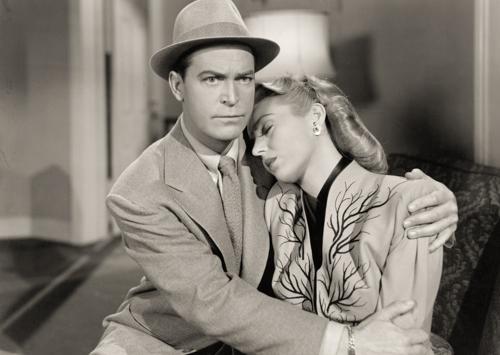
Chester Morris discusses theater and his Broadway production of "Advise and Consent" with Studs Terkel
Feb. 27, 1962 An interview with Chester Morris about his role in "Advise and Consent." They discuss theater and stage life for actors. Morris mentions numerous actors and actresses and stage productions. He discusses the business, status, and economics of acting.