

-

Carl Bernstein reads from and discusses his book "Loyalties"
Apr. 4, 1989 Carl Bernstein's parents had always hoped that government would be used to better the lives of the American people. Bernstein's book, "Loyalties: A Son's Memoir," happened as a result of his parents being accused of being disloyal and of being communists. The book also covers Bernstein's relationship with his father.
-
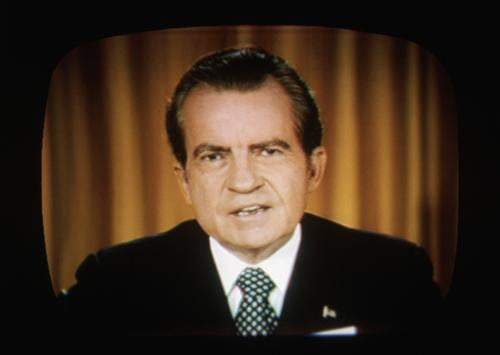
Carl Bernstein and Bob Woodward discuss the book "All the President's Men"
Jun. 21, 1974 Washington Post journalists discuss their book "All the President's Men" about breaking the Watergate scandal.
-
Carl and Hallie Foster discuss living their lives in Newburgh, Indiana
1970 Carl and Hallie Foster talk about the good and the bad of Newburgh, Indiana. Having been a welder for most of his life, Carl Foster, reflects on the time he got sick while on the job. He had gotten cancer and had to be fed intravenously for six months. While he was out sick, the company did not compensate him. When asked about his hobby of growing banana trees, a true calm and passion takes over his personality, as noticed by Studs Terkel.
-
Cao Ngoc Phuong discusses being a Buddhist in Southern Vietnam and starting the Buddhist School of Youth for Social Service
Feb. 25, 1970 Discussion with Cao Ngoc Phuong a Buddhist educator from Southern Vietnam and, one of the founding members of the Buddhist Student Movement, and the Buddhist School of Youth for Social Service. Includes poetry reading by Thich Nhat Hanh from his book "Vietnam: Lotus in a sea of fire-a Buddhist proposal for peace" Includes songs sung by Cao Ngoc Phuong: "The old man and the child" by Trinh Cong Son, "The Cio Linh mother" by Pham Duy, and "Lullaby" by Chinh Ba and Nhat Hanh.
-
Candy Armstrong-Jones discusses her book "Village of Vice" ; part 2
1968 Interviewing author Candy Armstrong-Jones about her book “Village of Vice.”
-
Candy Armstrong-Jones discusses her book "Village of Vice" ; part 1
Interviewing author and copywriter Candy Armstrong-Jones about her book “Village of Vice.” She discusses her writing techniques and shares themes from her book.
-
Candy Armstrong-Jones discusses her book "City of Sin"
1970 Studs Terkel plays Wagner’s “Liebestod” to introduce his guest, author Candy Armstrong-Jones. The two discuss her second book, “City of Sin,” a romance about a couple who work at a Chicago newspaper. Despite negative reviews for being pornographic, Armstrong Jones says she is celebrity now, which makes her “swinging” complicated. She asks Terkel if he ever swings several times, to which Terkel replies that he is married.
-
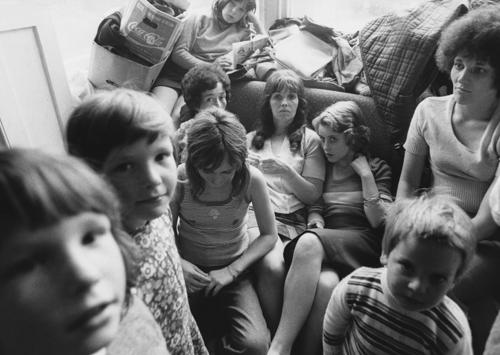
Candace Wayne talks about domestic violence
Jan. 12, 1979 Candace Wayne talks about domestic violence and the legal process in the field and her role as an attorney-at-law at the Battered Women's Center in Chicago.
-
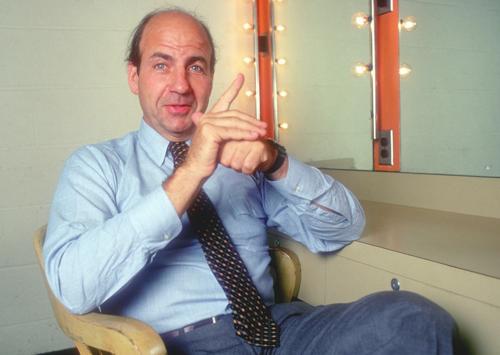
Calvin Trillin discusses his book “Third Helpings”
Apr. 22, 1983 Writer Calvin Trillin talks about his book “Third Helpings” and different regional foods and the ethnicities that influence them. Both Studs Terkel and Calvin Trillin read excerpts from Trillin’s book, and a soundbite from the former Commissioner of Immigration, Leonel Castillo, is played.
-
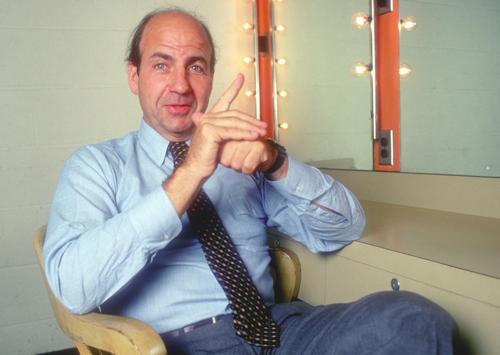
Calvin Trillin discusses his book “Killings”
Feb. 13, 1984 Writer Calvin Trillin discusses his book “Killings” and the murder cases included in the book. Trillin also reads a poem written by one of the victims.
-
C.D.B. Bryan talks with Studs Terkel
Jul. 14, 1976 C.D.B. Bryan discusses his book "Friendly Fire" and the Vietnam War. Bryan discusses the true story of Michael Mullen who was killed by friendly fire in Vietnam and his family.
-
Buzz Hirsch discusses the film "Silkwood"
Jan. 6, 1983 Discussing the film "Silkwood" a movie about Karen Silkwood and the circumstances surrounding her death with movie producer Buzz Hirsch.
-
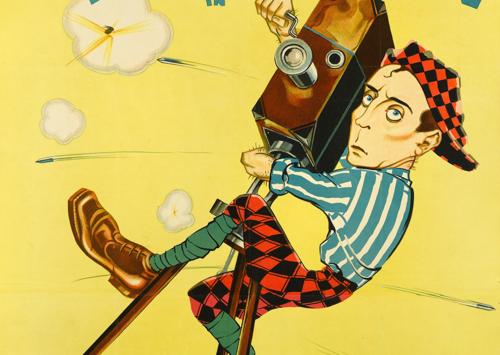
Buster Keaton discusses the release of "When Comedy Was King"
Sep. 5, 1960 Silent film pioneer Buster Keaton discusses his career following the release of "When Comedy Was King," a compilation of some classic shorts by Keaton, Charlie Chaplin, Harold Lloyd, and others. Keaton reveals how they shot the early silent films, generated material and gags, how they planned big chase scenes, the resurging European interest in silent classics, and more. Studs asks Keaton about the stylistic differences between him and Chaplin, whether he would recreate silent films, and how they compare to today's film-making.
-
-
Burton Bernstein discusses his book "Plane Crazy: A Celebration of Flying"
Nov. 22, 1985 Author Burton Bernstein discusses his latest work and his experiences with learning how to fly, and the inspiration that drove him to explore the unknown parts of the United States. Sections of the work include the discussion of air travel, types of aviation, and how the airports have changed over the years. A featured part of the work reflects privatized airports run by families, such as the O'Briens and the Nutts.