Listen to New Voices on Studs Terkel our partnership with 826CHI-here! Read the Story


Showing 796 - 810 of 1040 results
-

Holly Near discusses her book "Fire in the Rain--Singer in the Storm: An Autobiography"
Aug. 20, 1990 Singer-songwriter and activist Holly Near discusses her work for fighting for social justice through outlets such as her music. Near a prominent proponent for the LGBTQ community has streamlined her work using folk and protest-inspired songs. Near has been awarded multiple honors from organizations such as the ACLU and the National Organization for Women for her work for social change.
-
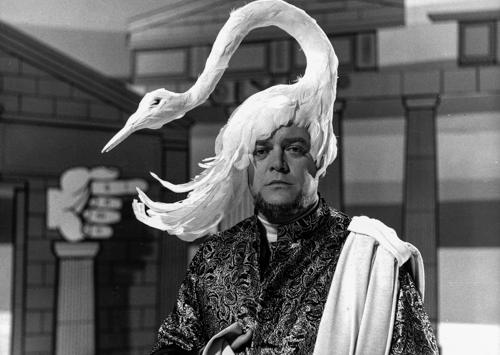
Hermann Prey discusses his career
Dec. 9, 1971 This is an interview with Herman Prey about his music career and the history of the opera music. This record contains music fragments from Papageno's lyrics of The Magic Flute.
-
Henry Threadgill, Fred Hopkins, and Steve McCall discuss their trio jazz group, Air
Sep. 4, 1981 Studs interview of Air jazz trio with Henry Threadgill - reeds, Fred Hopkins - bass, and Steve McCall - percussion. They discuss their individual careers and the people who have influenced them. Studs quoted Nelson Algren. Studs explores the evolution of their music and how the three came together. They discuss various pieces of their music and the instruments they use. Pauses were taken for musical numbers but none were played on this recording.
-
-
-
Helen Humes discusses her career
Jun. 29, 1977 Helen Humes discusses her career and touring with Count Basie and his orchestra. John McDonough is present for the interview and contributes. Songs sung by Helen are played throughout the interview: "He May Be Your Man", "Song of the Wanderer", "If I Could Be with You for One Hour Tonight" (2 recordings- one from 1940 and one from 1977), "Unlucky Woman", "They Can't Take That Away From Me", "Today I Sing the Blues", and "They Raided the Joint". Music has been removed for copyright reasons.
-
Harvey Phillips and Dr. Frederick Fennell discuss their holiday ensemble the TubaSantas
Dec. 13, 1994 Presenting music by the TubaSantas with Harvey Phillips and Dr. Frederick Fennell. Program may include a live performance. "Generic Version"-Re-edited on 12/6/1995
-
Harry Chapin discusses his career as a writer and singer and reflects on the stories behind his music
Mar. 31, 1975 Studs interviews Harry Chapin about his music and career. They discuss Chapin’s style of writing songs. Chapin describes some of his songs such as “Cats In the Cradle,” “Sniper,” “WOLD,” and “Mr. Tanner.” He stresses that his songs tell stories and often are influenced by real-life events. For example, “30,000 Bananas Pounds of Bananas” came from a trip he took on a Greyhound bus through Pennsylvania where there was a truck accident.
-
Harry Belafonte discusses jazz and folk music ; part 2
Jan. 6, 1955 The conversation continues with Belafonte talking about his album, "Belafonte Sings of the Caribbean". The songs, explained Belafonte, were both reflections of his childhood and things he was exposed to as an adult. Belafonte believed both Louis Armstrong and Jack Teagarden played important roles in jazz music.
-
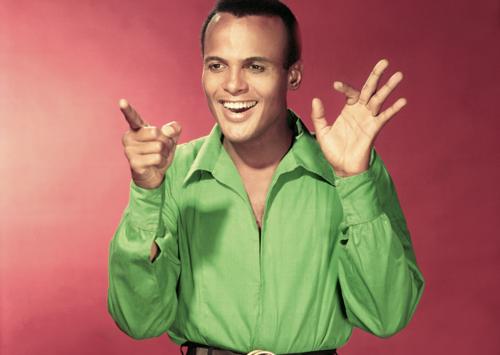
Harry Belafonte discusses jazz and folk music ; part 1
Jan. 6, 1955 Singer Harry Belafonte discusses Black music including spirituals and jazz and how it has contributed to American culture.
-
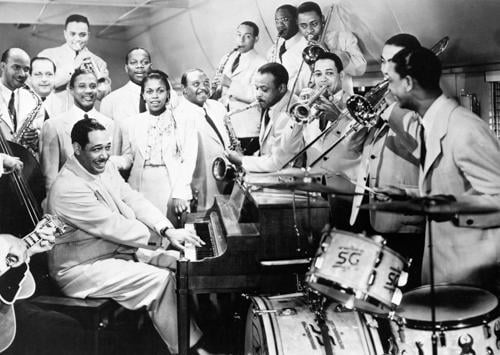
Harriet Choice discusses the career of Duke Ellington and promotes the Grant Park 5th Annual Tribute to Duke Ellington concert
Aug. 25, 1978 Studs interviews Harriet Choice, Jazz critic for the Chicago Tribune. They reflect on the music, talent and career of Duke Ellington. Choice describes several Ellington songs and the history behind them. She shares how Duke created music and wrote specifically for individual people. Studs reads what Ellington wrote about his song “Harlem Airshaft.” Choice and Terkel reflect on Ellington’s music and those who made music with him. Choice shares how a Duke Ellington performance at the Newport Jazz Festival rejuvenated Ellington’s career.
-
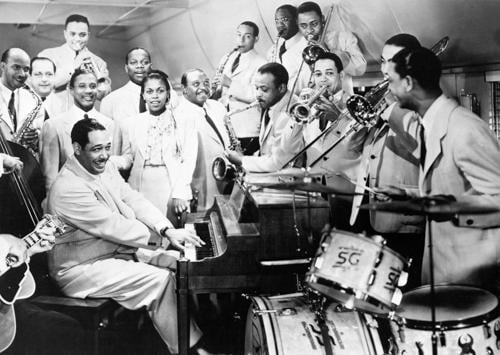
Harriet Choice discusses jazz
Aug. 7, 1978 Chicago Tribune jazz critic Harriet Choice plays and discusses some favorite records from her own personal collection with Studs Terkel.
-
Guy Duckworth discusses teaching the piano and three of his students play ; part 2
1968 Dr. Guy Duckworth and his students sing and play, "America." Duckworth talks about the importance of knowing how to learn to play the piano. The 11-year-old students first play a plain or harmonic version of "America', followed by other versions with more chords that add variety to "America."
-
Guy Duckworth and three students discuss teaching and learning piano ; part 1
1968 Musician, pianist, and educator Guy Duckworth and three of his young students at Northwestern--Darrah Cloud, David Greenberg, and Scott MacMillan--discuss teaching and learning piano. Part 1 of 2.
-
Guy Carawan and Evan Carawan discuss the impact of the Highlander Folk School
Feb. 23, 1995 Interviewing activist and musician Guy Carawan and his son, musician Evan Carawan. They discuss the impact of the Highlander Folk School during the Civil Rights Movement and their relationship with folk music. Includes a test tone that lasts 20 seconds. Content Warning: This conversation has the presence of outdated, biased, offensive language. Rather than remove this content, we present it in the context of twentieth-century social history to acknowledge and learn from its impact and to inspire awareness and discussion.