Listen to New Voices on Studs Terkel our partnership with 826CHI-here! Read the Story


Showing 1 - 15 of 74 results
-

Woody Allen discusses his work as a comedic writer and performer
Jun. 1, 1965 Woody Allen discusses his life and art, the influence of both success and failure on his work, and how he finds comedy in life’s difficulties and trials. He discusses his first screenplay, “What’s Up Pussycat?” and other comedians who have influenced the development of his own comedic work, including Mort Sahl, Charlie Chaplin, the Marx Brothers, and George S. Kaufman.
-

William Gibson discusses writing plays
1969 Now being a professional playwright, William Gibson talked about being able to write one of his plays in 8 days. A lot of the discussion is about his play, "The Miracle Worker". After reading one of Annie Sullivan's letters, and learning about a battle royale that Sullivan had with Helen Keller, Gibson envisioned what that battle royale would look like. It became a now famous part of the play.
-
William Friedkin in conversation with Studs Terkel
Oct. 1, 1985 Discussing the films "The People vs. Paul Crump", "To Live and Die in Los Angeles," and "The French Connection," with director and screenwriter William Friedkin.
-
-
Willard Maas and John Dubay discuss experimental films and filmmaking, part 2
1966 Experimental filmmaker and poet Willard Maas and his friend John Dubay discuss experimental films and filmmaking, part 2 of 2. John Dubay is featured predominantly in this part of the interview. The second part of the interview focuses less on filmmaking and more on societal ills, wealth inequality, and race relations.
-
Willard Maas and John Dubay discuss experimental films and filmmaking, part 1
1966 Experimental filmmaker and poet Willard Maas and his friend John Dubay discuss experimental films and filmmaking, part 1 of 2. His friend John Dubay speaks briefly in part 1 of the interview, but is more prominently featured in part 2.
-

Walter Bernstein discusses his book "Inside Out: A Memoir of the Blacklist"
Dec. 10, 1996 American screenwriter, Walter Bernstein, discusses his book "Inside Out: A Memoir of the Blacklist".
-
Walter Bernstein discusses his book "Inside Out: A Memoir of the Blacklist"
Dec. 10, 1996 American screenwriter, Walter Bernstein, discusses his book "Inside Out: A Memoir of the Blacklist", a memoir about his life during and following his blacklisted status due to his alleged communist views. Bernstein uses the case of John Henry Faulk versus Laurence A. Johnson to serve as an example of how the entertainment industry was being diminished during this time.
-

Viveca Lindfors discusses her roles and the roles of women in society
Feb. 2, 1974 Viveca Lindfors discusses her roles and the roles of women in society. Includes Viveca Lindfors reciting lines written by Lillian Hellman.
-
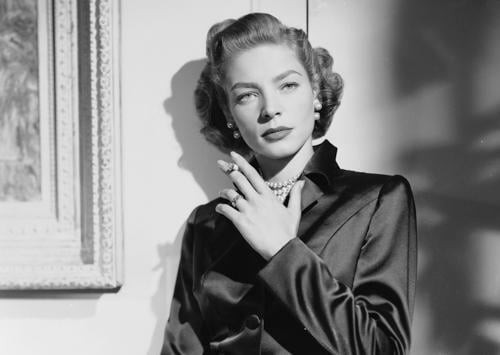
Vito Russo discusses his award-winning book "The Celluloid Closet"
Jul. 17, 1981 Discussing the book "The celluloid closet: homosexuality in the movies" with the author Vito Russo.
-
Talking with Robert Stone
Mar. 28, 1986 The American novelist, journalist, and college professor discusses his latest, Children of Light. Studs also asks him about his other works, A Flag For Sunrise, and Dog Soldiers.*Please note: some sections have been edited out from the original recording due to copyright considerations
-
Talking about Mabel Normand, with Betty Harper Fussell
Sep. 29, 1982 The essayist and biographer discusses her book, Mabel: Hollywood's First I-Don't-Care Girl, and how she attempted to separate the myth from the reality of the life of Hollywood actress, director, and screenwriter Mabel Normand.*Please note: some sections have been edited out from the original recording due to copyright considerations
-
Talking about international film, with Judy Stone
Jun. 4, 1997 The author and film critic discusses her book, Eye on the World: Conversations with International Filmmakers.*Please note: some sections have been edited out from the original recording due to copyright considerations
-
Talking about Groucho Marx, with Charlotte Chandler
Jul. 20, 1978 The biographer discusses the early life of comedian Groucho Marx, his stage career, his brothers, and their mother/manager, all further described in the book, Hello, I Must be Going: Groucho & His Friends.*Please note: some sections have been edited out from the original recording due to copyright considerations
-

Studs Terkel concludes his interview with Erich Lüth going more in depth on the aftermath of the war on Germany's youth ; part 4
1968 Erich Lüth's discussion with Studs Terkel is similar to part 3 but Luth offers a more in-depth conversation on the role of teachers in schools and how the time of Hitler is taught. There were those teachers that joined the party to continue their love of teaching and those teachers that were brought into the Nazi Party to follow their convictions. This lack of courage to resist influences pupils today because teachers are not saying they were cowards. The relationship is altered out of shame, and embarrassment.