Listen to New Voices on Studs Terkel our partnership with 826CHI-here! Read the Story


Showing 1 - 15 of 35 results
-
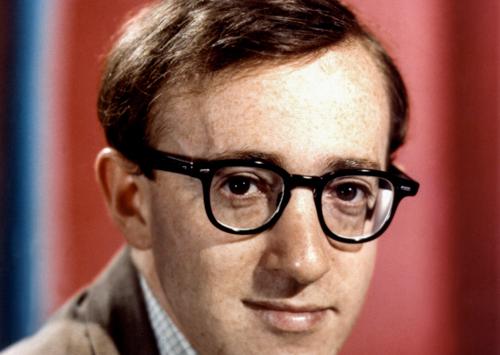
Woody Allen discusses his work as a comedic writer and performer
Jun. 1, 1965 Woody Allen discusses his life and art, the influence of both success and failure on his work, and how he finds comedy in life’s difficulties and trials. He discusses his first screenplay, “What’s Up Pussycat?” and other comedians who have influenced the development of his own comedic work, including Mort Sahl, Charlie Chaplin, the Marx Brothers, and George S. Kaufman.
-

Vic Greco and Fred Willard discuss their original comedy skits
Oct. 4, 1962 While performing some of their original material, comedians Vic Greco and Fred Willard talk about how they come up with their ideas for their shows. Always the entertainers, and while talking over one another, Greco and Willard explain that most of what they do on stage is improvisation.
-
Talking with Jules Feiffer
Nov. 30, 1979 The cartoonist and author talks about his latest work, Tantrum, which Studs describes as a novel-in-cartoon-form. The oddly-compelling story of a respectable business man who regresses to toddler-like behavior can be seen as an early example of a graphic novel.*Please note: some sections have been edited out from the original recording due to copyright considerations
-
Talking about Groucho Marx, with Charlotte Chandler
Jul. 20, 1978 The biographer discusses the early life of comedian Groucho Marx, his stage career, his brothers, and their mother/manager, all further described in the book, Hello, I Must be Going: Groucho & His Friends.*Please note: some sections have been edited out from the original recording due to copyright considerations
-
Talking about dogs and dog training with Barbara Woodhouse
1980 While on her book tour, author Barbara Woodhouse discusses canine training and the book, No Bad Dogs: The Woodhouse Way. Ms. Woodhouse talks about using the three T's with dogs - Touch, Tone, and Telepathy. Her fundamental belief is that all animals and humans are good, and if a dog exhibits bad behavior, it's a learned behavior from humans.*Please note: some sections have been edited out from the original recording due to copyright considerations
-
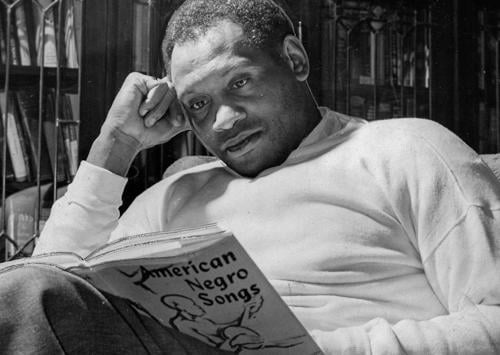
Studs presents a tribute to singer, actor, athlete, author and civil rights crusader Paul B. Robeson
Jan. 28, 1976 Studs presents a tribute to singer, actor, athlete, author and civil rights crusader Paul B. Robeson. Studs talks about his personal memories, the social impact and music of Paul Robeson. Excerpts from 1925362-4-1 Mr Robeson' friends recall memories of him: Earl Dickerson one of the 1 st black aldermen of Chicago, J. Mayo "Ink" Williams football player, Studs Terkel, Claudia Cassidy(1925655-4-1), Eddie Balchowski, Veteran, painter, poet(1934701-3-1) Includes excerpts from 1925362-4-1 and music. Similar to 1925362-3-1, but not identical. 01/23/1976 date of death.
-
Sam Levenson talks with Studs Terkel
1957 Sam Levenson discusses comedy and talks about his family life. He talks about the social push to get the children "off the corner" and how the roles in a traditional family have changed.
-
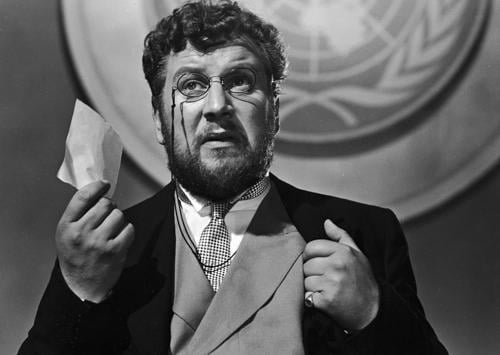
Peter Ustinov discusses his career in the arts
Jan. 7, 1959 Peter Ustinov discusses his wide-ranging career in the arts as an actor, author, director, and dramatist.
-
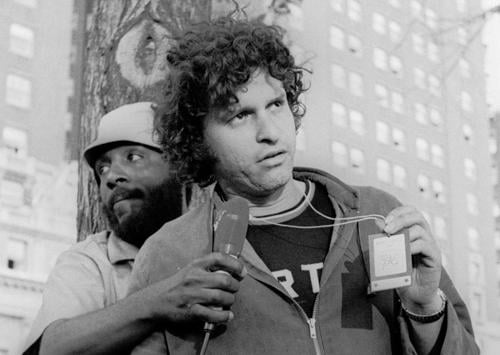
Paul Krassner discusses his book "Confessions of a Raving, Unconfined Nut: Misadventures in the Counter-Culture"
Oct. 19, 1993 Author, comedian and satirist Paul Krassner joins Studs Terkel in a “mosaic” of an interview, as Krassner calls it, to discuss his book, “Confessions of a Raving, Unconfined Nut: Misadventures in the Counter-Culture.” The conversation begins with two clips from Abbie Hoffman and Lenny Bruce, friends of Krassner’s and fellow key figures in the counterculture movement of the 1960s. Krassner speaks on his friends’ legacies, and then begins telling his story, reading a passage from his book about when he first started questioning society.
-
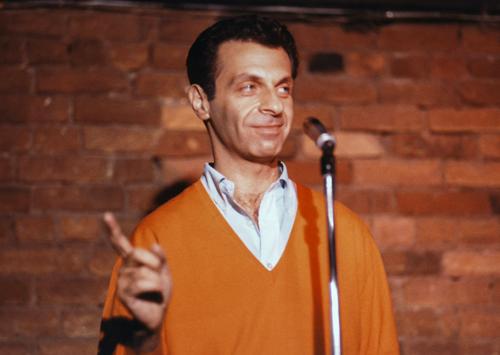
Mort Sahl discusses comedy, social satire, politics, and humorists
Feb. 17, 1960 Mort Sahl the comedian discusses comedy, social satire, and humorists. He discusses the difference between sick humor and social commentary. He discusses politics in America. Includes a speech by humorist Will Rogers towards the end of the program.
-
Michael Burton discusses John Henry Faulk and John Henry Faulk discusses American history and politics
May. 3, 1982 This interview contains two parts. The first focuses on writer and John Henry Faulk biographer, Michael Burton, in which Burton discusses John Henry Faulk’s life as an American storyteller as well as his book entitled “John Henry Faulk: The Making of a Liberated Mind.” Burton makes mention of how the Hollywood Blacklist affected Faulk’s career.
-
-
-
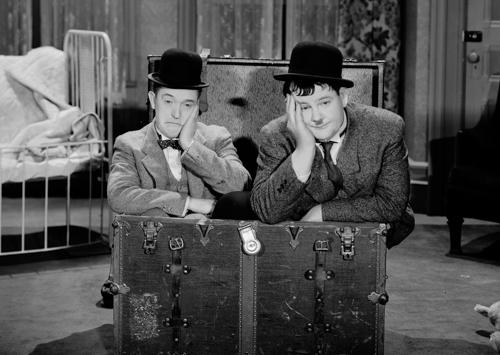
John West discusses Stan Laurel and Oliver Hardy
Nov. 2, 1965 John West discuss early classical Hollywood comedy double act Stan Laurel and Oliver Hardy. Four clips are played during the interview. The first three clips are from Laurel and Hardy's "Their First Mistake" (1932) and the fourth clip is from Laurel and Hardy's "Swiss Miss" (1938).
-
Jean Shepherd discusses his views on cynicism
Nov. 12, 1970 Radio and TV personality Jean Shepherd says there is no good or evil. He said the world is not going to change its ways based on a book or a play. Shepherd believed there's no right or wrong on issues because everyone just wants peace.