Listen to New Voices on Studs Terkel our partnership with 826CHI-here! Read the Story


Showing 1 - 15 of 87 results
-

Vine Deloria discusses his book "American Indians, American Justice"
Nov. 17, 1983 Buffalo, land, barbed wire, treaties and legal cases are all topics of Vine Deloria's book, "American Indians, American Justice". A lawyer and a Sioux Indian himself, Deloria points out a tricky question for the courts -- What constitutes Indian country?
-
Theodore Marmor discusses his book "The politics of Medicare"
Nov. 5, 1974 Discussing the book, "The Politics of Medicare," and interviewing the author Theodore Marmor. Associate professor of Center of Health Administration studies at University of Chicago. Mr Marmor has been part of policy planning with the department of welfare, for medicare. He talks about National Healthcare or at the least affordable healthcare for all. He speaks of Medicare not covering all expenses specifically prescription drugs.
-
Talking about Shakespeare, with Helene Rozenberg
Apr. 27, 1979 Power, the misuse of power, and the hollowness of one's heart and soul are the main themes covered by Helene Rozenberg in her adult courses on the plays of William Shakespeare.*Please note: some sections have been edited out from the original recording due to copyright considerations
-
Talking about piano instruction, with David Sudnow
Jun. 20, 1989 The unconventional music teacher returns to the studio to continue lessons from his book, Ways of the Hand: The Organization of Improvised Conduct.*Please note: some sections have been edited out from the original recording due to copyright considerations
-
Talking about piano instruction, with David Sudnow
Dec. 14, 1987 The sociologist, music teacher, and author joins Studs to talk about his book, Ways of the Hand: The Organization of Improvised Conduct, and his unconventional approach to piano instruction.*Please note: some sections have been edited out from the original recording due to copyright considerations
-
Studs, teachers and students have a conversation at a high school where there is controversy over the use of the book "Working"
1982 Discussing the controversy over the use of the book "Working" by author Studs Terkel in a senior vocational class. Interviews with Kay Nichols, teacher, and two high school classes, as well as Bob Burns and Jim Richardson. The students talk of how the "bad" language in the book is heard from their peers on a daily basis and they don't find it offensive. [recorded in Girard, Pennsylvania]
-
Studs Terkel interviews Professor Charles V. Hamilton on his book written with Stokely Carmichael entitled "Black Power: Politics of Liberation in America" ; part 1
Nov. 21, 1967 Using the backdrop of James Baldwin's "Nobody Knows My Name" and Baldwin's feelings that Blacks were ashamed of where they came from, Terkel interviews Professor and Chairman of the Political Science Department of Roosevelt University on his book coauthored with Stokely Carmichael entitled" Black Power: Politics of Liberation in America". Hamilton states that Blacks were taught to hate themselves and leave school believing that. Institutional racism and the deliberate oppression it creates, holds blacks back. Blacks are left out of crucial decision making processes that concern them.
-
Studs Terkel interviews Professor Charles V. Hamilton on his book written with Stokely Carmichael entitled "Black Power: Politics of Liberation in America" ; part 2
Nov. 21, 1967 Using the backdrop of James Baldwin's "Nobody Knows My Name" and Baldwin's feelings that Blacks were ashamed of where they came from, Terkel interviews Professor and Chairman of the Political Science Department of Roosevelt University on his book coauthored with Stokely Carmichael entitled" Black Power: Politics of Liberation in America". Hamilton states that Blacks were taught to hate themselves and leave school believing that. Institutional racism and the deliberate oppression it creates, holds blacks back. Blacks are left out of crucial decision making processes that concern them.
-
Rose Rigsby and Betty Shifflett discuss writing and being a writer
Jun. 7, 1971 Rose Rigsby a writer and poet is interviewed along with Betty Shifflett, who teaches fiction at Columbia College. Ms Rigsby and Ms. Shifflett talk about writing with Studs. Ms. Rigsby reads from her stories and about her time in the Sanitarium and receiving shock therapy. Several excerpts are presented from an interview with Rose Rigsby speaking about children and of taking care of them. (1925145-3-1)
-
Paul Fussell in conversation with Studs Terkel
Oct. 16, 1996 Discussing the book "Doing Battle: The Making of a Skeptic" (published by Little Brown) with author Paul Fussell.
-
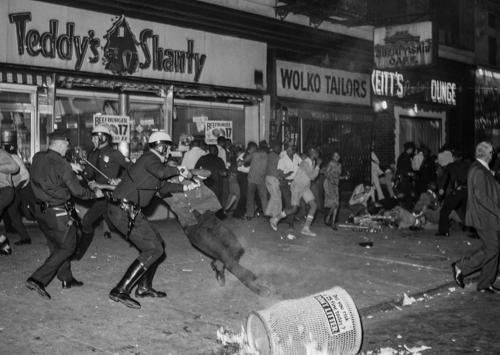
Paul Chevigny discusses his book "Police Power"
According to Paul Chevigny’s book, “Police Power: Police Abuses in New York," disobeying the police is what precipitated violence. Chevigny explained some of the police felt if they had to deal with the undesirables, whether they were criminals or not, anything goes on the street to get these guys and anything goes in court to make a conviction stick.
-
Paul Boyer discusses his book "By the Bomb's Early Light"
Jan. 9, 1986 In the book, "By the Bomb's Early Light: American Thought and Culture at the Dawn of the Atomic Age," Paul Boyer covers people's feelings and attitudes after the bomb was dropped in Hiroshima. Boyer admits he, himself, when he was a young boy, he sent away for a free atomic ring that was being advertised. The program includes an excerpt of David Lilienthal talking.
-
Norman Maclean reads from and discusses his book "A River Runs Through It"
Jun. 8, 1976 Fly fishing, relationships and people Norman Maclean has met are all apart of his book, "A River Runs Through It." Maclean's father taught Maclean and his brother the art of fly fishing. Maclean's book is semi-autobiographical with three short stories.
-
Norma Field reads from and discusses the book "In the Realm of a Dying Emperor"
Jan. 22, 1992 "In the Realm of a Dying Emperor: A Portrait of Japan at Century's End," is Norma Field's story of dissenters against Emperor Hirohito. There's the story of Mr. Chibana, a supermarket owner, who was arrested for burning the flag of the Rising Sun because he learned of the mass suicides by the people of Okinawa. There were also some that believed Emperor bore some responsibility for WWII when being told it was imperative to fight the sacred war.
-
Neil Postman discusses the book, "The School Book: For People Who Want to Know What All the Hollering Is About,".
Feb. 8, 1974 Neil Postman, an author, educator, media theorist and cultural critic discusses his book; "The School Book: For People Who Want to Know What All the Hollering Is About,". Mr Postman and Studs talk about his definition of what school is for and it's worth, and they converse about several sections of the book. Mr. Postman reads an excerpt from his book to begin the interview.