

-

Studs Terkel presents a performance of "Feiffer's America"
Apr. 1988 Studs and Jules Feiffer read several of Feiffer’s political cartoons culminating in a performance of “Feiffer’s America.” The performance is preceded by Feiffer’s explanation of the inspiration behind these works. Feiffer attempts to answer what drives him to create these astute observations of political happenings, which are often used as an outlet for his anger regarding social and political events. Studs plays "On the Good Ship Lollipop" - Shirley Temple (1934).
-
Studs Terkel interviews Friedrich Luft in the home of Dr Erich Heller of Northwestern University
1968 Friedrich Luft, Chief Drama Critic for Die Welt discusses German theater and Bertolt Brecht as well as new playwrights such as Peter Weiss. Unlike American theaters, Germany has over 200 theaters that are subsidized and each town of 50,000 has a theater. Just like the days of The People's Stage (which still exists) the grocer and cobbler of Germany enjoy the theater. They are as devoted to the theater as going to a museum or church. They are treated to 12 to 16 new or old plays from Sophocles to Sartre or Pinter.
-
Studs Terkel interviews author-dramatist Frank Norman at his Bloomsbury Square Hotel ; part 1
1968 Terkel delves into the life of Frank Norman, a London ex-con who turned his life around and became a novelist and playwright by writing on his experiences. He wrote "Bang to Rights" shortly after his prison release which brought him great fame. He followed that with "The Monkey Pulled it's Hair" that had a U.S. release under the name "Don't Darling Me Darling". Norman opened up to Terkel discussing his illegitimacy, his illiteracy till age 14, his institutionalization in an orphanage which he turned into the novel "Banana Boy".
-
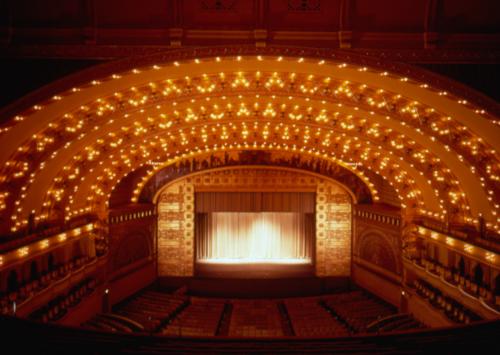
Studs Terkel discusses the history of Chicago architecture and its future with Carl Condit, Richard Nickel, and Ben Weese
1957 Studs Terkel rebroadcasts a discussion on the Chicago School of Architecture and its future in memory of Carl Condit. Carl Condit, Richard Nickel, and Ben Weese share their opinions on the Auditorium Theatre, University of Illinois-Circle Campus, Chicago Civic Center, Monadnock Building, and historical continuity.
-
Studs Terkel discusses the global status of theater with Croatian director Vlado Habunek
Apr. 25, 1962 Vlado Habunek, the Director of The Croatian National Theater, also a teacher at the University of Zagreb and board member for the Debrovnik Summer Festival discusses how all arts are seeking new revelations with Studs Terkel. Terkel asks Habunek to compare American Actors with Croatian actors because they are subsidized by the state. He sees Croatian actors as too secure and admires the ambition of American actors. The fact that theater reflects life and life is difficult begins a discussion on the status of theater today.
-
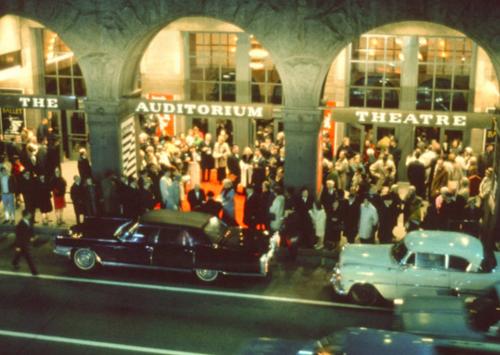
Studs Terkel discusses the Auditorium Theater with friends ; part 2
Jun. 1, 1967 Studs Terkel sits down with three guests who convey their memories of the Auditorium Theater in Chicago. Mary Garden, John Glickman and architect Harry Weese all agree that the theater's acoustics were extraordinary and there wasn't a bad seat in the house. Weese helped Chicago rediscover the Auditorium.
-
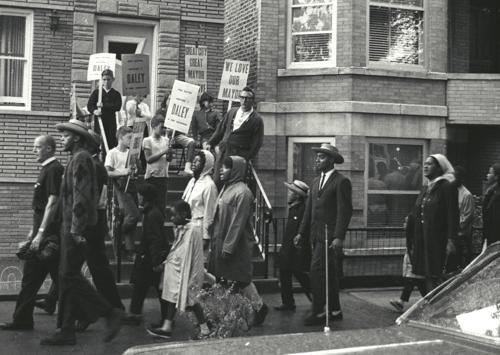
Studs Terkel discusses race relations and economic disparity with four Chicago area women ; part 2
Jan. 27, 1965 Studs discusses race relations and economic disparity with four Chicago area women in a program entitled "Each of us can act". This recording was the last of a 6-part series, "Rearing the Child of Good Will", broadcast under the auspices of the National Conference of Christians and Jews.
-
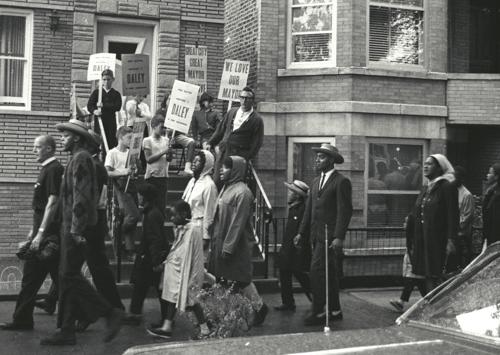
Studs Terkel discusses race relations and economic disparity with four Chicago area women ; part 1
Jan. 27, 1965 Studs discusses race relations and economic disparity with four Chicago area women in a program entitled "Each of us can act". This recording was the last of a 6-part series, "Rearing the Child of Good Will", broadcast under the auspices of the National Conference of Christians and Jews. The series focused on prejudice, race, religion, and community. Interviewees are: Madeline Bonsigniore of Chicago's south suburbs, Naomi Brodky of the Marynook neighborhood of Chicago, Lynn Williams of Winnetka, and Harriet White of the NCCJ.
-
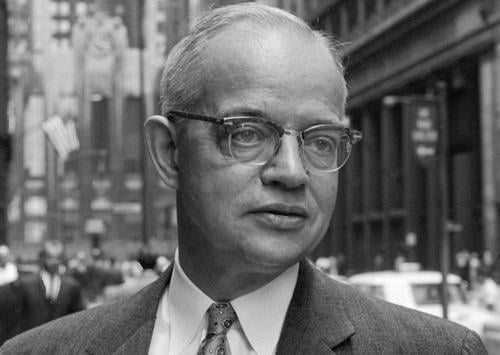
Studs Terkel discusses church architecture with William Cooley and Martin Marty
Apr. 27, 1965 Studs Terkel discusses church architecture William Cooley, a church architect, and Martin E. Marty, a theologian and scholar at the University of Chicago.
-
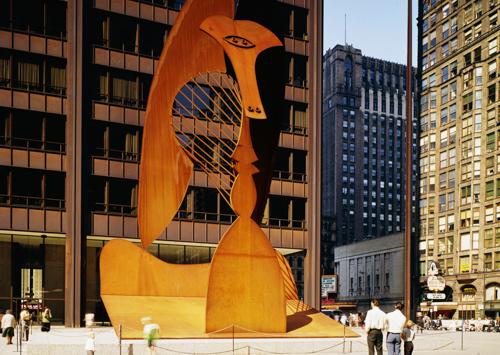
Studs Terkel comments and presents Picasso unveiling ceremony on its 30th anniversary
Aug. 15, 1997 Presenting at the Picasso unveiling: dedication ceremony and comments 30th anniversary.
-
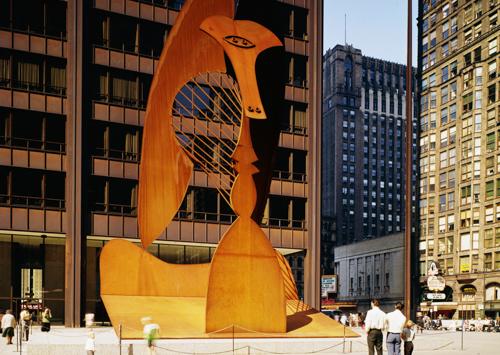
Studs Terkel comments and presents Picasso unveiling ceremony
Aug. 15, 1967 Studs Terkel presents the unveiling of the Chicago Picasso on August 15th, 1967, asking bystanders for their opinion on the new sculpture.
-
-
Stephen Deutch in conversation with Studs Terkel
Nov. 13, 1989 Discussing the book "Stephen Deutch, Photographer: From Paris to Chicago, 1932-1989" (published by the Tri-Quarterly) with photographer Stephen Deutch.
-
-
Sibyl Moholy-Nagy discusses the art of her husband, Laszlo Moholy-Nagy
Jun. 10, 1969 On the day before the opening at the Museum of Contemporary Art, Sibyl Moholy-Nagy, talks about the art of her husband, Laszlo Moholy-Nagy. Mrs. Moholy-Nagy said her husband believed in self discipline and the sacrifice to learn. In addition, she explained that her husband didn't believe in focusing on one type of material for his art but rather he worked with different types of materials like oil on canvas, steel, and plexiglass.