Listen to New Voices on Studs Terkel our partnership with 826CHI-here! Read the Story


Showing 1 - 15 of 129 results
-
Werner Burkhardt German jazz critic and translator speaks with Studs in Hamburg, Germany.
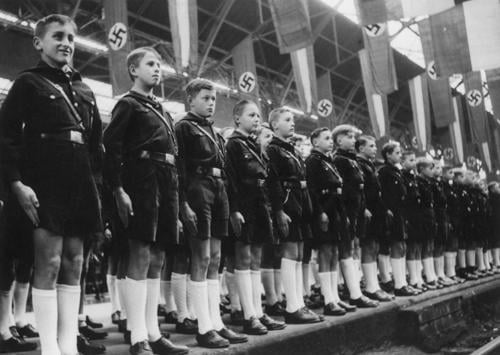
Mar. 1, 1967 Werner Burkhardt, German music journalist, critic, and translator, discusses his life and work with Studs. Mr Burkhardt speaks about his life during the time of Adolph Hitler, the Hitler Youth, and World War II. They end the interview talking about Jazz in Munich, a recording of "My Man" by Billie Holiday closes the interview.
-

Walter Terry discusses his biography of Ruth St. Denis
Jan. 19, 1970 Studs speaks with dance critic Walter Terry about his book, Miss Ruth: The More Living Life of Ruth St. Denis. They also discuss her influence on the world of dance. A few audio clips of Walter Terry interviewing Ruth St. Denis are played.*Please note: some sections have been edited out from the original recording due to copyright considerations
-
Walter Kerr discusses his book "The Silent Clowns"
Dec. 11, 1975 Writer and critic Walter Kerr discusses his book "The Silent Clowns," about the film era's greats including Charlie Chaplin, Buster Keaton, Harold Lloyd, Raymond Griffith, and Harry Langdon. Studs begins by reading an excerpt from James Agee's "Death in the Family" with music in the background followed by Kerr reading from his book. They begin talking about how silent films affected the audience, lesser known stars Lloyd Hamilton and Charley Chase, and then analyze several famous Charlie Chaplin scenes to assess the complex nature of his characters.
-
Tribute to journalist Curtis MacDougall (part 1 of 2) and reading the Nelson Algren story "The Stickman's Laughter" from his novel "Chicago, City on the Make" (part 2 of 2)
Apr. 23, 1984 Tribute to Curtis MacDougall and reading 'The Stickman's Laughter'
-
Tribute to Chicago journalist and literary critic Herman Kogan
Mar. 8, 1989 Tribute to Herman Kogan
-
Tribute to Bill Leonard on WFMT
Jan. 7, 1977 Tribute to Bill Leonard
-
The very "U" girl talks with Studs Terkel ; part 2
1962 Interviewing with the very "u" girl at the establishment (Part 2) while Studs was in England.
-
The very "U" girl talks with Studs Terkel ; part 1
1962 Interviewing with the very "Upper U" girl at the establishment (Part 1) while Studs was in England.
-
Talking film, with Molly Haskell and Andrew Sarris
Feb. 15, 1980 The film critics - and married couple - offer their opinions on various films, covering stereotypical depictions of women and the modern trend of dumbing-down plots and characters. An excerpt of an interview with Buster Keaton is included.*Please note: some sections have been edited out from the original recording due to copyright considerations
-
Talking about international film, with Judy Stone
Jun. 4, 1997 The author and film critic discusses her book, Eye on the World: Conversations with International Filmmakers.*Please note: some sections have been edited out from the original recording due to copyright considerations
-
Talking about film and film writing, with Pauline Kael
May. 2, 1980 The American film critic talks about how she attempts, through her writing, to evoke the feelings she experiences while watching movies. Studs asks about her latest collection, When the Lights Go Down: Film Writings, 1975-1980.*Please note: some sections have been edited out from the original recording due to copyright considerations
-
Studs Terkel talks to six young people about their outlooks on life ; part 2
1967 Content Warning: This conversation includes racially and/or culturally derogatory language and/or negative depictions of Black and Indigenous people of color, women, and LGBTQI+ individuals. Rather than remove this content, we present it in the context of twentieth-century social history to acknowledge and learn from its impact and to inspire awareness and discussion. The conversation continues with Studs talking to the group about their futures. They say they're happiest when playing their music.
-
Studs Terkel presents a performance of "Feiffer's America"
Apr. 1988 Studs and Jules Feiffer read several of Feiffer’s political cartoons culminating in a performance of “Feiffer’s America.” The performance is preceded by Feiffer’s explanation of the inspiration behind these works. Feiffer attempts to answer what drives him to create these astute observations of political happenings, which are often used as an outlet for his anger regarding social and political events. Studs plays "On the Good Ship Lollipop" - Shirley Temple (1934).
-
Studs Terkel interviews Friedrich Luft in the home of Dr Erich Heller of Northwestern University
1968 Friedrich Luft, Chief Drama Critic for Die Welt discusses German theater and Bertolt Brecht as well as new playwrights such as Peter Weiss. Unlike American theaters, Germany has over 200 theaters that are subsidized and each town of 50,000 has a theater. Just like the days of The People's Stage (which still exists) the grocer and cobbler of Germany enjoy the theater. They are as devoted to the theater as going to a museum or church. They are treated to 12 to 16 new or old plays from Sophocles to Sartre or Pinter.
-
Studs Terkel interviews author-dramatist Frank Norman at his Bloomsbury Square Hotel ; part 1
1968 Terkel delves into the life of Frank Norman, a London ex-con who turned his life around and became a novelist and playwright by writing on his experiences. He wrote "Bang to Rights" shortly after his prison release which brought him great fame. He followed that with "The Monkey Pulled it's Hair" that had a U.S. release under the name "Don't Darling Me Darling". Norman opened up to Terkel discussing his illegitimacy, his illiteracy till age 14, his institutionalization in an orphanage which he turned into the novel "Banana Boy".