Listen to New Voices on Studs Terkel our partnership with 826CHI-here! Read the Story


-

Authors Louise Erdrich and Michael Dorris discuss "Tracks: A Novel"
Sep. 16, 1988 Living in the past and the present, Native American Indians and Catholicism are all parts of Louis Erdrich's book, "Tracks: A Novel." Both Michael Dorris and Erdrich have Native American Indian backgrounds. The husband and wife team also talk about how they take long walks with one another and discuss with each the ideas of future books and the books' characters.
-
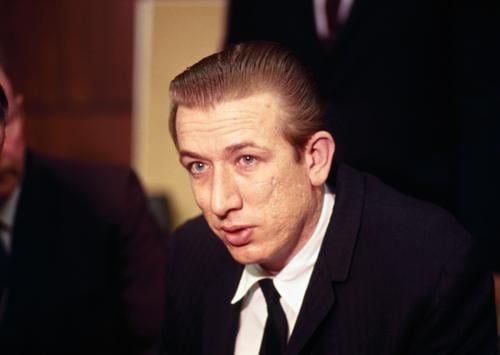
Authors Jack Altman and Dr. Marvin Ziporyn discusses their book "Born to Raise Hell"
1967 Richard Speck, the man who murdered eight student nurses in 1966, is the topic of Jack Altman's and Dr. Marvin Ziporyn's book, "Born to Raise Hell: The Untold Story of Richard Speck -- The Man, The Crime, The Trial". Altman saw Speck's public and private image as being quite different. When asked to smile for the cameras, Speck obeyed authority and was labeled a monster by the press when in reality, he blocked out the murders and was disgusted by his actions. Dr. Ziporyn sees this murderous violence as a disease and not as a monster as the press portrayed it.
-
Auburn University student discusses the Civil Rights march on campus and his involvement
1965 Studs interviews a white student on the Auburn University campus after a Civil Rights march. The student explains that he is there to be sure a white face is present and to stand up for democracy. He describes the event and speaks to his family background. The student expresses the experience of black students on the integrated campus and how it has changed. (Tape 6, part 2)
-
Asa Baber reads from and discusses his book "Land of a Million Elephants"
Jun. 8, 1970 Having spent time as a Marine in southeast Asia and his military experience became material for Asa Baber's first book, "Land of a Million Elephants". Baber also talks about how he formulated his book. "Writing is music. Writing is jazz," said Baber. He didn't believe writing was about concepts and structure.
-
Arthur Miller discusses working in China
Jan. 22, 1984 In 1978, Arthur Miller saw a play in China and was asked to offer his expertise critique. A few years later, Arthur Miller was asked to direct "Death of a Salesman" in Beijing. Complimentary tickets were given away to the audience for a preview performance. Arthur was appalled at the audiences' behavior as they talked throughout the entire presentation. Miller's main concern was that his play would be seen as a political statement instead of a work of art. However, opening night arrived and his play was very well received.
-
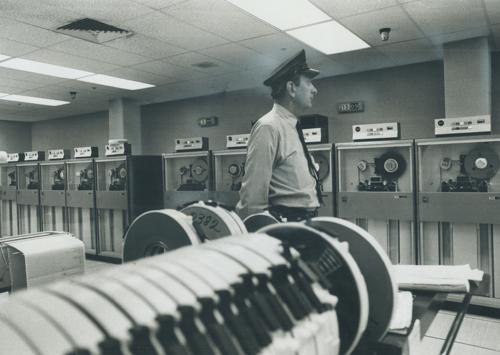
Arthur Miller and John O'Brien discuss privacy and surveillance
1970 Arthur Miller, author of "Assault on Privacy: Computers, Data Banks, and Dossiers," and John O'Brien discuss issues relating to technological privacy and surveillance.
-
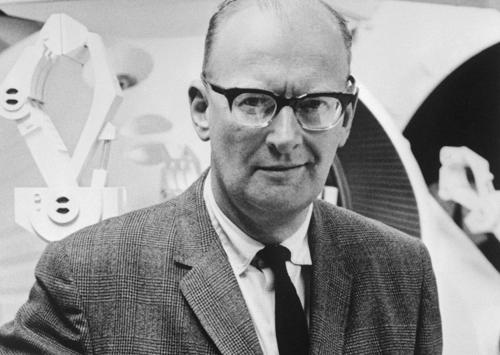
Arthur Charles Clarke discusses science fiction
Jan. 27, 1959 Arthur Charles Clarke discusses science fiction and his books "Childhood's End", "Prelude to Space", and "the Deep Range".
-
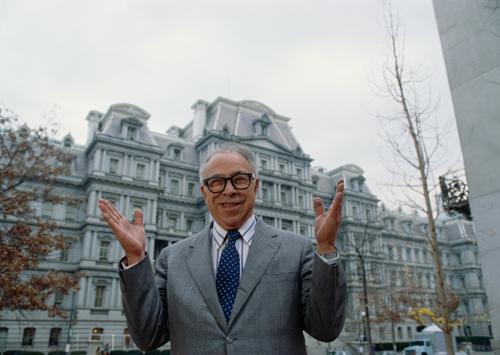
Art Buchwald reads from and discusses his book "Laid Back in Washington"
Feb. 1982 Discussing the book "Layed back in Washington" and interviewing Art Buchwald.
-
Anne Guerrero discussing urban renewal ; part 1
1968 Anne Guerrero discusses urban renewal and the difference between her neighborhood in a conservation area and a suburban neighborhood. She discusses how the area is changing and how the University of Illinois has affected her neighborhood. This recording ends abruptly and is part 1 of 3
-
Anne Guerrero discussing event in her life ; part 2
1968 Anne Guerrero discusses the impact her divorce has had on her younger children. She also discusses her own career and her future plans as well as her connection to the Roman Catholic Church. This recording ends abruptly and is part 2 of 3.
-
Anne Guerrero discusses religion ; part 3
1968 Anne Guerrero discusses religion in the Roman Catholic Church and her children. Her children participate in this interview and sing "Henry the Eighth." Part 3 of 3.
-
-

Anna Deavere Smith discusses her career
May. 4, 1995 Anna Deavere Smith discusses and demonstrates her unique character portrayals from her works "Fires in the Mirror" and "Twilight: Los Angeles, 1992."
-
-
Andrew Patner discusses his book, "I.F. Stone: A Portrait" and Stone's career as a newspaper man
Mar. 10, 1988 Studs Terkel interview with Andrew Patner about his book, "I.F. Stone: A Portrait" that speaks to the life of newspaper man Izzy Stone. Patner describes his preparation and efforts to interview Stone. They discuss Stones incredible work in spite of the fact that he was nearly blind and deaf. Both Studs and Patner read excerpts from the book. They discuss Stones knowledge of literature, Greek philosophy, the Vietnam War, and his ability to speak French. Studs quotes a review of Patner's book from a newspaper. Patner also quotes Izzy Stone comments about Socrates.