Listen to New Voices on Studs Terkel our partnership with 826CHI-here! Read the Story


Showing 286 - 300 of 3671 results
-
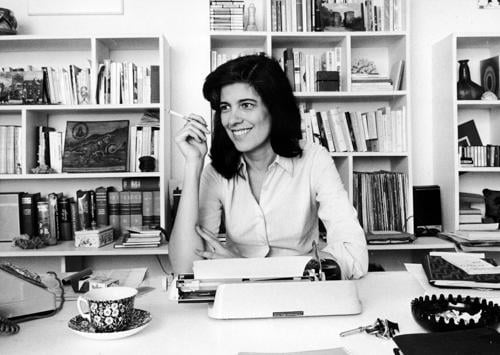
Susan Sontag discusses Tuberculosis
Jun. 30, 1978 Sontag reads from "Illness as Metaphor" and discusses differences between diseases, particularly tuberculosis and cancer, regarding historic understanding and cultural representation.
-

Susan Salm discusses her career as a cellist
Oct. 26, 1977 Susan Salm discusses her career as a cellist, the cello, and classical music. Includes an earlier interview with a younger Susan Salm and her mother. Includes an announcer's comments from the BBC at the end of the program.
-
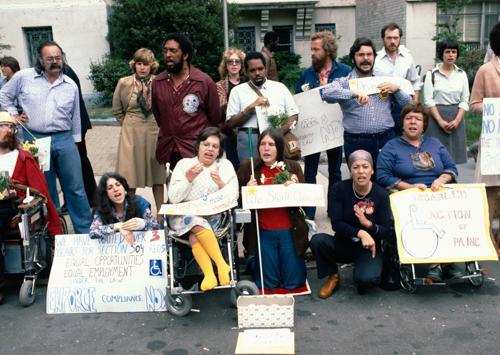
Susan Nussbaum and Michael Pachovas discuss the Disabled Americans Freedom Rally with Studs Terkel
Feb. 28, 1981 Susan Nussbaum, founder of Access Living and Michael Pachovas founder of Disabled Prisoners Program discuss the upcoming Disabled Americans Freedom Rally in the backdrop of the International Year of the Disabled Persons and President Reagan's budget cuts. Society needs to understand that expenditures are required to secure the rights of disabled people to live active, productive lives. They need to be able to get out of their apartment buildings or homes, travel on sidewalks and ride buses. That may require access ramps, working elevators, cut curbs, and hydraulic buses to lower steps.
-
Susan Brownmiller discusses her book "Against Our Will"
Oct. 23, 1975 In Susan Brownmiller's book, "Against Our Will: Men, Women and Rape," Brownmiller shows her audience how and why rape is a crime of one's mind and not one of passion. According to Brownmiller, rape is man's dominance over a woman.
-
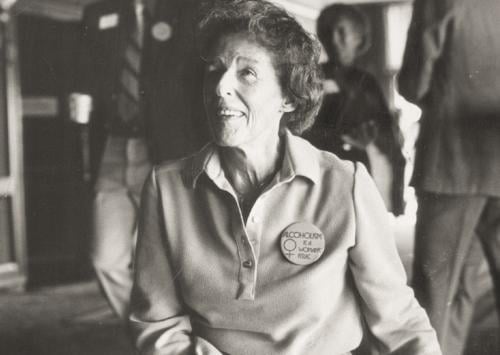
Susan Brownell Anthony discusses her book "The Ghost in My Life"
Oct. 29, 1971 Ms. Anthony, the grand-niece of Susan B. Anthony, comments on the women's liberation movement, her personal political life and her view of Christian life.
-
Survivors of the Hiroshima atomic bomb discuss the event and nuclear nonproliferation
May. 31, 1982 Discussing Hiroshima and nuclear nonproliferation with survivors of the Hiroshima bomb of August 6, 1945 and activists organizing against nuclear proliferation.
-
Studs, teachers and students have a conversation at a high school where there is controversy over the use of the book "Working"
1982 Discussing the controversy over the use of the book "Working" by author Studs Terkel in a senior vocational class. Interviews with Kay Nichols, teacher, and two high school classes, as well as Bob Burns and Jim Richardson. The students talk of how the "bad" language in the book is heard from their peers on a daily basis and they don't find it offensive. [recorded in Girard, Pennsylvania]
-
Studs visits the Illinois Institute of Technology to view student work about Vietnam
May. 24, 1970 Interviewing guests at the Institute of Design memorial in Crown Hall on the campus of the Illinois Institute of Technology. The student work on view is a collaboration between the Schools of Architecture and Planning, and the Institute of Design.
-
-
Studs Terkel talks with three World War Two veterans
Apr. 17, 1985 Interviewing Ed Ruff, Joe Polowski, and Leroy; three veterans of the meeting of U.S. and Soviet forces at the Elbe River on April 25, 1945. The result of this meeting was the splitting of Nazi Germany into two parts and the ensuring of victory in Europe.
-

Studs Terkel talks with R. Buckminster (Richard) Fuller and Young Lords Party as they tour old Chicago neighborhood on route to public discussion at a local church
May. 13, 1970 R. Buckminster, Studs Terkel and members of Young Lords tour the Chicago, Lincoln Park neighborhood in a station wagon on route to Buckminster's discussion at People's Church. Studs Terkel, Richard Buckminster, Cha Cha Jimenez, the Chairman of the Young Lords, and an unidentified female discuss the redevelopment and displacement of citizens by urban renewal in the name of community improvement.
-
Studs Terkel talks with members of the Mattachine Midwest organization
Feb. 19, 1970 Content Warning: This conversation includes racially and/or culturally derogatory language and/or negative depictions of Black and Indigenous people of color, women, and LGBTQI+ individuals. Rather than remove this content, we present it in the context of twentieth-century social history to acknowledge and learn from its impact and to inspire awareness and discussion. Discussing homosexuality and American society and interviewing members of the Mattachine Midwest organization: Jim Bradford, Valerie Taylor (pen name of Velma N. Tate, 1913-1997), and Henry Weimhoff.
-
Studs Terkel talks with journalist Dieter Strand in Stockholm
Nov. 20, 1973 Journalist Dieter Strand discusses his upbringing in Germany, political apathy and natural characteristics of Swedes. The two also review the urbanization, Protestant work ethic and Strand's writing. Recorded in Stockholm.
-

Studs Terkel talks with Erich Lüth on his first hand experiences living in Hamburg through the rise and fall of Hitler ; part 1
1968 Erich Lüth discusses his experiences, observations, and accounts of life in Hamburg, Germany during the rise and fall of Hitler. He recounts how as a member of Parliament he brought in Hitler's, "Mein Kampf" and read portions aloud and was laughed at by his colleagues. He states they were blind to what Hitler declared in his book he would do and some are still blind by wanting to rub out their past, their history.
-
Studs Terkel talks with artist Gene Hall and Dr. Paul Mundy about the painting "The Black Christ Not Worthy of Its Cross" ; part 1
Sep. 21, 1965 Studs Terkel interviews the artist Gene Hall who created "The Black Christ Not Worthy Of Its Cross" and the head of the Loyola University Sociology Department, Dr. Paul Mundy, who used the title and painting reproduction to spark classroom discussions. Hall describes the creation of his 6 ft tall by 2 1/2 feet wide painting and how seeing the color of Christ diminishes Christ. You don't see Christ when you see color. Hall uses barbed wire instead of thorns in the painting to signify there is no time in painting, it is up to date.