Listen to New Voices on Studs Terkel our partnership with 826CHI-here! Read the Story


-

Harrison Salisbury discusses his views on the constantly changing world of Russia ; part 1
Jun. 8, 1962 Being a correspondent for the New York Times in Moscow gave others the chance to see Russia through Harrison Salisbury's reporting. Inside their country, the people, says Salisbury, they have started to loosen up and they have started to talk to one another. The freedoms of the arts have come back, too.
-
Harrison Salisbury discusses his book "The 900 Days: The Siege Of Leningrad" and Isabella Zorina discusses a trip to mass graves
Jul. 1, 1982 Harrison Salisbury discusses his book “The 900 Days: The Siege Of Leningrad” and the lasting impact of the siege on the Soviet Union and life in Leningrad during the siege. Salisbury reads a poem by Olga Bergholz.Isabella Zorina discusses a trip to mass graves, including the many young people who were also visiting, some as part of wedding ceremonies, and the music played at the graves. Terkel plays Beethoven's Symphony No. 3, conducted by Leonard Bernstein, at the end of the program.
-
Harrison Evans Salisbury discusses his book "A Time of Change"
Mar. 18, 1988 His experiences as a journalist are what's covered in Harrison Evans Salisbury's book, "A Time of Change: A Reporter's Tale of Our Time". Salisbury believed as a reporter, one truly needed to be at the event, in order to obtain the true story. Once Salisbury questioned if he was living in America because he was asked to switch rooms at a hotel in Birmingham, only to find out later that there were special, bugged rooms for reporters.
-
Harrison E. Salisbury discusses his book on the 1917 Russian revolution, "Black Night, White Snow"
Feb. 2, 1978 Studs Terkel talks to New York Times journalist Harrison E. Salisbury about his book on the Russian Revolution of 1917 entitled, "Black Night, White Snow", detailing the roles of the SR's, Lenin and the Bolsheviks, the Mensheviks, the Narodniks, Kerensky, Kropotkin, Stalin, Zinoviev and more.
-
Harrison E. Salisbury discusses his book "The 900 Days"
Apr. 10, 1969 Discussing the book "The 900 days" about the siege of Leningrad during World War II.
-
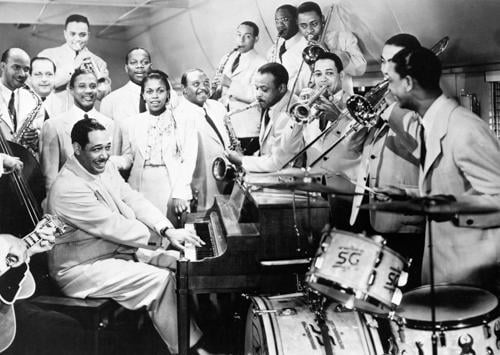
Harriet Choice discusses the career of Duke Ellington and promotes the Grant Park 5th Annual Tribute to Duke Ellington concert
Aug. 25, 1978 Studs interviews Harriet Choice, Jazz critic for the Chicago Tribune. They reflect on the music, talent and career of Duke Ellington. Choice describes several Ellington songs and the history behind them. She shares how Duke created music and wrote specifically for individual people. Studs reads what Ellington wrote about his song “Harlem Airshaft.” Choice and Terkel reflect on Ellington’s music and those who made music with him. Choice shares how a Duke Ellington performance at the Newport Jazz Festival rejuvenated Ellington’s career.
-
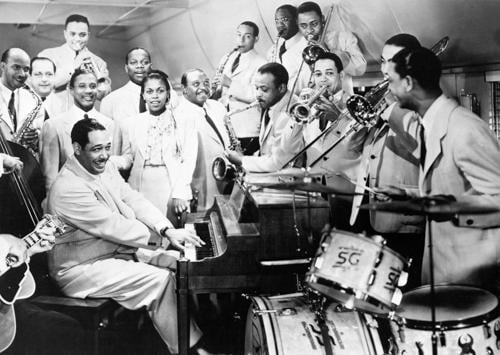
Harriet Choice discusses jazz
Aug. 7, 1978 Chicago Tribune jazz critic Harriet Choice plays and discusses some favorite records from her own personal collection with Studs Terkel.
-
Harold Taylor, scholar and former president of Sarah Lawrence College, talks with Studs Terkel
Aug. 8, 1965 An interesting, half-hour interview conducted while Taylor was visiting Chicago on a lecture tour. The two discuss student discontent on campuses across the United States, intellectuals' work in military defense and cynicism among those in the professional-education hierarchy.
-
Harold Taylor on his book "Students Without Teacher: The Crisis in the University" ; part 2
May. 16, 1968 Discussing the book, "Students Without Teachers: The Crisis in the University," and interviewing its author, Dr. Harold Taylor (2 parts). Dr. Taylor is an educator.
-
Harold Taylor on his book "Students Without Teacher: The Crisis in the University" ; part 1
May. 16, 1968 Discussing the book, "Students Without Teachers: The Crisis in the University," and interviewing its author, Dr. Harold Taylor (2 parts). Dr. Taylor is an educator.
-
Harold Rosenberg discusses action painting and other trends in art
Apr. 9, 1966 Harold Rosenberg, a provocative and loquacious art critic, joins Studs Terkel to discuss trends in the art world. The interview begins with a clip from Sonia Delaunay, who remarks that Pablo Picasso does not create art, but transforms it. Rosenberg disagrees with this statement, elaborating on his beliefs that tradition and past experiences and influences are present in any work. The desire to create “new” art is also a complicated concept, according to Rosenberg, as art transcends time and can be considered “new” to new viewers.
-
Harold Prince discusses his direction of Madame Butterfly for the Lyric Opera, Chicago
Sep. 24, 1985 Harold Prince discusses his direction of Madame Butterfly while also discussing operas, musicals, and theater in general.
-
Harold Clurman discusses the theatre and his book "The Fervent Years"
Mar. 20, 1978 Being both a theatre critic and a theatre director prompted Harold Clurman to write his book, "The Fervent Years: The Group Theatre and the 30's". Clurman hopes that with every play a viewer sees, he or she then takes that material and ponders the message. Clurman explained that plays were a way to communicate truth about life.
-
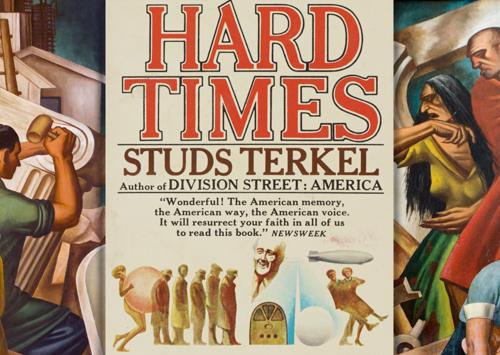
Hard Times Demo
1971 Hard Times Demo
-
Harald Edelstam discusses his work in Chile before and after the military coup of 1973
Jun. 3, 1974 Former Swedish ambassador to Chile Harald Edelstam discusses his work in Chile before and after the military coup of 1973. At length, he discusses Salvador Allende, the 1973 Chilean coup d'état, and his work to protect Chilean, Cuban, Brazilian, Uruguayan, Bolivian, and Swedish individuals that were targeted by the military junta led by Augusto Pinochet.